Cleaning Service After Renovation: What to Expect in DFW
You've finally finished the Dallas kitchen remodel. The cabinets are in, the counters shine, and the new flooring looks beautiful. Then sunlight crosses the room, revealing a pale film on the shelves, trim, and window tracks. Someone starts rubbing their eyes, the dog tracks powder into the hallway, and the air conditioner sends another invisible layer drifting through the house.
That's the renovation hangover. A cleaning service after renovation isn't a larger version of routine housekeeping. It's the controlled transition from a work zone to a space where your family, pets, employees, or guests can comfortably return.
Table of Contents
The Renovation Hangover - Why Normal Cleaning Isn't Enough
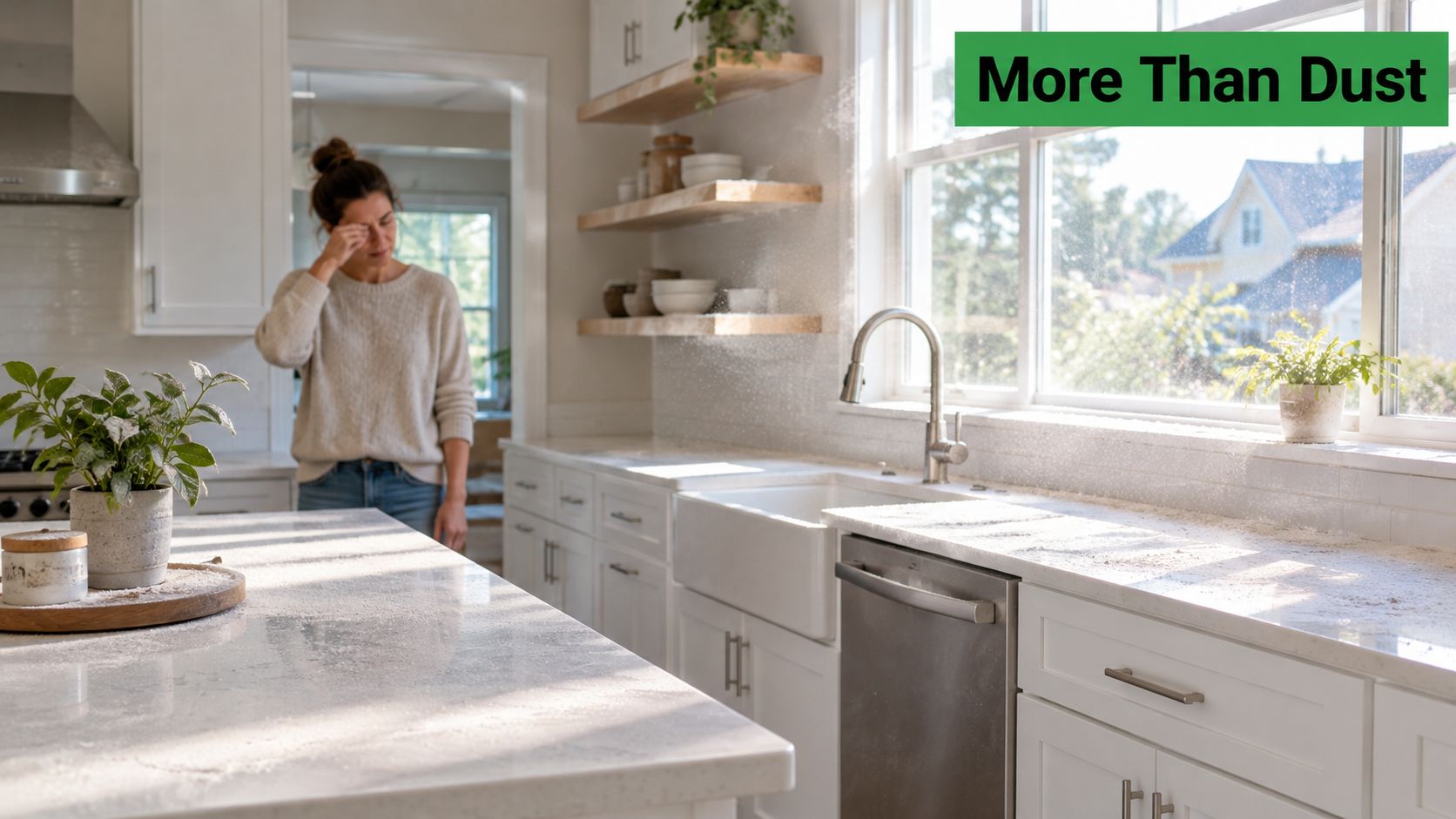
By the time the contractor leaves, a remodeled kitchen can look finished at a glance. Then the afternoon sun hits the shelves, someone wipes a countertop, and a pale film shows up on the cloth. In Dallas-Fort Worth, that residue rarely stays put. Air conditioning runs often, return grilles keep pulling air, and fine dust can recirculate through the house long after the obvious scraps are gone.
A standard tidy-up misses that pattern. It may remove the chunks you can see while leaving behind powder-fine drywall, wood, tile, or concrete dust on cabinet tops, light fixtures, baseboards, and other ledges. The problem is not only mess. It is indoor air quality, especially in homes with kids, pets, allergies, or asthma.
The U.S. Environmental Protection Agency notes that remodeling tasks such as demolition and removing wood casings can create dust and other indoor-air contaminants. Renovation can also disturb materials such as lead, asbestos, and mold. That is why the agency recommends isolating work areas, protecting HVAC ducts, using exhaust ventilation to create negative pressure, and removing debris during the project. EPA remodeling guidance helps explain why the last phase of cleaning has to deal with air pathways and residue, not just shiny new surfaces.
Three layers of renovation residue
Construction residue settles in three layers:
- Visible debris: Drywall scraps, packaging, wood offcuts, tile pieces, insulation, and metal need removal and proper handling.
- Settled dust: Fine particles collect on shelves, inside cabinets, along trim, on registers, across floors, and often beyond the room that was remodeled.
- Airborne particles: Walking, wiping, opening doors, and HVAC airflow can send settled material back into the air.
That third layer is where ordinary deep cleaning often falls short. Dust behaves a bit like flour in a busy kitchen. Once it gets a puff of air, it spreads farther than you expect and lands in places that did not look dirty an hour earlier. In North Texas, seasonal pollen can stack onto that irritation, which is one reason a non-toxic crew focuses on capture and removal, not heavy fragrance that only covers the smell of dust.
Practical rule: A room is not ready because the floor looks clean. It is ready when dust-collecting surfaces and air-moving pathways have been cleaned and checked before normal use resumes.
What Post-Renovation Cleaning Entails
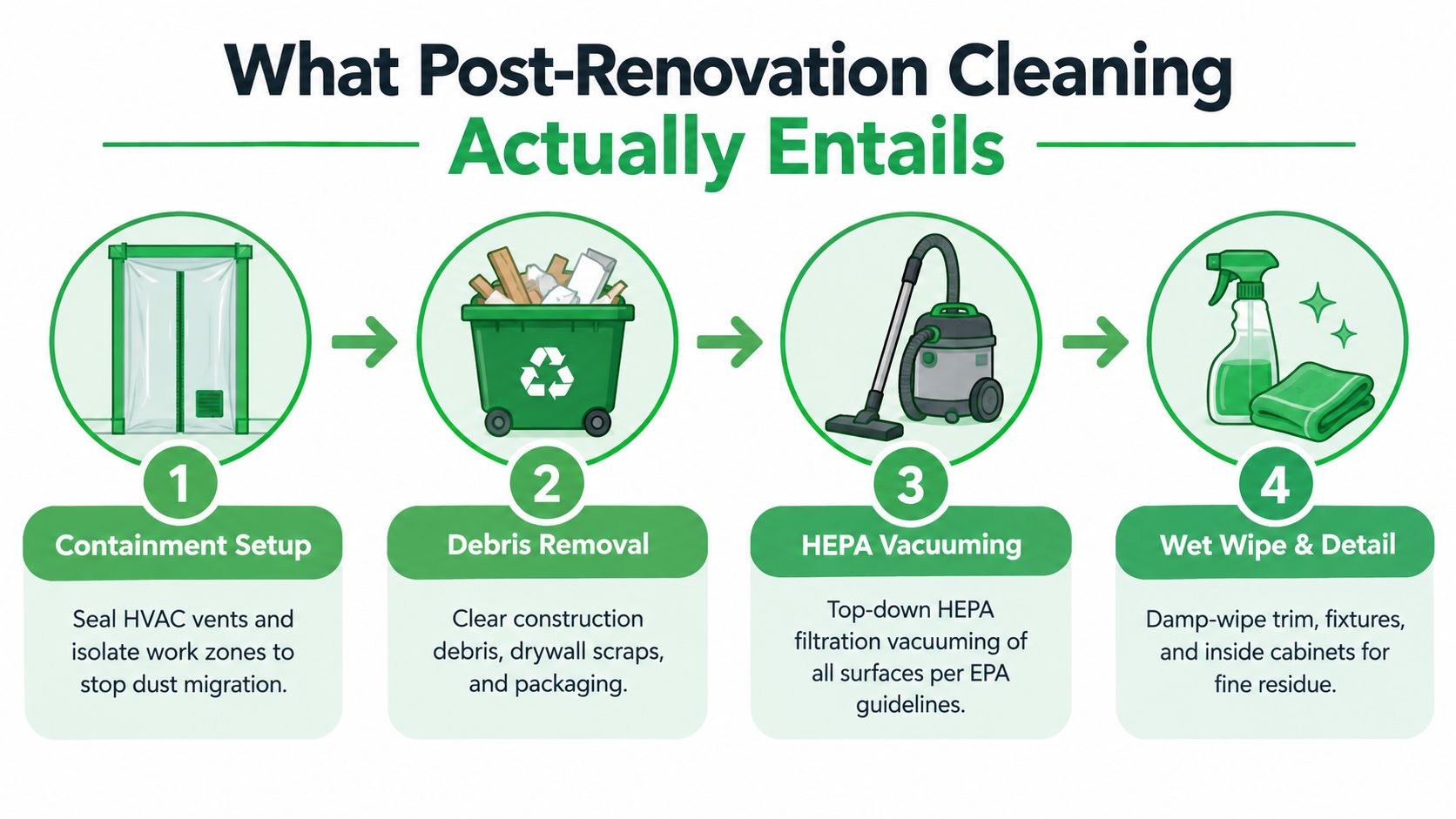
Post-renovation cleaning starts before anyone reaches for a spray bottle. The first job is containment and materials management, because remodel dust moves like flour after a cabinet door slams. Federal remodeling guidance recommends 6-mil polyethylene sheeting and negative-pressure exhaust, and those measures help keep dust from migrating in an occupied home or office. In Dallas-Fort Worth, where HVAC systems run hard through long hot stretches, that matters even more. Fine dust can cycle through returns and settle again in rooms that looked untouched the day before.
The waste stream matters too. Construction debris is not the same thing as everyday trash left after a normal deep clean. Drywall scraps, packaging, wood, tile, insulation, metal, and dust-loaded disposable materials need organized pickup and removal so the home can shift from jobsite back to living space. EPA's construction-and-demolition materials reports give helpful context for why construction and demolition materials are tracked separately from ordinary household waste.
The equipment question
Equipment choice shapes the result. A renovation vacuum is more than a regular shop vacuum with a HEPA sticker on the box. EPA explains that a HEPA filter can capture 99.97% of 0.3-micrometer particles, but the vacuum also has to be built so extracted air passes through that final HEPA stage without bypass leaks. EPA's explanation of renovation HEPA vacuums shows why machine design matters as much as the filter itself.
That detail trips people up. If a machine leaks around seals or exhaust, it can stir up the same fine residue you are trying to remove. Dry sweeping and feather dusting create the same problem. They often send particles back into the air, then into vents, soft furnishings, and allergy-sensitive corners of the home. A non-toxic crew handles that by focusing on capture, controlled wiping, and fragrance-free products rather than masking the dusty smell.
Know when cleaning isn't the right service
Older Dallas homes call for one extra question: what materials were disturbed? Some renovation dust is not ordinary dust. Lead- and asbestos-containing materials need a different response if they were damaged or disturbed. A careful cleaning crew should stop and refer the job when hazardous materials are suspected, instead of treating the situation like routine post-construction cleanup.
That protects both air quality and people. Fragrance-free products help avoid adding more irritants, but they do not neutralize lead or asbestos. For readers comparing service scopes, this resource for finding post-renovation cleaning services helps explain why renovation cleanup differs from standard housekeeping.
The Dust-Control Sequence Professionals Use
The order of operations matters because dust behaves like flour scattered above a countertop. If you clean the counter first and then shake the light fixture, you've only decorated the counter again.
Start high and keep the work zone controlled
A professional sequence typically begins by isolating the work area and limiting recirculation into occupied rooms. The crew then works from high surfaces downward:
- Ceiling edges and fixtures: Remove residue from ceiling corners, light fixtures, fans, and high trim without using compressed air or indoor blowers.
- Windows and cabinetry: Detail window tracks, ledges, cabinet tops, doors, drawers, and built-ins where fine particles settle.
- Walls, trim, and horizontal surfaces: Use disposable or washable microfiber materials for controlled wiping. A damp cloth captures residue instead of flicking it into the air.
- Floors and soft furnishings: Vacuum floors, stairs, carpets, and upholstery after overhead work is finished, then damp-mop hard flooring as appropriate for the material.
The principle is simple: capture, don't redistribute. OSHA's silica guidance identifies an action level of 25 micrograms per cubic meter of air and a permissible exposure limit of 50 micrograms per cubic meter of air, both averaged over an eight-hour time-weighted period. The same guidance supports wet sweeping, HEPA-filtered vacuuming, or another exposure-minimizing method when dry sweeping could contribute to exposure. OSHA's construction silica information gives the safety basis for avoiding a dry broom during this phase.
Finish with HVAC attention and a second look
Return grilles, registers, and filters deserve inspection because they can collect and redistribute renovation dust. CDC and NIOSH guidance recommends dust-containment procedures when cleaning or replacing filters, removing construction dust around the HVAC area, and using pre-filters and HEPA filtration when air from the renovation zone must pass through the system.
A crew should inspect seals, hoses, filters, and airflow before vacuuming. Collected dust and used filters belong in sealed heavy-duty bags or containers, not in a hallway where they can spill back into the cleaned space.
The EPA also cautions that vacuuming can temporarily increase airborne dust. Its guidance on vacuuming and air ducts supports controlled HEPA vacuuming, damp wiping, and a later inspection after particles have had time to settle. That follow-up is especially useful in Dallas homes where the AC runs soon after the crew leaves.
Why Non-Toxic and Fragrance-Free Matters After a Remodel
A renovated room may already contain odors from paint, sealants, adhesives, flooring, and finishes. Adding a strongly scented cleaner can make the air feel “fresh” while layering another fragrance over the original smells. That's why fragrance-free is a meaningful specification, not just a personal preference.
Fragrance-free means synthetic scents are left out entirely. It isn't automatically the same as unscented, which can describe a product that contains masking agents to cover its natural odor. If you're caring for a baby, a pet, or someone with asthma, allergies, or chemical sensitivity, you deserve to know what the cleaning product contributes to the room.

The floor-level test
A cleaner's ingredients matter most where residue remains. Babies crawl across floors, pets nap on rugs, and children touch baseboards, cabinet doors, and lower trim. A product that leaves a strong scent behind may also leave residues that sensitive households would rather avoid.
Gmaids uses plant-derived and mineral-based products with no bleach, ammonia, or synthetic fragrance. The company's approach is described through its promise, “Healthy Homes, Families and Souls. We green clean without toxic chemicals.” You can learn more about its green cleaning and non-toxic maid service in Dallas.
This doesn't mean every renovation residue can be solved with a gentler spray. Lead, asbestos, mold, and construction dust require the right containment and technical response. But once the space is appropriate for routine cleaning, fewer harsh chemicals and no added synthetic scent can make the return to normal life more comfortable for a pet-friendly household or a family managing allergies.
Post-Construction vs. Standard Deep Cleaning
A standard deep clean is designed for an occupied home with household buildup. It may be the right choice before holiday hosting, after a busy season, or when kitchen grease, bathroom residue, and accumulated dust need detailed attention. A post-construction clean has a different job: it manages the debris and fine particulate left when an active work zone becomes an occupiable space.
| Feature | Standard Deep Clean | Post-Construction Clean |
|---|---|---|
| Primary purpose | Remove household buildup and grime | Remove renovation dust, debris, and residue |
| Typical setting | Occupied home needing detailed maintenance | Remodel, new build, or major repair nearing completion |
| Dust approach | Routine vacuuming and wiping | Controlled sequence with sealed HEPA equipment and damp methods |
| Detail areas | Kitchens, bathrooms, floors, trim, and common surfaces | Cabinets, window tracks, fixtures, vents, registers, trim, and construction-affected areas |
| Materials handling | Household dirt and ordinary waste | Construction debris and material-specific disposal considerations |
| Safety review | Standard cleaning conditions | Check for hazardous materials, HVAC pathways, and dust migration |
For a small cosmetic project with little dust, a careful homeowner may be able to handle the final cleanup. Use a top-down sequence, avoid dry sweeping, and don't assume one pass captures every particle. For demolition, drywall sanding, flooring installation, concrete cutting, or work across several rooms, specialized equipment and training become much more important.
A useful rule is to ask whether the home needs maintenance or decontamination from construction residue. The first points toward a deep clean. The second calls for post-construction scope. Gmaids also explains the distinction in its comparison of deep cleaning and regular cleaning.
The same practical thinking applies to commercial properties. An office, medical practice, retail space, or multi-tenant building needs dust control without spreading residue into occupied areas. Property managers can also benefit from understanding the separate planning involved in related exterior upkeep, such as this guide to commercial landscape costs, when coordinating a broader property turnover.
Hiring a Safe, Local Crew in Dallas-Fort Worth
A post-renovation crew in DFW is doing more than making surfaces look finished. The job is to help your home shift from worksite back to living space without leaving fine dust in vents, on trim, or inside cabinets where it keeps circulating every time the AC turns on. In Dallas-Fort Worth, that matters because long cooling seasons and allergy-prone months can keep construction residue moving through the house long after the contractor leaves.
Local conditions shape the cleaning plan. A new build in Frisco or Prosper can leave a light, powdery film spread across multiple rooms. A remodel in Uptown may be smaller but concentrated around one kitchen or bath. In Preston Hollow or University Park, crews often need a gentler approach around custom millwork, fresh finishes, and built-ins. In Richardson or Irving, attention to registers and return grilles becomes especially important because settled dust can re-enter the air again and again.
Questions worth asking before booking
- Equipment: Does the crew use a sealed HEPA machine designed for renovation dust, and can they confirm in writing that all extracted air passes through the final filter stage?
- Scope: Will they clean debris, horizontal and vertical surfaces, inside cabinetry, fixtures, floors, registers, and complete a final walkthrough?
- Materials: What is the procedure if the team finds suspected lead, asbestos, mold, or another unknown substance?
- Products: Do they use fragrance-free, non-toxic products, and avoid bleach, ammonia, and heavy masking scents?
- Accountability: Are cleaners trained, background-checked, insured, and backed by a clear satisfaction process?
That equipment question matters because a HEPA label by itself can be misleading. As noted earlier, the machine design matters as much as the filter. Ask the provider to explain how the vacuum is sealed and how debris is handled after collection. A careful company should be able to answer plainly, without vague wording.
Ask about crew habits, too. Ordinary deep cleaners may focus on visible soil and speed. A non-toxic post-renovation crew should work more like dust-control technicians, using a sequence that limits re-aerosolizing particles and choosing products that do not add strong fragrance to a home that already has fresh paint, adhesives, or new materials off-gassing.
Gmaids serves Dallas-Fort Worth with Certified Cleaning Teams® that are trained, background-checked, and insured. Its Dallas house cleaning service area includes homes and workplaces across the region.
Get Your Clean Quote From Gmaids
Once the contractor has finished, remove tools, paint cans, and large materials before the cleaning appointment. Confirm that finishes are ready for cleaning, identify the rooms affected by the renovation, and tell the provider whether drywall sanding, flooring work, cabinet installation, tile cutting, or demolition took place. If the project involved suspected lead, asbestos, or mold, pause and obtain the appropriate professional assessment before booking ordinary cleaning.
Gmaids offers post-construction cleaning for renovations, new builds, and major repairs. The service addresses dust and debris removal, detailed surface cleaning, windows and glass, floor scrubbing and polishing, fixtures, and final presentation cleaning. For a move-in or move-out situation, its service also includes inside the fridge, oven, cabinets and drawers, and closets.
The company has served DFW since 2004, was founded by Juan Chaparro and Karen La Spina, and provides residential and commercial options. Alongside post-construction cleaning, its services include basic cleaning, deep cleaning, weekly, biweekly, and monthly recurring maid service, office cleaning, commercial cleaning, and sanitizing cleaning.
A practical booking checklist
Before requesting a quote, gather:
- Project details: Which rooms were renovated, and what materials were cut, sanded, demolished, or installed?
- Access information: Is the home occupied, are pets present, and does the crew need to work around furniture?
- HVAC information: Were vents covered during construction, and has the system run since the work ended?
- Readiness details: Has the contractor removed large debris, and are paint, sealants, and finishes ready for cleaning?
- Safety concerns: Is there any suspected hazardous material that requires a licensed specialist instead?
Gmaids brings its tools and non-toxic products, including fragrance-free, plant-derived and mineral-based solutions. The brand uses no bleach, ammonia, or synthetic fragrance. That choice suits families, pet owners, pregnant moms, and people who prefer fewer harsh chemicals around floors, fabrics, and frequently touched surfaces.
Gmaids reports serving 7,500+ families, holding a 4.8-star Google rating, and being featured in Forbes and on NBC 5 DFW. It also offers a 24-hour satisfaction policy. If something isn't right, let the team know within 24 hours and it will make it right.
The goal isn't to make a renovation feel finished only from the doorway. It's to give your household a clean starting point, with visible debris removed, fine residue captured, and the space ready for everyday Dallas living.
Gmaids provides non-toxic, fragrance-free post-construction cleaning for Dallas-Fort Worth homes and businesses, with trained teams equipped to remove renovation dust, debris, and residue. Get an instant, flat-rate quote by visiting Gmaids or call 214-997-6918 to schedule your next step.


Ready for a healthier, cleaner home?