

Deep Cleaning vs Regular Cleaning: The Complete Guide

Regular cleaning keeps visible surfaces under control on a daily or weekly rhythm, but deep cleaning handles the buildup you can't wipe away in hidden spots every few months. In a standard 1,500-square-foot home, a regular clean usually takes 1.5 to 2.5 hours, while a deep clean typically takes 4 to 8 hours for a two-person crew.
If you're standing in your kitchen right now looking at clean counters, dusty baseboards, a sticky vent cover, and a bathroom that somehow never feels fully reset, you're in the exact spot where most Dallas homeowners get stuck. They clean constantly, but the house still feels off.
That's the fundamental issue in deep cleaning vs regular cleaning. These are not interchangeable services. One preserves order. The other repairs neglect. If you try to use regular cleaning to solve a deep-cleaning problem, you create what I call the rebound effect. Dirt hides, grease hardens, soap scum thickens, pet dander settles deeper, and then one day you need a much bigger reset than you expected.
For allergy-prone families across DFW, product choice changes this equation too. If your home needs frequent upkeep, harsh fragrances and aggressive chemicals can turn “clean” into its own problem. A smart maintenance plan uses the right cadence and the right products.
Table of Contents
- What regular cleaning should include
- What regular cleaning is not
- Why non-toxic routine care matters in family homes
- Regular vs Deep Cleaning at a Glance
- The biggest difference is not effort
- Where people choose the wrong service
- The timing difference matters more than most people think
- Non-toxic maintenance changes the long game
- What cleaning can and can't do for allergens
- Cleaning is not disinfecting
- Pick regular cleaning if this sounds like your home
- Pick deep cleaning if these signs are obvious
- The smartest plan for most DFW homes
Understanding the Cleaning Divide
A Dallas homeowner story I see all the time goes like this. Saturday starts with good intentions. Counters get sprayed, floors get vacuumed, the guest bath gets a quick wipe, and the house looks better by lunch. But the baseboards are still gray, the oven door still has baked-on splatter, the grout still looks tired, and dust is still clinging to vents and blinds.
That's not laziness. That's a scope problem.
In the 2018 ACI National Cleaning Survey as summarized by Care.com, 74% of respondents described their household habits as “light cleaning”, while 26% said they do “deep cleaning.” The same survey also found deep cleaning tends to cluster around spring, with 58% saying that's when they do it most often. That split matters because it reflects how most households behave. They maintain first, then reset later.
Why people feel busy but still behind
Routine cleaning removes what you can see first. Crumbs. Fingerprints. Sink splatter. Hair on the floor. That work absolutely matters, but it doesn't automatically touch the buildup in low-visibility areas.
Deep cleaning is different because it goes after accumulation. Not mess. Accumulation.
Practical rule: If your home looks decent from eye level but feels dingy up close, you don't have a maintenance problem. You have a buildup problem.
The rebound effect homeowners ignore
When people skip deep cleaning for too long, regular cleaning gets less effective. You wipe over residue instead of removing it. Floors dull faster. Bathrooms need more scrubbing. Kitchens hold odors longer. Every “simple” cleaning session gets slower and more frustrating.
That's the rebound effect. The longer you rely on surface work alone, the more expensive your eventual reset becomes in time, effort, and wear on surfaces.
Here's the divide in plain language:
| Cleaning mode | What it does | What it misses if used alone |
|---|---|---|
| Regular cleaning | Keeps daily mess and visible dust under control | Hidden grime, buildup, neglected edges |
| Deep cleaning | Restores neglected areas and removes accumulated residue | Ongoing upkeep between resets |
Most DFW homes need both. The only question is when.
What Is Regular Maintenance Cleaning
Regular maintenance cleaning is the work that keeps a home functional, calm, and presentable. It's not a lazy wipe-down. It's recurring, structured upkeep focused on visible surfaces, high-touch areas, floors, kitchens, and bathrooms.
If your home is already in reasonably good condition, this is the service that protects that baseline. If your home is already behind, it won't magically catch you up.
What regular cleaning should include
A proper maintenance clean usually covers the areas that get used every day:
- Floors: Vacuuming carpets and rugs, sweeping, and mopping hard surfaces.
- Bathrooms: Toilets, sinks, mirrors, tub and shower surfaces that are part of routine use.
- Kitchen surfaces: Counters, stovetop exterior, sink area, and exterior-facing surfaces that collect grease and fingerprints.
- Dusting: Accessible furniture tops, shelves, tables, and common touchpoints.
- General reset: Trash removal, straightening, and bringing the home back to a livable baseline.
The point is consistency. If a home gets this kind of attention on a predictable schedule, dirt has less chance to harden into a bigger project.
For readers comparing service scopes, a basic cleaning service is the kind of recurring maintenance model that fits homes already in decent shape.
What regular cleaning is not
Customers often experience disappointment. They book maintenance cleaning but expect restoration.
Regular cleaning does not usually mean pulling out appliances, scrubbing inside ovens, descaling neglected fixtures, washing baseboards throughout the house, or attacking old buildup in grout and tracks. That's not a small oversight. That's a completely different labor profile.
The CDC's guidance on environmental surfaces supports the routine side of this split. It says surfaces should be cleaned or disinfected on a regular basis, with examples such as daily or three times per week, and also when visibly soiled, as outlined in the CDC recommendations for environmental surface cleaning frequency.
A recurring clean should make your home easier to live in this week. It shouldn't be expected to undo six months of neglect.
Why non-toxic routine care matters in family homes
In Dallas homes with kids, pets, or chemical sensitivities, the maintenance plan shouldn't create a second problem. Strong scents can linger. Harsh chemicals can be unpleasant in bedrooms, nurseries, and pet zones. Regular service happens often enough that product choice matters a lot.
I'm opinionated on this: if a product leaves the room smelling “clean” for hours, many families will eventually get tired of it. Routine care works better when it's effective, low-residue, and easier to live with.
What Is Deep Cleaning
Deep cleaning is restorative work. It targets the grime that regular maintenance leaves behind, especially in places that people tend to neglect until the buildup is obvious.
This is the service you book when the house needs a reset, not just a touch-up.
What deep cleaning actually tackles
Deep cleaning reaches the edges and neglected zones that change how a home feels once they're finally cleaned:
- Baseboards and trim
- Grout and corners in bathrooms
- Appliance exteriors and often interiors
- Behind and under furniture where accessible
- Window sills and tracks
- Light fixtures, vents, and overlooked dust zones
- Built-up grease, soap scum, and mineral residue
According to the Cleaning Services Authority definition of deep cleaning, regular cleaning in a 1,500-square-foot home usually takes 1.5 to 2.5 hours, while deep cleaning generally takes 4 to 8 hours for a two-person crew because it targets accumulated soil in hidden and neglected areas.
That difference in labor isn't cosmetic. It's operational. Scrubbing a shower that's used every week is one thing. Removing months of scale around fixtures and grout lines is another.
Why deep cleaning needs different tools and expectations
Professional comparisons consistently show deep cleaning is scheduled much less often, commonly every 3 to 6 months or quarterly, and it often requires more specialized equipment such as industrial vacuums, steam cleaners, degreasers, descalers, and extraction tools, as described in this industry comparison of deep cleaning and regular cleaning.
That matters because homeowners often try to DIY a deep clean with the same spray bottle and microfiber cloth they use every weekend. Wrong tool set. Wrong result.
If soft surfaces are part of the problem, especially in homes with pets or kids, it also helps to understand how specialists deep clean area rugs in Birmingham. Rug buildup behaves differently from hard-surface dirt, and surface vacuuming alone won't solve embedded grime.
For people deciding whether they need a reset before recurring service, a deep cleaning service is the category to look at when the home has fallen behind.
Side-by-Side Comparison
Some differences are easier to understand when you stop thinking in labels and start thinking in labor. One service protects a clean home. The other repairs a tired one.
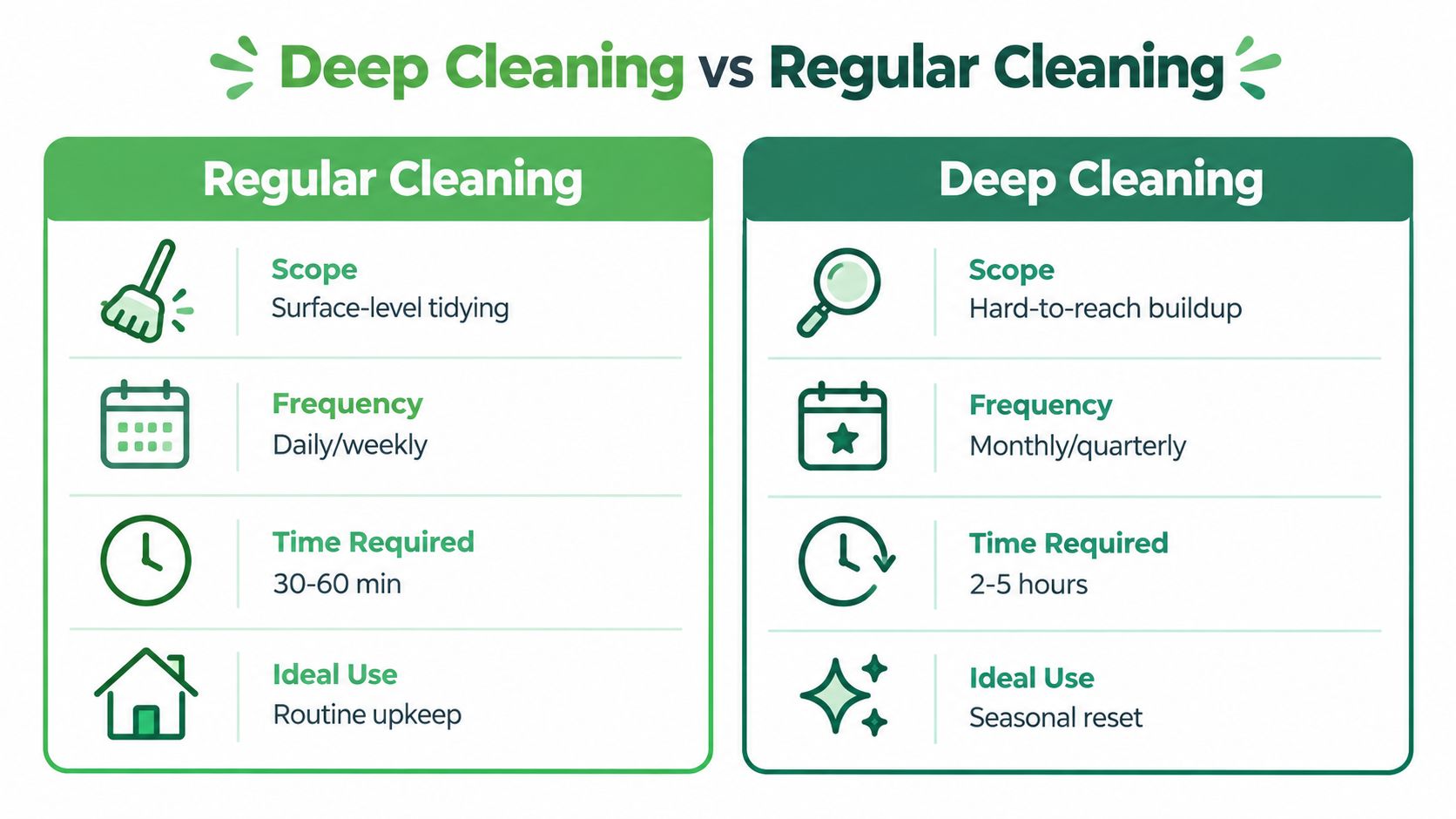
Regular vs Deep Cleaning at a Glance
| Feature | Regular Cleaning | Deep Cleaning |
|---|---|---|
| Main goal | Maintain daily livability | Restore neglected areas |
| Scope | Visible, high-use surfaces | Hidden buildup, detailed scrubbing |
| Typical timing | Daily, weekly, or recurring | Every few months or when needed |
| Labor profile | Shorter, repeatable maintenance work | Longer, more intensive reset work |
| Best for | Homes already in decent condition | Homes with buildup, seasonal resets, move prep |
| Product use | General cleaning products for routine care | May require degreasers, descalers, steam, extraction, stronger process control |
| Expected result | Tidy, sanitary, manageable | More complete reset and detail recovery |
The biggest difference is not effort
The biggest difference in deep cleaning vs regular cleaning isn't that one is “more cleaning.” It's that they solve different problems.
Regular cleaning is efficient because the cleaner can move through repeatable tasks with fewer surprises. Deep cleaning slows down because every neglected area asks for handwork, extra passes, dwell time, and close inspection. A greasy backsplash, dusty return vent, or soap-scaled shower door doesn't respond to a quick wipe.
Where people choose the wrong service
Here's the mistake I see most. A homeowner waits too long, books a regular clean, then feels frustrated because the house still doesn't feel reset. That frustration is predictable.
Use this quick filter:
- Choose regular cleaning if your main issue is ongoing mess, visible dust, tracked-in debris, and bathroom or kitchen upkeep.
- Choose deep cleaning if you're noticing grime at the edges, dull floors despite mopping, bathroom scale, greasy kitchen residue, or neglected detail zones.
- Choose a combination if the house is livable but clearly behind in the details.
If your baseboards, grout lines, and fixture edges look worse than your countertops, stop booking maintenance alone.
The timing difference matters more than most people think
Independent consumer research cited by ACI reported that the average person spends about 2 hours on a light cleaning session and about 5 hours on a deep clean. The same findings said 40% of people deep clean twice a year or less often, and 52% said the longest they had gone without cleaning their home was one month, according to the ACI survey summary.
That pattern explains why so many homes rebound into emergency mode. Frequent light cleaning without periodic reset work doesn't eliminate buildup. It delays the moment you have to deal with it.
Cost and Time Investment Analysis
Homeowners often ask the wrong question first. They ask which service costs more per visit. The better question is which plan costs less disruption over time.
Deep cleaning takes more labor on the day of service. That part is obvious. What's less obvious is how expensive neglect becomes when every routine clean starts fighting old residue.
The cheapest plan is usually the one with a reset
If you skip deep cleaning long enough, routine visits become slower and less satisfying. Bathrooms need repeated scrubbing. Kitchen grease takes longer to lift. Dust in vents and along trim keeps returning to visible surfaces. You pay in time if you DIY, and you pay in labor if you outsource.
That's why I recommend a hybrid model for most DFW households:
- Start with a reset: Use deep cleaning when the home has visible buildup or hasn't had detailed care in a while.
- Protect the baseline: Shift to recurring maintenance before grime has time to harden again.
- Schedule the next deep clean before you “need” it: Emergency cleaning is always more stressful than planned cleaning.
This is especially true in Dallas homes with pets, kids, heavy traffic, or lots of hard flooring. Fine dust, tracked-in debris, cooking residue, and bathroom mineral deposits stack up fast.
Hidden DIY costs most people ignore
DIY looks cheaper until you count what it demands:
- Your time: Deep cleaning eats weekends.
- Tool mismatch: Most households don't keep steam equipment, extraction tools, or commercial descalers on hand.
- Surface risk: Wrong products can haze stone, dull finishes, or leave sticky residue that attracts more dirt.
- Inconsistent follow-through: People clean what they see first and postpone detail work.
One practical option in DFW is to use a provider that separates maintenance from restoration instead of pretending one checklist does both. Gmaids is one local example of that split, offering recurring maintenance cleaning and separate deep cleaning with non-toxic, fragrance-free products.
Bottom line: Pay for intensity when you need intensity. Don't pay for emergency-level labor because maintenance got stretched too far.
Health and Safety Considerations
For allergy-prone families, “clean” isn't just visual. It's about what stays in the air, what's left on surfaces, and what products your household has to live with after the cleaners leave.
Non-toxic maintenance changes the long game
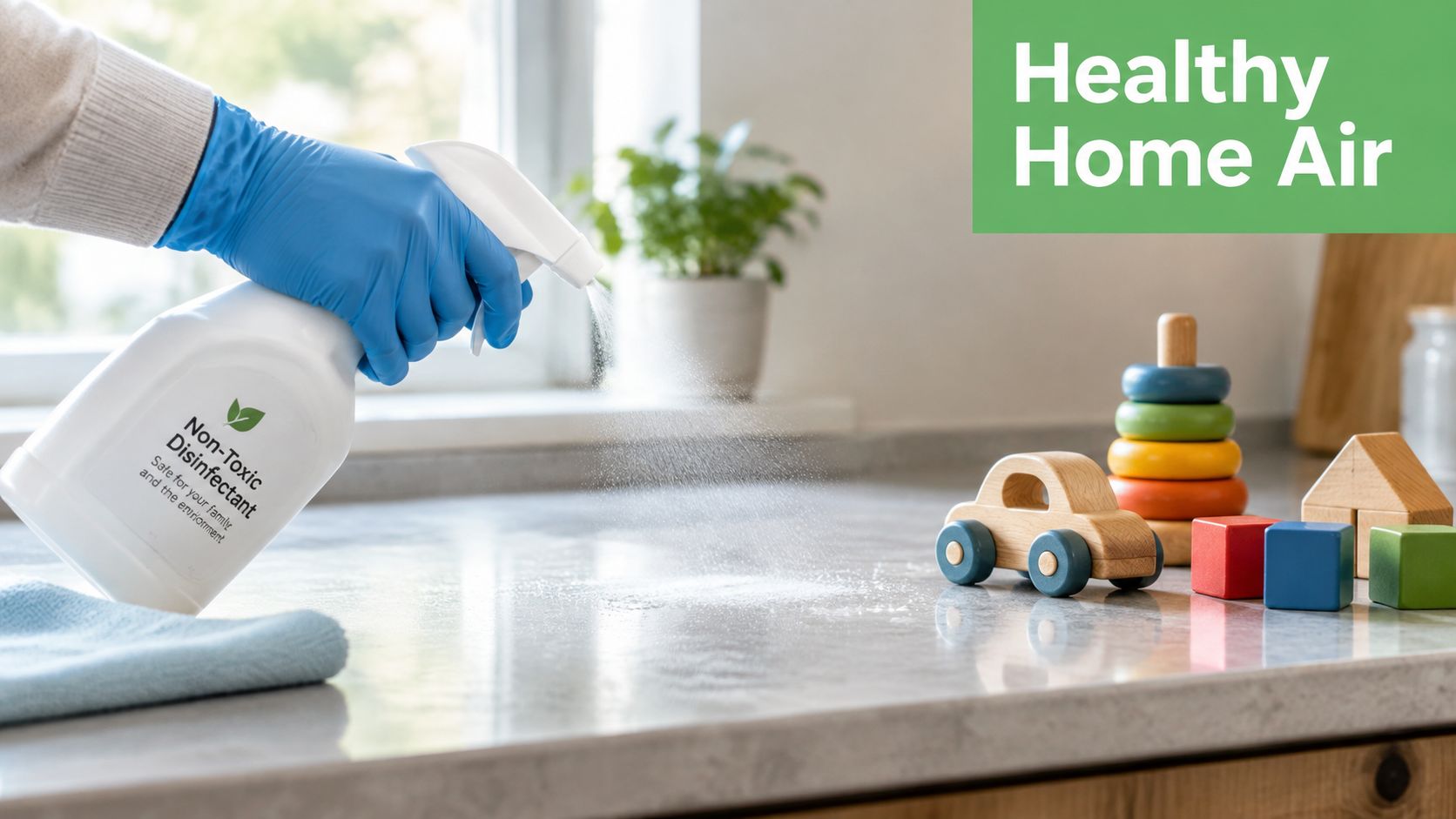
If regular cleaning happens often, product choice matters more than people think. Fragrance-heavy products can be rough on sensitive households. Bleach and ammonia aren't the only path to a sanitary home. For many families, especially those with pets or children, fragrance-free and lower-residue routines are easier to tolerate consistently.
If that's your concern, it helps to understand the basics of pet-safe cleaning products and why ingredient choices matter in homes where floors, fabrics, and shared surfaces get constant contact.
What cleaning can and can't do for allergens
This part deserves honesty. Cleaning helps, but the evidence on allergen reduction is not as simple as marketing copy usually makes it sound.
A peer-reviewed review of indoor-allergen research found that regular maintenance and cleaning of air-conditioning filters can reduce exposure risks, but another study reported that cleaning methods or frequency were not clearly related to measured house dust mite allergen levels, as discussed in this review of indoor allergen exposure and cleaning evidence.
That means two things are true at once:
- Cleaning can reduce some exposure pathways
- More frequent cleaning does not automatically solve every allergen issue
That's exactly why I prefer a practical approach. Reduce dust reservoirs. Maintain filters. Use products your family can tolerate. Don't assume a stronger scent means a healthier home.
Cleaning is not disinfecting
A lot of homeowners blur these together. They shouldn't.
EPA guidance says a disinfectant must keep the surface visibly wet for the full contact time on the label. If the label says 10 minutes, the surface has to remain wet for at least that long, or more product must be applied, according to the EPA disinfectant contact time guidance.
That's a real operational difference. Wiping a counter dry right away may clean it, but it may not disinfect it.
EPA guidance also notes that some residual efficacy claims require a 99.9% reduction, also called a 3-log reduction, for bacteria and viruses compared with untreated controls within a 1 to 2 hour contact time, as outlined in the EPA residual efficacy claims guidance.
For households with sensitivities, this matters. You want targeted disinfection where it counts, not aggressive chemical use everywhere all the time.
How to Choose the Right Service
Choosing between the two gets easy when you stop asking what sounds better and start asking what condition your home is in.
Pick regular cleaning if this sounds like your home
Your counters, floors, and bathrooms are mostly under control. The house gets messy from normal life, not from months of buildup. You need help staying ahead, not catching up.
Choose maintenance cleaning when your main problem is consistency.
Pick deep cleaning if these signs are obvious
Use deep cleaning when detail areas are telling on you:
- Baseboards look dusty even after vacuuming
- Bathroom fixtures show scale or soap buildup
- Kitchen surfaces feel greasy after wiping
- Window tracks, vents, or corners collect visible grime
- You're moving, renovating, hosting, or restarting after a long gap
If those signs are present, don't try to solve them with a lighter service. That's where people waste money.
The smartest plan for most DFW homes
Most homes do best with a simple decision matrix:
| Home condition | Best choice |
|---|---|
| Already tidy, just hard to maintain | Regular cleaning |
| Looks okay at first glance, but details are grimy | Deep cleaning first, then regular cleaning |
| Allergy-sensitive household with steady traffic | Non-toxic regular cleaning plus periodic deep cleaning |
| Move-in, move-out, post-renovation, seasonal reset | Deep cleaning |
Book a deep clean to create the baseline. Book regular cleaning to keep from losing it.
If you're unsure, inspect three places tonight: baseboards, the shower edge, and the area around your stove. Those spots tell the truth faster than your countertops do.
If your home needs either a reset or a reliable upkeep plan, Gmaids offers both deep cleaning and recurring maintenance cleaning across Dallas-Fort Worth using non-toxic, fragrance-free products and trained, insured technicians. If you want a practical cleaning plan that fits your home's actual condition, visit Gmaids and choose the service that matches the work your house really needs.


Ready for a healthier, cleaner home?


Gmaids is Dallas's original non-toxic house cleaning and maid service green since 2004. We deliver consistent, reliable, eco-friendly cleaning across Dallas–Fort Worth using fragrance-free products that are safe for kids, pets, and allergies, performed by our Certified Cleaning Teams®.
support@gmaids.com