Floor Sticky After Mopping: Causes and Real Fixes
You've mopped the kitchen, the floor looks clean, and then your socks catch on that tacky film. You go over it again, maybe with more cleaner, and somehow it feels worse. If your floor is sticky after mopping, the problem usually isn't that you didn't scrub hard enough. It's that something has been left behind or spread across the floor.
In Dallas, dust, busy kitchens, closed windows during long air-conditioning seasons, and frequent mopping can all make residue easier to notice. But “use less soap” isn't a complete diagnosis. The right fix depends on whether you're dealing with cleaner film, minerals, sugary soil, an incompatible product, or a mop that's putting the mess back down. Here's how to tell the difference and choose a fix that suits your floor.
Table of Contents
- Why Your Floor Feels Sticky Right After Mopping
- The Four Real Causes of Sticky Floors
- A Quick Diagnostic You Can Do in Five Minutes
- The Reset Protocol That Actually Removes Residue
- Matching the Fix to Tile, Vinyl, Laminate, and Sealed Wood
- Why Adding More Cleaner Usually Makes It Worse
- Keeping Floors Sticky-Free Between Deep Cleans
Why Your Floor Feels Sticky Right After Mopping
That tacky feeling is frustrating because the floor can look spotless. You finish mopping, wait for it to dry, then walk across it and feel your socks drag. In a home in Dallas, Plano, or Frisco, the instinct may be to mop again. Resist that urge until you know what's on the floor.
A common cause is cleaner residue. Surfactants loosen and suspend oils and particles, but if the solution is too concentrated, the mop is too wet, or the floor doesn't get a clean-water rinse when needed, a thin film can remain. Once it dries, that film feels tacky and catches dust and soil from everyday foot traffic. Professional cleaning guidance describes detergent-laden water drying on the surface as a way a light film can accumulate over time (how detergent residue can affect floors).
The mop can be part of the problem, too. A pad that's carrying dirty water, grease, or old cleaner can redeposit it as you work. In a kitchen, one pass with a contaminated mop may spread a sticky patch instead of lifting it. Humidity can also make concentrated neutral-cleaner residue feel tackier, so the same floor may feel different as conditions change (why humidity can affect sticky floor residue).
The useful question isn't, “Did I use too much soap?” It's, “What kind of residue is this, and what does my floor tolerate?” The difference matters. A water rinse may lift cleaner film, but it won't solve every mineral deposit or product incompatibility. Start by identifying the pattern before you reach for another bottle.
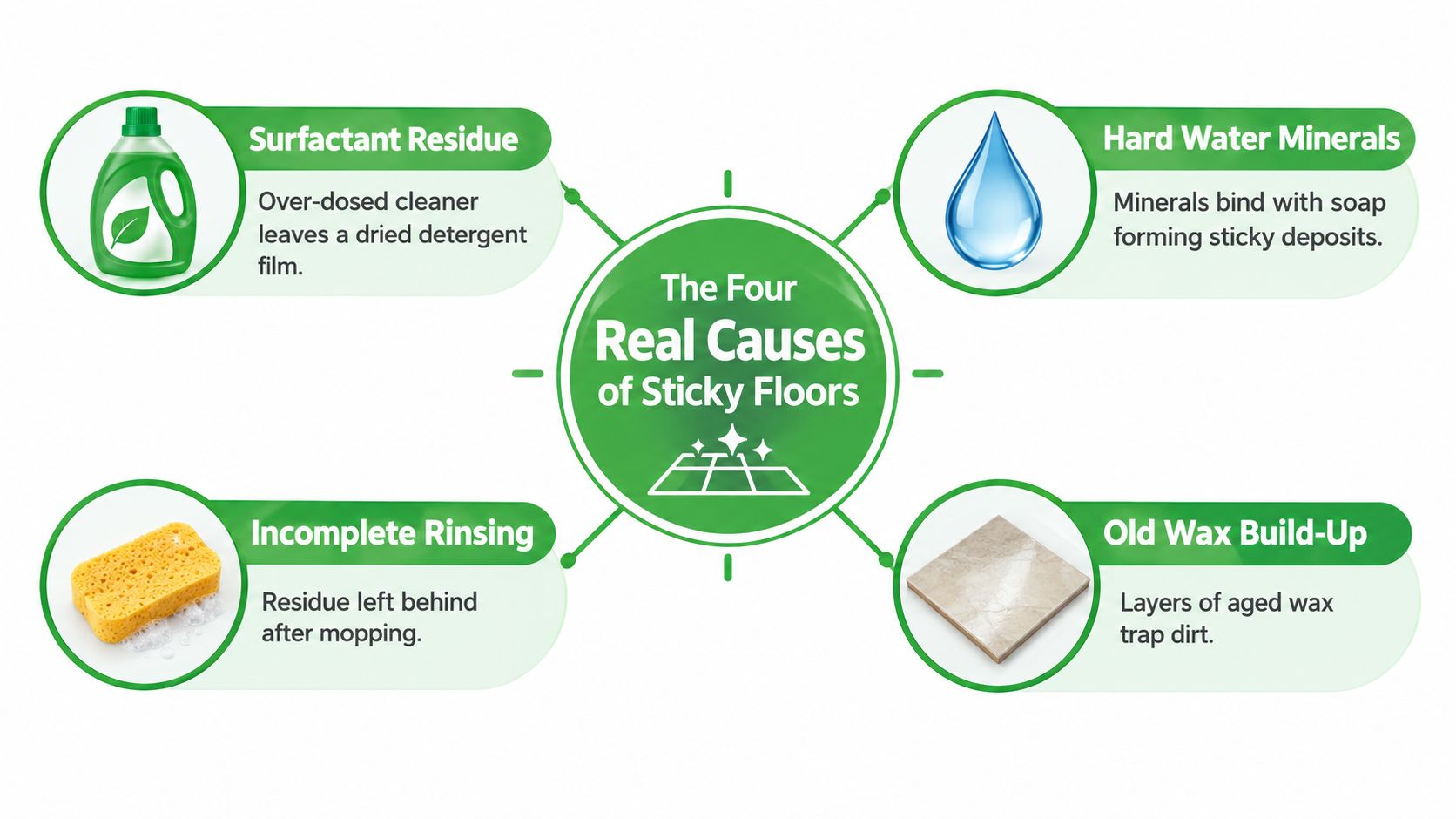
The Four Real Causes of Sticky Floors
Cleaner residue is common, but it isn't the only reason a freshly mopped floor feels tacky. Look closely at the way the stickiness behaves. The texture, location, and speed at which it returns can point to the cause.
- Dried detergent film: Too much cleaner, inadequate rinsing, or a mop that leaves too much liquid behind can produce a dull, grabby surface. The floor may look hazy, and dust can cling to it soon after it dries.
- Sugary or oily soil: Food and drink spills can leave sticky spots, especially in kitchens. If the problem is concentrated near a counter or dining area, residue from a spill may be more likely than a uniform film across the room.
- Hard-water minerals: Minerals in water can remain after evaporation and leave a pale, hazy deposit. Look for a white crust or chalky marks near sinks, bathrooms, and entryways. Don't assume all haze is detergent.
- Incompatible product or accumulated finish layers: A cleaner that doesn't suit the floor's finish can leave a coating or interact with product already on the surface. If the floor feels uneven or looks cloudy in patches, stop layering products and check the flooring manufacturer's care guidance.
A contaminated mop can make any of these problems harder to diagnose. If stickiness returns quickly after cleaning, the pad or water may be spreading residue back over a surface you just treated. Think of a Highland Park kitchen where a mop is repeatedly dipped into the same dirty bucket: a floor can end up coated with what the mop was meant to remove.
The appearance gives clues, not a guaranteed answer. A small test is the better next move.
A Quick Diagnostic You Can Do in Five Minutes
Before you clean the whole room again, test a small area. A clean microfiber cloth and plain water are enough to start, as long as the flooring manufacturer allows damp cleaning.
- Choose a discreet spot. Wipe a small patch with a clean, damp microfiber cloth. Don't flood the floor, particularly if it's laminate or wood.
- Let it dry fully, then feel it. If the patch feels smoother than the surrounding floor, cleaner residue is a strong possibility. If it remains sticky, investigate the floor material, a spill, or mineral deposits before repeating the same cleaning routine.
- Check when the tackiness comes back. Stickiness that returns quickly can point to a contaminated mop or rinse water redistributing residue. Wash or replace the pad and use fresh water before trying another pass.
- Look for a pale crust or isolated sticky spots. White, chalky deposits suggest minerals may be involved. A tacky patch near the kitchen table or counter may instead be food or drink residue. Localized patterns are useful clues.
- Review what you used. Check the label, dilution directions, and whether the product is suitable for your floor. A strong scent doesn't prove that a product cleaned well, and an added fragrance can hide a smell without removing residue.
If plain water improves the test patch, a careful rinse may be appropriate. If nothing changes, don't keep adding cleaner. Identify the flooring and the likely residue first, then follow the product and floor-care instructions.
The Reset Protocol That Actually Removes Residue
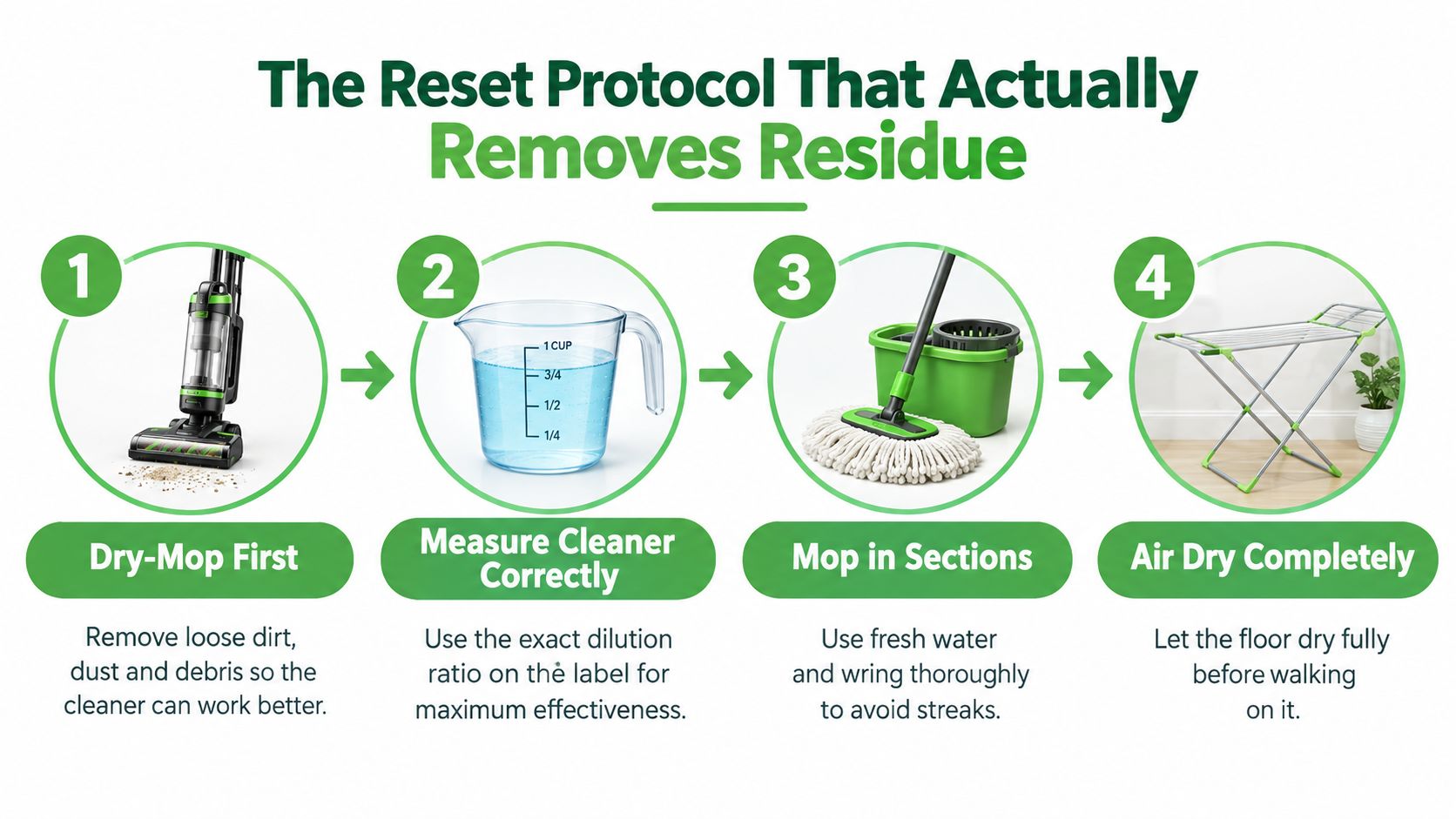
A good reset is controlled, not aggressive. The aim is to remove loose dirt first, clean with the correct amount of product, then lift away the spent solution rather than letting it dry on the floor.
Start by vacuuming or dry-mopping. This collects loose dust and grit before water turns them into a smear. In a pet-friendly home in Lakewood or Uptown, picking up hair and dust first also keeps the wet mop from pushing it into corners and grout lines.
Prepare the cleaner using the measured dilution on its label and a separate, clean bucket. Don't estimate by eye. Cleaning guidance emphasizes that solution concentration strongly affects cleaning performance, and over-dosing combined with skipping a rinse is a common source of tackiness (guidance on cleaner concentration and sticky floors). Use a clean microfiber pad, wring it well, and work in small sections so you can control how much liquid remains on the floor.
After the cleaning pass, make a separate pass with clean water if the product label and flooring instructions allow it. Use a fresh or thoroughly washed pad, and change the water when it becomes dirty. A final dry mop or dry microfiber pass helps remove leftover moisture before it can leave another deposit.
Practical rule: If the floor feels sticky, don't respond by adding more product. Correct the dilution and remove the residue with a compatible rinse.
For another perspective on cleaner use and rinsing, see this residue-free Pine Sol method. Whatever product you choose, its label and your flooring manufacturer's instructions take priority. If the kitchen needs a broader reset beyond the floor, Gmaids' guide to what a deep cleaning includes can help you decide what else needs attention.
Matching the Fix to Tile, Vinyl, Laminate, and Sealed Wood
Don't treat every hard floor as if it were the same material. The safest cleaner and the amount of rinse water depend on the surface and its finish. When you aren't sure, check the flooring manufacturer's care instructions before trying a new product or treatment.
| Floor Type | Best Cleaner Approach | Rinse Pass Needed |
|---|---|---|
| Ceramic or porcelain tile | Use a cleaner approved for the tile and grout. Mop with a well-wrung pad, taking care not to leave solution sitting in grout lines. | A clean-water rinse is useful when cleaner film remains or the product label calls for it. |
| Luxury vinyl plank | Choose a product specifically compatible with the floor's finish. Use a lightly damp mop, especially in newer homes in Frisco and Prosper. | Follow the manufacturer's directions. Use a separate rinse pass if residue remains and the instructions allow it. |
| Laminate | Use a laminate-safe cleaner and a barely damp pad. Excess water can create a different problem, so don't flood it. | Rinse only as permitted by the flooring guidance, with minimal moisture. |
| Sealed wood | Use a cleaner approved for the specific wood finish. Wring the mop thoroughly and avoid unapproved acidic or abrasive products. | Don't assume a rinse is safe for every finish. Follow the floor-care instructions. |
Grout can retain grime and cleaner, so a tile floor may feel tacky in the joints even after the tile surface looks clear. On vinyl, laminate, and sealed wood, the bigger concern may be using a product or amount of water that the finish cannot handle. The product label is not a substitute for flooring guidance, and a general-purpose “natural” remedy isn't automatically compatible.
Vinegar is a good example of why a universal recipe is poor advice. Acidic products may be unsuitable for some stone, grout, and finished surfaces. If you can't confirm the material or finish, use only a cleaner approved for it and avoid experimenting across the whole room.
Why Adding More Cleaner Usually Makes It Worse
A sticky floor makes people reach for stronger soap. Resist that urge. More detergent puts more dissolved material into the water, and whatever the mop leaves behind dries into a thicker film. If your five-minute check pointed to hard-water minerals or a dirty mop head, extra soap accomplishes even less: the deposit isn't soap, so more soap can't lift it. You end up with the same tacky floor plus a fresh layer of residue.
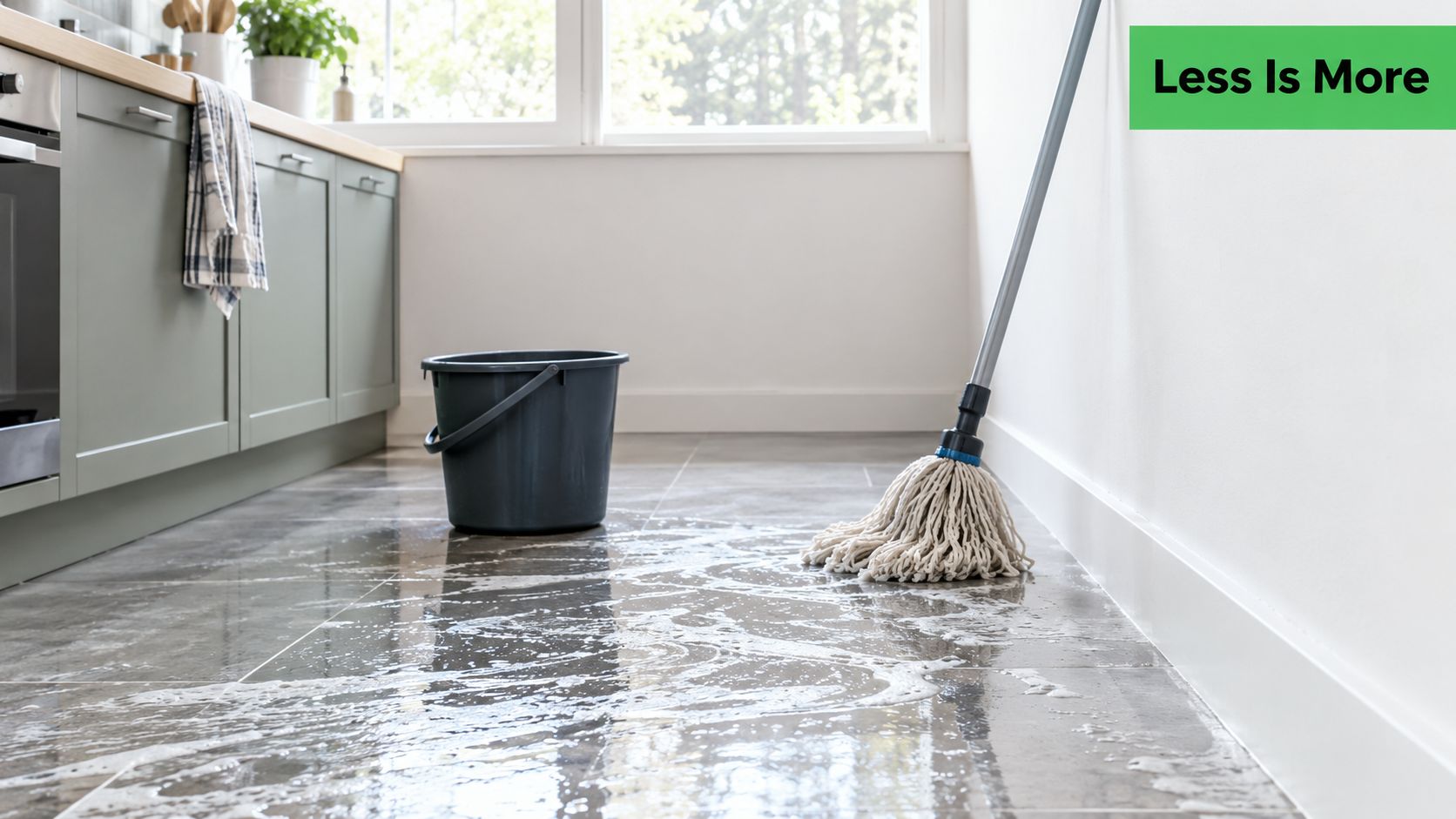
Concentrated "deep clean" dosing has the same problem. Manufacturers set dilution ratios so surfactants lift soil without leaving a film, and doubling the dose throws that balance off. No amount of fragrance in the bottle will hide the result, because scent covers odor while the residue stays put. EPA guidance notes that cleaning products and air fresheners can emit volatile organic compounds that may irritate the eyes, nose, and throat, and that some products labeled "unscented" may still contain masking fragrance (EPA guidance on identifying greener cleaning products). During Dallas's long air-conditioning seasons, skipping fragrance you don't need is the smarter move.
Fragrance-free means synthetic scents are left out; "unscented" doesn't guarantee that. If you're unsure which product suits sealed hardwood, this resource on how to choose the right hardwood floor cleaner offers a useful starting point. Confirm compatibility with your floor's care instructions, measure instead of guessing, and let the diagnosis decide the dose rather than the bottle's promises.
Keeping Floors Sticky-Free Between Deep Cleans
Sticky floors come back when the same mistake gets repeated every week. Start with the cause you diagnosed, then build the routine around it. If the problem is surfactant film, measure cleaner and stop adding a second glug for insurance. If it is hard-water minerals, keep tap water for the wash pass and use filtered or distilled water for the final rinse. If it is sugary soil, wipe spills before they spread; syrup and juice need faster removal, not more detergent. If the mop was the contamination source, launder pads after every use and retire any pad that stays gray after washing.
Change mop water as soon as it turns cloudy. Dirty water is residue in progress. Keep dry soil under control between wet cleans so the mop is not grinding grit into the finish, and a simple daily floor-care checklist helps if dust and crumbs keep beating you to the bucket. For porcelain, follow material-specific guidance on how to clean porcelain tiles properly, then check your grout sealer and tile care notes before improvising.
For households that want low-residue products, Gmaids uses fragrance-free cleaning with plant-derived and mineral-based products, without bleach, ammonia, or synthetic fragrance. Gmaids has served Dallas–Fort Worth since 2004 with trained, background-checked, insured Certified Cleaning Teams®, and recurring maid service is available weekly, biweekly, or monthly when regular upkeep is not keeping pace.
If sticky floors keep returning, let Gmaids handle the cleaning with a fragrance-free approach and floor-appropriate products. Get an instant, flat-rate quote at Gmaids or call 214-997-6918 to arrange a deep clean or recurring maid service in Dallas–Fort Worth.


Ready for a healthier, cleaner home?