

What Does Deep Cleaning Include for Your Dallas Home

Deep cleaning is a top-to-bottom reset that reaches buildup routine cleaning leaves behind. In one 2024 industry roundup, 74% of people reported doing light cleaning regularly, compared with 26% doing thorough deep cleaning, which reflects how deep cleaning works as an occasional, more detailed service rather than a routine wipe-down.
If you're in Dallas and the same dusty baseboards, sticky cabinet handles, or cloudy shower glass keep returning, your home may need more than another maintenance visit. Texas heat, long AC seasons, cedar pollen, pets, and busy family schedules all give dust and grime plenty of places to settle.
This guide breaks down what deep cleaning includes, room by room. You'll also see what's typically extra, how to think about indoor air and allergens, and how a deep reset can help homes in Dallas, Plano, Frisco, and the wider Dallas–Fort Worth area feel easier to maintain.
Table of Contents
What Deep Cleaning Actually Means for Your Home
A Dallas family can keep a biweekly cleaning schedule and still notice the same grime beneath the baseboards, behind the bathroom faucet, and along the lower edge of the shower door. That doesn't necessarily mean the routine clean failed. Basic cleaning maintains the surfaces that need regular attention, while deep cleaning addresses the accumulation points that need a slower, more detailed pass.
Deep cleaning is broadly defined as a whole-home or whole-room service that goes beyond routine maintenance. It may include hand-wiping baseboards, door frames, and window sills, cleaning light fixtures, reaching behind and under accessible appliances, scrubbing grout, and removing heavy soap scum. A professional deep cleaning scope is usually a separate service tier because it involves a different set of tasks, not merely more time spent wiping the same counters.
Three signs that a clean is genuinely deep
It reaches overlooked places. Vents, switches, cabinet exteriors, appliance surrounds, corners, and edges receive attention instead of being passed over.
It breaks down layered buildup. Kitchen grease, bathroom soap scum, hard-water residue, and embedded dust often need appropriate cleaner, dwell time, brushing, or repeated passes.
It resets the home for maintenance. Once neglected areas are brought back to a cleaner baseline, weekly, biweekly, or monthly service can maintain them more effectively.
Practical rule: “Deep” should describe the scope of work, not an impressive label for a standard cleaning with a little extra dusting.
North Texas homes have a particular reason to pay attention to these zones. Long periods of AC use move fine dust and seasonal pollen through returns and supply vents, while pets and open doors bring additional soil indoors. A quick wipe can make a surface look better without removing everything that has collected along its edges.
The sections below make the scope visible, including common add-ons that may not be included unless you request them.
Basic Cleaning vs Deep Cleaning at a Glance
A basic cleaning is designed to keep a reasonably maintained home comfortable between visits. It commonly includes dusting reachable surfaces, vacuuming and mopping floors, wiping counters, cleaning bathroom sinks and mirrors, and tidying the kitchen. The cleaner focuses on visible, regularly used areas.
A deep cleaning adds detailed work to the places routine service usually doesn't reach. That can mean hand-wiping baseboards and door frames, cleaning vents and window sills, washing cabinet fronts, scrubbing grout and shower buildup, and working behind accessible appliances. The difference is best understood as maintenance versus reset.
Use this comparison to decide what your Dallas home needs today.
| Area or Surface | Basic Cleaning | Deep Cleaning |
|---|---|---|
| Floors | Vacuum and mop accessible areas | Vacuum edges and hard-to-reach areas, then mop with detailed attention to buildup |
| Counters | Wipe kitchen and bathroom counters | Clean counters, edges, backsplash areas, and buildup around fixtures |
| Baseboards | Usually light dusting or limited attention | Hand-wipe throughout accessible rooms |
| Door frames | Spot clean as needed | Wipe frames, edges, and reachable tops of doorways |
| Vents | Surface dusting when accessible | Remove or clean accessible covers and detail surrounding grilles |
| Kitchen cabinets | Wipe obvious marks | Clean cabinet fronts, handles, and grease-prone edges |
| Bathroom surfaces | Clean sinks, mirrors, and toilets | Scrub grout, shower walls, tubs, glass, fixtures, and soap-scum areas |
| Appliances | Clean exterior surfaces | Detail appliance surrounds and add interior cleaning when selected |
| Window areas | Clean reachable glass as included | Detail sills, tracks, blinds, and reachable moldings when included |
The boundary isn't identical with every provider, so read the checklist rather than relying on the word “deep.” Gmaids explains the distinction further in its guide to deep cleaning versus regular cleaning.
Choose basic cleaning when the home is already in good condition and needs ongoing upkeep. Choose deep cleaning when buildup is visible, it's been a while since detailed service, allergy concerns make dust control more important, or you're preparing for holiday guests.
Room by Room Deep Cleaning Checklist
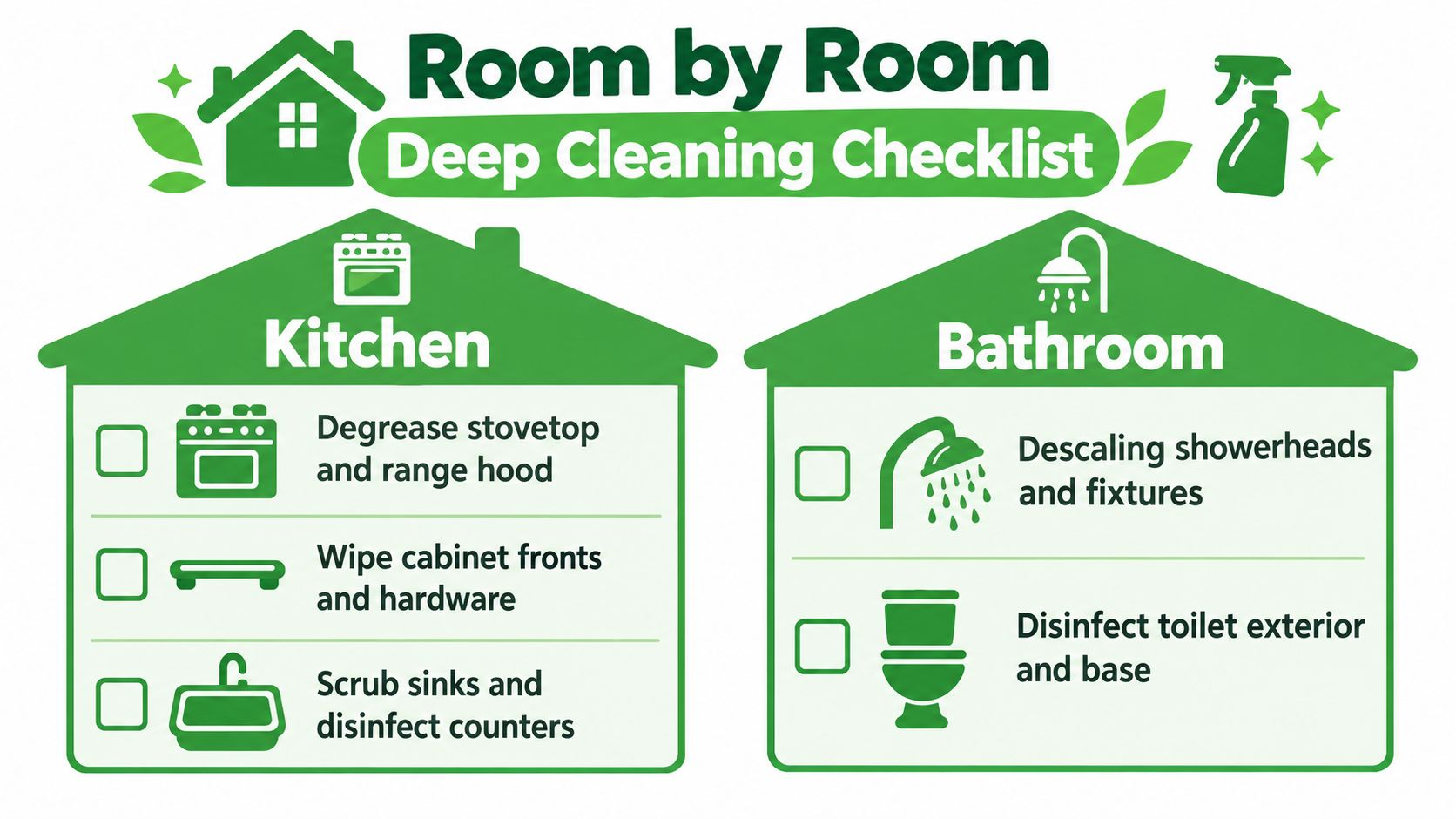
A room-by-room approach makes the answer to what does deep cleaning include much more concrete. The cleaner isn't just moving through the home quickly. Each task responds to a particular type of buildup, from cooking grease in the kitchen to soap scum in the bathroom and fine dust on high surfaces.
Kitchen details
The kitchen usually needs the most targeted degreasing. A deep clean may include the stovetop, burners, range hood, and filter, along with cabinet fronts, hardware, backsplash areas, and the microwave interior and exterior. The sink, faucet, drain area, and counter edges also receive detailed attention because food residue and moisture collect around them.
Small appliances can be moved when accessible so the team can clean behind and beneath them. Professional checklists commonly include appliance interiors such as the oven, refrigerator, and dishwasher, but interior appliance work may be an add-on depending on the service selected. Kitchen deep-cleaning checklists help clarify why grease and food residue require more than a quick surface wipe.
Bathroom work
Bathrooms need mechanical action on grout, shower walls, tubs, shower glass, fixtures, and the area around the drain. A detailed visit can also cover the toilet exterior, toilet base, behind-toilet floor, vanity exterior, mirrors, and the exhaust fan cover.
Hard-water minerals and soap residue bond to frequently wet surfaces. Giving the cleaner enough time to work, followed by appropriate scrubbing, is more useful than applying more product and wiping immediately.
Bedrooms and shared living areas
Bedrooms may include ceiling fan blades, blinds or shutters, window sills and tracks, baseboards, reachable moldings, and careful dusting of décor. If you're comparing a professional service with a DIY project, this resource on how to deep clean a bedroom offers a helpful room-specific reference.
Living and dining areas need attention on built-ins, electronics exteriors, light fixtures, switch plates, vents, and reachable trim. Upholstery vacuuming can go beyond the visible cushions when the material and furniture design allow it.
The connecting spaces
Hallways, entryways, and laundry rooms shouldn't disappear from the checklist. These areas collect tracked-in soil, lint, dust, and fingerprints, especially around doors, switches, shelving, and appliance surrounds. A whole-home reset should identify those transition zones rather than leaving them as an afterthought.
High Touch and Often Forgotten Zones
The spots that attract the most attention during a deep clean aren't always the largest surfaces. A light switch, door handle, vent grille, or refrigerator top may be small, but each can collect oils, dust, and residue between visits.
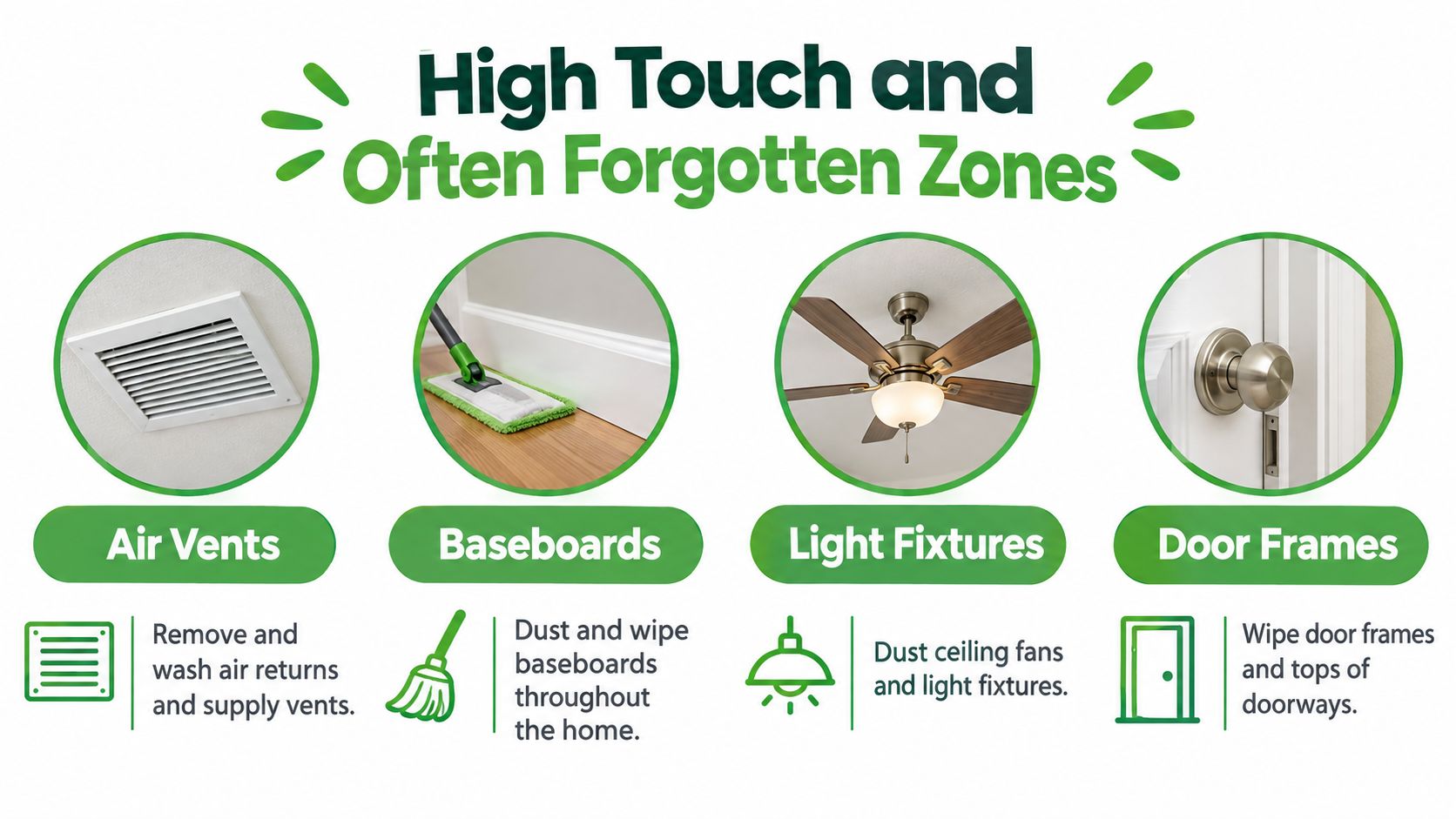
Air returns and supply vents deserve special attention in Dallas homes. AC dust and seasonal cedar pollen can settle on grilles and around accessible vent covers before air movement carries fine particles back into living spaces. Cleaning guidance recommends a top-down process, with high surfaces and vents handled before floors, and filtration used during vacuuming where appropriate. Detailed deep-cleaning guidance also explains why agitation, surface-specific products, and proper disinfectant use matter.
Places worth flagging on your quote
- Air vents: Ask whether accessible return and supply covers will be removed, washed, and replaced, and whether the visible area just inside the register will be vacuumed.
- High-touch points: Door handles, light switches, outlet covers, remote controls, and stair rails collect skin oils. Disinfectants need to remain visibly wet for the label-specified contact time to work as intended, as explained in CDC cleaning and disinfecting guidance.
- Edges and tracks: Baseboards, window sills, and tracks trap dust. New-construction homes in north-suburban areas such as Frisco and Prosper may also hold fine construction residue in these narrow spaces.
- High surfaces: Ceiling fan blades, fan housings, light fixtures, cabinet tops, and the top of the refrigerator collect dust and grease where everyday wiping rarely reaches.
- Wet-zone edges: The lip above a shower door and the seam around a faucet can hold soap residue and mineral deposits.
If a household has pets, young children, or allergy concerns, tell the cleaning service which zones matter most. That helps the team prioritize accessible dust reservoirs and high-touch surfaces instead of treating every room as identical.
How Often Dallas Homes Really Need a Deep Clean
Deep cleaning is occasional, but it isn't rare. A 2024 cleaning-industry roundup reported that 40% of cleaning clients use deep cleaning at least three times a year, while 25% also purchase move-in or move-out cleaning. The same source reported that 74% do light cleaning regularly and 26% do thorough deep cleaning, reinforcing the difference between everyday maintenance and periodic intensive work. See the cleaning-industry frequency data for that breakdown.
A useful starting point is to schedule a reset when buildup begins returning soon after routine service. Dallas homes with pets, children, frequent guests, or indoor allergy concerns may need detailed attention sooner than quieter households. Homes in the north suburbs with new construction or recent renovation may need post-construction cleaning before recurring maintenance begins.
| Household Factor | Suggested Deep Clean Interval |
|---|---|
| Lightly occupied home with consistent maintenance | Occasional reset when buildup becomes visible |
| Pet-friendly household | More frequent attention to vents, upholstery, baseboards, and floors |
| Young children | Focused resets around kitchens, bathrooms, play areas, and touch points |
| Allergy-sensitive household | Prioritize dust reservoirs, vents, high surfaces, and low-irritant products |
| New construction or renovation | Post-construction cleaning before routine service |
| Move or lease transition | Move-in or move-out cleaning as a separate reset |
| Holiday hosting | Schedule before guests arrive, with kitchen, bathrooms, floors, and entryways prioritized |
Watch for practical signs rather than following a calendar blindly. Hazy glass, sticky floors, visible dust on vents, darkened grout, and a bathroom film that returns quickly all suggest that maintenance is working on top of unresolved buildup.
Recurring maid service then keeps the reset from sliding backward. Gmaids offers weekly, biweekly, and monthly service, while a deep clean can serve as the more detailed starting point.
Why Non Toxic Products Matter on a Deep Clean
A deep clean reaches more surfaces and spends more time working on buildup. That makes the product choice important, especially in homes where children crawl on floors, pets nap near baseboards, or someone is sensitive to strong chemical smells.
Fragrance-free isn't the same as unscented. Fragrance-free means synthetic scents are left out entirely. An unscented product may contain masking ingredients designed to cover the smell of other chemicals. For a sensitive Dallas household, ask exactly what “fragrance-free” means before booking.
Plant-derived and mineral-based products can support detailed cleaning without bleach, ammonia, or synthetic fragrance. Mechanical action still does much of the work. A brush, microfiber cloth, vacuum with filtration, warm water, and appropriate dwell time can loosen grease, soap scum, and dust without leaving a strong scent behind.
A clean room shouldn't need fragrance to signal that it has been cleaned.
Questions to ask before booking
- What's in the spray bottle? Ask whether the service uses plant-derived and mineral-based products and whether bleach, ammonia, or synthetic fragrance is excluded.
- How are residues handled? Find out how counters, floors, switches, and other high-touch areas are wiped after cleaning.
- What dwell time is used? Products need adequate contact time for their intended cleaning or disinfecting function.
- Can sensitivities be noted? Tell the provider about children, pets, pregnancy, asthma, allergies, or chemical sensitivities before the visit.
- Is fragrance-free standard? Confirm whether it's the default service or an added request.
For readers considering products for devices that support indoor air care, this overview of green cleaning for air purifiers offers additional context. For a local option, Gmaids' non-toxic Dallas cleaning approach uses fragrance-free, plant-derived and mineral-based products, with no bleach, ammonia, or synthetic fragrance.
What's Usually Extra on a Deep Cleaning Visit
Many people assume a deep-cleaning booking automatically includes every difficult task in the house. That's where quotes become confusing. Interior appliances, windows, high fixtures, and heavy items often require extra labor, specialized tools, or additional safety planning.
Common add-ons include:
- Interior oven cleaning: Racks, door glass, and baked-on residue require additional time.
- Refrigerator and freezer interiors: Shelves, drawers, gaskets, and empty compartments need separate handling.
- Cabinet and pantry interiors: These require the homeowner to remove food, dishes, and stored items first.
- Interior windows, tracks, and screens: Glass, frames, tracks, and screens may be priced separately.
- High ceiling fans and chandeliers: Work above normal reach can require special equipment and added safety precautions.
- Garage and patio sweeping: Exterior or semi-exterior spaces may fall outside the home's standard scope.
- Laundry folding and bed linen changes: These are household support tasks rather than surface-cleaning tasks.
- Post-construction dust removal: Fine dust and residue after a build or renovation may need a dedicated post-construction service.
Consumer guidance also notes that interior oven cleaning, refrigerator cleaning, and exterior window washing are frequently excluded or added on. Don't assume a deep-clean label includes them.
| Add-On Task | Why It Costs Extra | Typical Pricing Style |
|---|---|---|
| Oven interior | More labor and baked-on residue | Flat-rate task add-on |
| Refrigerator or freezer interior | Shelves and drawers need emptying and washing | Flat-rate task add-on |
| Cabinet interiors | Items must be removed and replaced | Flat-rate task add-on |
| Interior windows | Tracks and screens add detail work | Flat-rate task add-on |
| High fixtures | Reach and ladder safety increase complexity | Flat-rate task add-on |
| Garage or patio | Different surfaces and access conditions | Flat-rate task add-on |
| Post-construction dust | Fine residue requires specialized attention | Separate service or quoted scope |
Move-in and move-out cleaning often bundles many of these tasks, including the inside of the fridge, oven, cabinets, drawers, and closets. A recurring deep clean may treat them as optional upgrades, so walk through the home first and select the extras that solve your actual problem.
Booking a Deep Clean in the Dallas Area
Start with a flat-rate quote that reflects the home rather than a vague hourly estimate. Square footage, bedrooms, bathrooms, condition, and selected add-ons all affect the scope. For a larger home in Plano, Frisco, Richardson, or the Park Cities, an in-home or video walk-through can make the quote more accurate.
Before the team arrives, clear clutter from counters and floors, secure pets, and note any product sensitivities. Tell the provider whether AC dust, pet hair, construction residue, or holiday hosting is your main concern. Confirm parking and entry access too, especially if the team needs to bring vacuums, mops, microfiber supplies, and other equipment.
What the service conversation should cover
- Scope: Confirm which rooms and surfaces are included.
- Add-ons: Ask specifically about appliance interiors, windows, high fixtures, and cabinets.
- Products: Verify fragrance-free, non-toxic products and explain household sensitivities.
- Follow-up: Ask how concerns are handled after the visit.
A deep clean generally takes longer than maintenance service because the team is cleaning edges, buildup, fixtures, and out-of-sight areas. The actual time depends on the home's size and condition, so a reliable provider should set expectations after reviewing the scope rather than promising the same duration for every property.
Gmaids was founded by Juan Chaparro and Karen La Spina and has served Dallas–Fort Worth since 2004. Its Gmaids Certified Cleaning Teams® are trained, background-checked, and insured, and the company provides basic cleaning, deep cleaning, move-in/move-out cleaning, post-construction cleaning, recurring maid service, office cleaning, commercial cleaning, and sanitizing cleaning. The brand promise is “Healthy Homes, Families and Souls. We green clean without toxic chemicals.” You can review the Dallas deep cleaning service and ask about adding recurring service after the initial reset.
Gmaids serves Dallas neighborhoods including Uptown, Preston Hollow, Highland Park, University Park, Lakewood, East Dallas, Lake Highlands, M Streets, Bluffview, Kessler Park, and Bishop Arts/Oak Cliff, along with communities such as Plano, Frisco, McKinney, Allen, Prosper, Celina, Richardson, Addison, Carrollton, Farmers Branch, Coppell, Southlake, Grapevine, Colleyville, Westlake, Flower Mound, Highland Village, and Irving.
Gmaids can help you reset the buildup that routine cleaning leaves behind with non-toxic, fragrance-free deep cleaning for Dallas–Fort Worth homes, including kitchens, bathrooms, vents, baseboards, and other detailed zones. Get an instant, flat-rate quote online through Gmaids or call 214-997-6918 to discuss your home and choose the right service.


Ready for a healthier, cleaner home?


Gmaids is Dallas's original non-toxic house cleaning and maid service green since 2004. We deliver consistent, reliable, eco-friendly cleaning across Dallas–Fort Worth using fragrance-free products that are safe for kids, pets, and allergies, performed by our Certified Cleaning Teams®.
support@gmaids.com