Refrigerator Cleaning Service: What It Covers and Costs
If your refrigerator looks clean and smells fresh, does that mean it's ready to store food safely? Not necessarily. A polished door tells you nothing about sticky drawer tracks, cleaner residue on shelves, or whether the appliance is cold enough. A good refrigerator cleaning service addresses those details without replacing food odors with fragrance.
For Dallas households, the useful questions are practical: Is the interior included? Where will the food stay during cleaning? What's in the spray bottle? And how will the team leave the appliance ready to use?
Table of Contents
- What a Refrigerator Cleaning Service Covers
- Why Fridge Cleaning Is a Food-Safety Task
- How a Fridge Cleaning Visit Works, Step by Step
- Fragrance-Free Versus Unscented Cleaning Products
- Which Fridge Visit Fits Your Move or Season
- How Pricing Works for Refrigerator Cleaning
- Book Your Refrigerator Cleaning Quote Today
What a Refrigerator Cleaning Service Covers
A refrigerator cleaning service empties the fridge, removes shelves, drawers and door bins, washes interior surfaces and the door gasket, rinses, dries, and returns food only after the unit is cold again. That's different from wiping fingerprints off the door.
The refrigerator interior isn't automatically included in every house-cleaning visit. Our Move-In / Move-Out Cleaning includes inside the fridge, oven, cabinets/drawers and closets. Basic Cleaning, Deep Cleaning and recurring visits require a scope check when you book if interior refrigerator cleaning is your priority.
Refrigerator scope by Gmaids service
| Service | Refrigerator scope |
|---|---|
| Basic Cleaning | Appliance exterior and kitchen surfaces; confirm whether the refrigerator interior is included |
| Deep Cleaning | Appliance exterior and detailed kitchen surfaces; confirm whether the refrigerator interior is included |
| Move-In / Move-Out Cleaning | Inside of the refrigerator, plus oven, cabinets/drawers and closets |
| Recurring maid service (weekly, biweekly, monthly) | Kitchen and living-space upkeep; confirm whether the refrigerator interior is included |
| Refrigerator interior add-on | Inside surfaces, shelves, drawers, bins and gaskets; confirm availability when booking |
Find your service row before deciding what else the kitchen needs. Our deep-cleaning kitchen checklist helps distinguish everyday surface work from the detailed tasks you may want included.
An exterior wipe-down handles the door, handles and accessible appliance surfaces. Food-contact interior work requires protected food storage, removable-part washing and careful removal of cleaner residue. Spraying around groceries isn't a substitute for clearing the shelves.
Confirm the kitchen extras
With Deep Cleaning, appliance exteriors are included and interior appliance cleaning is optional. Kitchen add-ons include refrigerator interior cleaning, oven interior deep cleaning, inside cabinets and drawers, and washing a sinkful of dishes.
Dallas booking rule: If there are spills under the shelves, a lingering smell, or the home is changing hands, request the refrigerator interior, not just the outside.
Tell our office which appliance needs attention, including any secondary refrigerator. That avoids booking a kitchen refresh when what you need is a complete interior clean.
Why Fridge Cleaning Is a Food-Safety Task
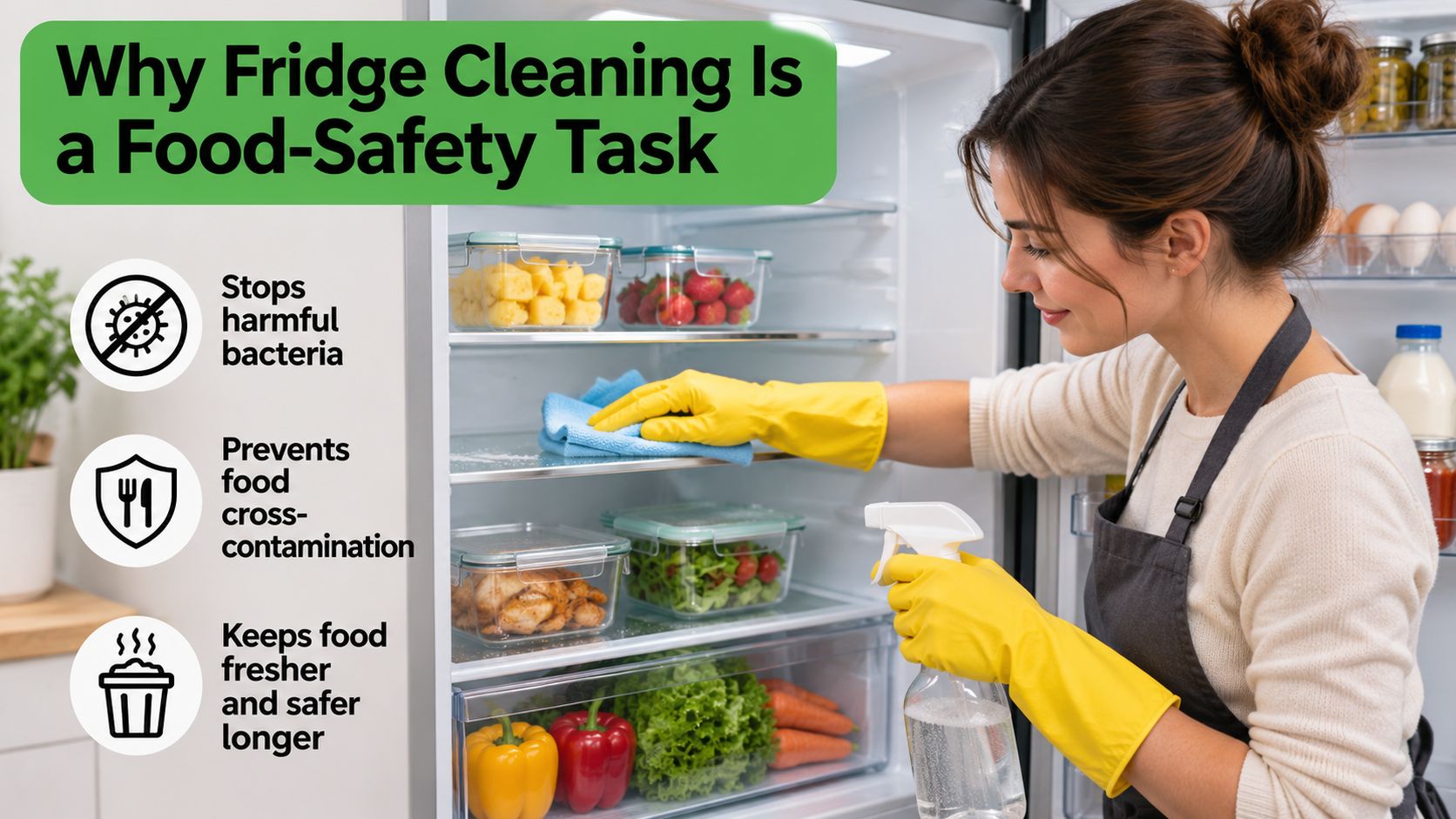
Keep the refrigerator at 40°F or below. The FDA's refrigerator safety guidance gives that target and reports that 23% of consumers' refrigerators weren't cold enough. A separate appliance thermometer lets you check the storage temperature instead of assuming the control dial tells the whole story.
Cleaning and cooling solve different problems. Washing a shelf removes food residue; it doesn't repair a failing thermostat, damaged seal or cooling system. If the thermometer stays high, check the appliance settings and arrange service rather than expecting a deeper scrub to fix it.
Follow the path of a spill
Juices from thawing meat can travel beneath a drawer or collect around a shelf support. The visible puddle may be small while the cleanup extends into tracks, corners and accessible drainage channels.
The USDA's refrigeration guidance recommends immediate spill cleanup and warns against cleaners that can damage finishes or impart chemical tastes. That's why the right approach combines physical soil removal with a surface-compatible product, rinsing and complete drying.
- Door gaskets: Gently open the folds to remove crumbs and sticky residue without stretching the seal.
- Shelf supports and drawer tracks: Use a small soft brush or folded cloth to reach narrow edges.
- Corners and drainage areas: Clean accessible surfaces without pushing debris into openings or removing unfamiliar panels.
Separate maintenance from interior cleaning
Condenser coils need attention too. USDA guidance recommends cleaning them several times a year because dust and lint can interfere with efficient cooling and temperature control. Coil access, however, is a separate maintenance task, not permission to move a heavy appliance or open its housing without checking the manufacturer's instructions.
The practical routine is straightforward: remove spills promptly, treat interior surfaces as food-contact areas, and verify cooling after the work. Thorough drying and an end-of-visit temperature check matter more than a shiny finish.
How a Fridge Cleaning Visit Works, Step by Step
Before the visit, prepare a cooler with ice packs or make room in another working refrigerator. Clear counter space for removable parts, and tell our office about broken shelves, active leaks or an appliance that isn't cooling.
The FDA's safe food-storage guidance recommends cleaning refrigerator walls and shelves with hot water and mild liquid dishwashing detergent, then rinsing and drying. The important distinction is the full sequence, not just applying a spray.
From food removal to restocking
Move food into protected cold storage. Separate leaking or spoiled items for disposal with the homeowner's approval. This keeps food out of the cleaning area and prevents another drip while surfaces are being washed.
Remove shelves, crisper drawers, door bins and removable ice trays. Follow the appliance instructions rather than forcing clips or supports. Removing these components exposes the residue underneath them.
Wash removable parts with a suitable fragrance-free cleaner and warm water. Let cold glass lose its chill before exposing it to warmer wash water. Use a soft sponge rather than an abrasive pad that could scratch the surface.
Clean the interior from upper surfaces downward. Work through walls, shelf supports, drawer tracks and gasket folds with a clean cloth. Use a separate cloth for exterior handles so exterior grime doesn't get carried inside.
Rinse away cleaner residue. Wipe with clean water, refreshing the cloth and water as needed. Food-contact surfaces shouldn't retain a slippery detergent film or chemical smell.
Dry before reassembly. Use clean, dry cloths to reach shelf edges, corners and gasket folds. Standing moisture can hide unfinished cleaning and leave wet surfaces beneath replaced bins.
Reassemble, verify cooling and restock. Check the appliance thermometer before returning highly perishable food. In Texas heat, plan the work so the door isn't left open while the team handles unrelated tasks.
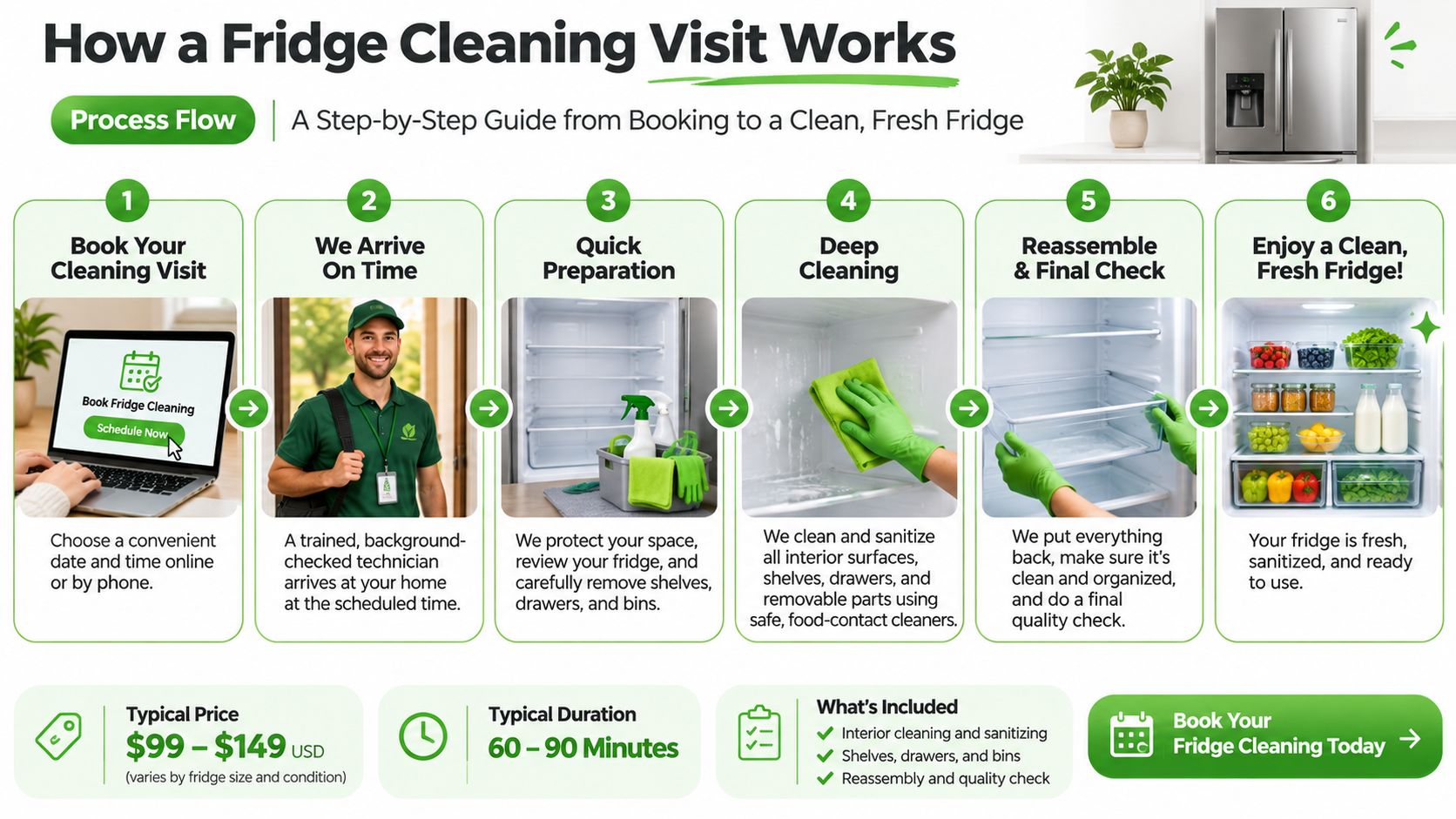
A finished refrigerator has no sticky shelf film, clean gasket folds, no lingering odor and a steady storage temperature. Perfume isn't a finishing step.
Confirm separately whether condenser-coil cleaning is part of the visit. If an odor remains after accessible surfaces are clean, investigate drainage, hidden contamination or appliance problems instead of repeatedly adding cleaner.
Fragrance-Free Versus Unscented Cleaning Products
Fragrance-free isn't the same as unscented. Fragrance-free means synthetic scents are left out entirely. An unscented product may still use masking fragrance to hide the smell of other ingredients.
That distinction matters beside stored food and throughout a sensitive household. The U.S. Access Board's indoor environmental quality guidance notes that added natural or synthetic fragrances can be problematic for chemically sensitive people. A pleasant scent isn't evidence that a surface is clean.
Common label terms compared
| Label term | What it means | What to ask your provider |
|---|---|---|
| Fragrance-free | No synthetic fragrance added | Confirm no fragrance in the product list |
| Unscented | Scent removed, but masking fragrance may still be used | Ask whether masking fragrances are used |
| Eco-friendly or green | Broad marketing term with no single definition | Ask for the product name and label |
| Botanical or plant-derived | Ingredients come from plants, but food-contact suitability still requires appropriate use | Ask how rinsing and drying are handled |
| No bleach or ammonia | Excluded from the cleaning process | Confirm the rule applies to interior and handles |
Gmaids uses non-toxic, fragrance-free, plant-derived and mineral-based products, with no bleach, ammonia or synthetic fragrance. Work is performed by Gmaids Certified Cleaning Teams®, who are trained, background-checked and insured. Our guide to fragrance-free household cleaners explains the label distinction in more detail.
“Natural” doesn't automatically mean appropriate for refrigerator shelves. Product compatibility, dilution, rinsing and drying still matter. Fewer harsh chemicals is a useful priority for homes with kids, pregnant moms, pets, allergies, asthma or chemical sensitivities, not a medical guarantee.
Cleaning and sanitizing are different jobs
Cleaning removes food soil. Sanitizing is a separate step when contamination risk calls for it, using a product suitable for the surface and its food-contact requirements. FDA guidance for contaminated-food incidents places washing before sanitizing; applying sanitizer over grime skips the necessary preparation.
For babies crawling near kitchen floors and pets napping nearby, unnecessary fumes and residues deserve attention beyond the fridge itself.
- Request the product list: We can discuss the products planned for your visit.
- Confirm exclusions: Our no-bleach, no-ammonia approach applies to the cleaning process.
- Discuss the finish: Specify that rinsing and drying matter to you, not just odor removal.
Which Fridge Visit Fits Your Move or Season
Say you're leaving a Dallas rental and collecting the last groceries before handing over the keys. The refrigerator needs more than a tidy front: the next occupant needs clean drawers, dry shelves and no leftover food residue. Our Move-In / Move-Out Cleaning combines appliance interior and exterior cleaning with kitchen and bathroom sanitization, floor detailing, baseboards and surfaces.
A new-build move in Plano or Frisco calls for a different inspection. Look inside the appliance before loading groceries, especially if trades have continued working around the kitchen. If construction dust remains elsewhere, pair the move-in service with Post-Construction Cleaning rather than treating the refrigerator as the whole cleanup.

Visit type by situation
| Situation | Fridge priority | Service to request |
|---|---|---|
| Moving out of a rental | Interior, drawers, door seals and odor check | Move-In / Move-Out Cleaning |
| Moving into a new build in Plano or Frisco | Clean interior before the first food goes in | Move-In Cleaning; add Post-Construction Cleaning if trade dust is present |
| First cleaning in a Dallas home | Interior plus exterior, shelves and gaskets | Deep Cleaning with refrigerator interior add-on |
| Spring or winter allergy reset | Door seals, handles and shelf edges | Deep Cleaning with refrigerator interior add-on |
| Hosting prep | Quick interior tidy and shelves | Basic Cleaning with refrigerator interior add-on |
| Busy weekly routine | Keep the fridge tidy between visits | Weekly or Biweekly Recurring Cleaning |
Match seasonal work to its actual purpose
North Texas has overlapping allergy seasons, including winter mountain cedar and spring tree pollen, according to Parkland Health. Refrigerator cleaning won't remove outdoor pollen from the whole home. It can address dust and food residue on handles, door seals, shelf edges and other frequently touched surfaces without adding unnecessary fragrance.
Deep Cleaning is recommended for first-time visits, seasonal resets and homes that haven't been professionally cleaned recently. For holiday hosting, a lighter Basic Cleaning with the interior add-on may fit better if the rest of the house is already maintained.
Pet-friendly households and busy professional families can pair an occasional interior add-on with recurring upkeep. Weekly kitchen cleaning doesn't mean dismantling refrigerator shelves every week, so keep those scopes distinct when scheduling.
How Pricing Works for Refrigerator Cleaning
Refrigerator cleaning is priced around the scope of the visit, home size and condition, and whether the interior is included or added. A move-in or move-out clean with empty storage areas is different from kitchen upkeep around a fully stocked refrigerator. Food residue, sticky shelves and door seals take more time than a quick exterior wipe, and that affects the quote.
Our online instant quote shows the exact flat-rate price before you commit to booking. Move-in, move-out and customized plans are quoted through our office, where you can explain deadlines and appliance needs. Customized cleaning plans are priced by contacting the Gmaids office. For broader budgeting context, our professional house-cleaning rates guide helps you compare service scopes rather than unlike quotes.
Prepare the details that affect your quote
- Service choice: Identify Basic Cleaning, Deep Cleaning, a move, or recurring upkeep.
- Interior scope: Say explicitly whether you need inside the refrigerator cleaned.
- Appliance count: Include kitchen, garage and other refrigerators needing attention.
- Current condition: Mention hardened spills, persistent odors or hard-to-reach areas.
- Household needs: Share pet concerns, allergies and product sensitivities before scheduling.
A one-time visit suits a move, first cleaning or seasonal reset. Weekly, biweekly or monthly recurring maid service suits steady kitchen and living-space maintenance. Weekly recurring cleaning costs $163.11 per visit, biweekly recurring cleaning costs $180.78 per visit, and monthly recurring cleaning costs $230.83 per visit. Monthly recurring cleaning is done every 4 weeks. Compare what each plan includes, not just the final amount.
Budget advice: Don't pay for a broader service merely because its name sounds more thorough. Select the visit your home needs, then confirm refrigerator interior coverage.
Deep Cleaning includes appliance exteriors, while interior appliance cleaning is optional. Move-in/move-out cleaning includes appliance interior and exterior cleaning, kitchen sanitization, floor cleaning and detailing, and baseboards and surfaces. Kitchen add-ons include refrigerator interior, oven interior deep cleaning, inside cabinets and drawers, and washing a sinkful of dishes.
You'll receive a 72-hour email reminder, and you can reschedule free with 3+ days' notice. For a useful flat-rate quote, provide appliance details before booking rather than adding them when the team arrives.
Book Your Refrigerator Cleaning Quote Today
Gmaids has provided non-toxic, fragrance-free house cleaning across Dallas–Fort Worth since 2004. Every visit is handled by trained, background-checked and insured technicians who bring their own supplies, so nothing harsh ends up near the shelves where your food sits.
The fastest route is the instant quote tool, which shows your exact flat-rate price in 60 seconds before you commit to a booking. Prefer to talk it through? Call 214-997-6918 to discuss a move-out deadline, refrigerator interior cleaning or product sensitivities in your household.
One detail matters more than the rest: say you want the inside of the fridge cleaned. That interior work comes standard with move-in and move-out visits, while a deep cleaning treats it as an optional add-on, so naming it upfront keeps both the scope and the quote accurate. The same goes for what goes in the spray bottle. Mentioning allergies or sensitivities before scheduling lets the team confirm the fragrance-free products your kitchen needs.
Moves and renovations often mean fielding calls from contractors, property managers and cleaners at once. The Heyline guide to contractor call coverage explains how those calls can be handled while you coordinate the rest.
Tell us what needs attention, and we will confirm the scope before your appointment, with our satisfaction policy behind the work.
Gmaids offers fragrance-free refrigerator interior cleaning with house-cleaning visits that fit moves, seasonal resets and everyday kitchen upkeep. Visit Gmaids for an instant, flat-rate quote online, or call 214-997-6918 to confirm your refrigerator cleaning needs. Healthy Homes, Families and Souls. We green clean without toxic chemicals.


Ready for a healthier, cleaner home?