Cleaning Routine for Working Moms That Actually Fits

You don't need a better color-coded schedule. You need fewer jobs with your name on them. That's the uncomfortable truth most advice about a cleaning routine for working moms skips, because it's easier to sell a printable than to tell a tired parent in Dallas to stop trying to run her house like a second office. Drop the perfect plan. Keep the house livable, protect your evening, and make other people, or a recurring team, own whole pieces of the work.
Table of Contents
Why Perfect Cleaning Routines Fail Working Moms
It's 6:40 in Lakewood. Pickup ran late, dinner hasn't started, and the kitchen already looks unfinished even though someone wiped it this morning. A perfect routine assumes you have an empty hour waiting for instructions. You don't.
Paid work doesn't shrink the house. It squeezes the same work into less time, with less sleep at the end of it. A Pew Research Center analysis of how mothers spend time at home using pooled American Time Use Survey data from 2003 to 2012 found working mothers spent an average of 14 hours per week on housework, compared with 23 hours for mothers who did not work for pay, a difference of 9 hours weekly. The same analysis found working mothers had less time available for leisure and sleep.
That 9-hour gap isn't found time. The floors still collect crumbs, the bathrooms still need attention, and laundry doesn't care about your meeting schedule. You're fitting maintenance around a job, not replacing one with the other.
The Childcare Math Gets Harder With Little Kids
Working mothers in that analysis spent 11 hours per week on childcare, compared with 18 hours for stay-at-home mothers. Mothers with children under age 6 spent about 16 hours weekly on childcare, compared with 7 hours among mothers whose children were age 6 or older. If you've got a preschooler, your evening isn't short because you're disorganized. It's short because someone small needs you constantly.
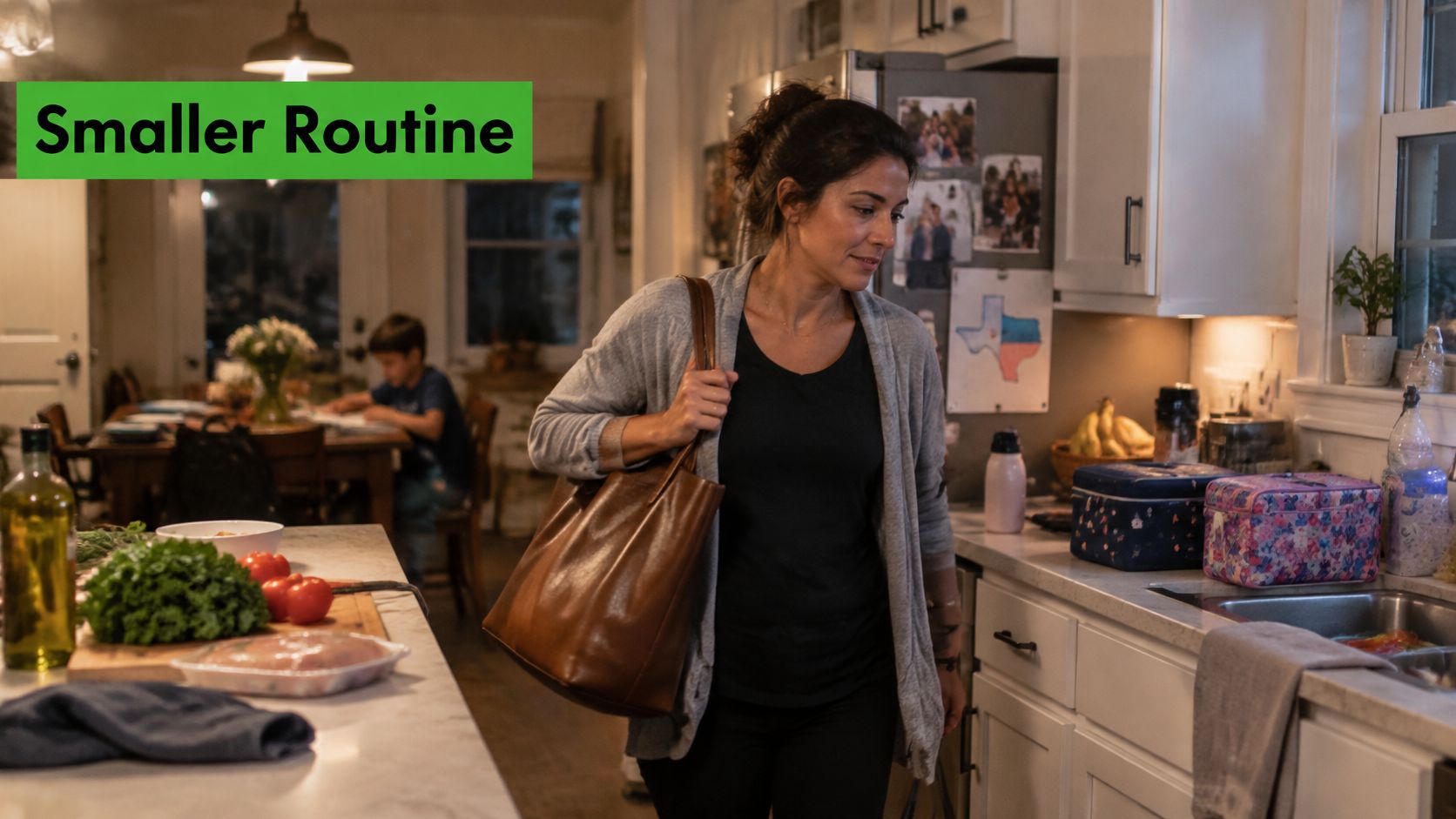
Dallas adds its own pressure. Long air-conditioning seasons keep houses closed up, dust settles where you can see it, and spring oak pollen and winter cedar pollen track in on shoes and paws from Lakewood to Plano. Ignore surfaces for a week during pollen season and you'll know it.
- Stop aiming for done. Aim for maintained, meaning the kitchen works, bathrooms are usable, and floors aren't gritty underfoot.
- Stop saving it for Saturday. A heroic weekend reset costs you the only recovery time you have.
- Stop treating every room equally. The rooms you live in every night matter more than a guest room nobody opened this week.
A routine that only works on a calm week isn't a routine. It's a wish.
The approach that fits a real Dallas week is smaller and more stubborn. You spread essential upkeep across short weekday blocks, you hand over ownership instead of asking for help, and you choose products that don't leave fumes in a closed, air-conditioned house. When the baseline still eats your evenings, you let a recurring team carry it. That's not giving up. That's arithmetic.
Hand Off Ownership Not Just Chores
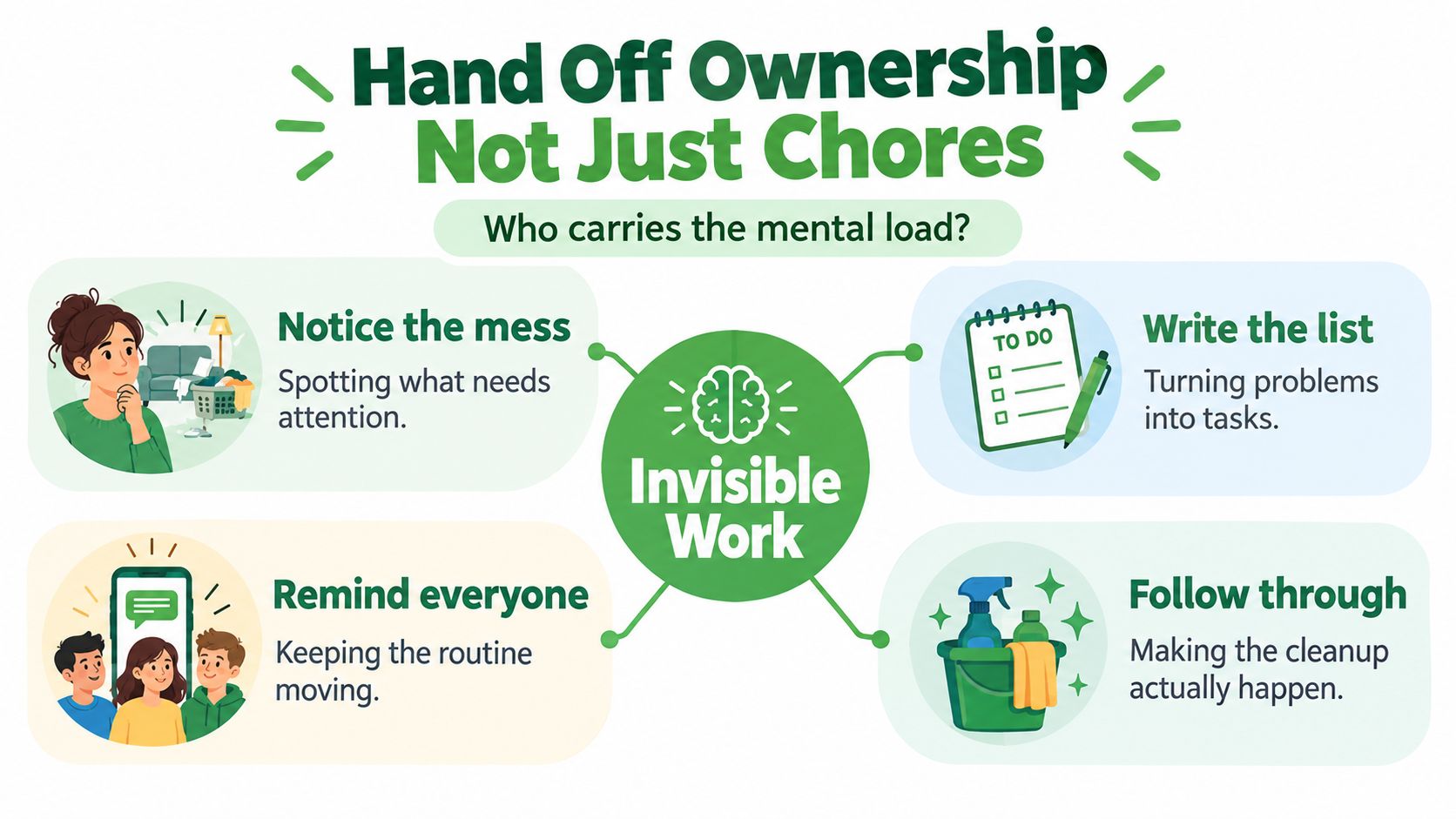
Most schedules fail before anyone picks up a cloth. Mom notices the sticky counter, Mom writes the list, Mom reminds everyone twice, and Mom checks whether it got done. The chore took ten minutes. Managing it took all day.
That invisible work falls unevenly. A 2024 survey and related research on household mental load found mothers handled 71% of household tasks in a survey of 3,000 U.S. parents, while a separate study of 322 mothers found they were responsible for 73% of cognitive household labor and 64% of physical household labor. The latest U.S. time-use data cited there also show women who performed household activities spent 2.8 hours per day on them, compared with 2.1 hours for men.
You're not tired because wiping a sink is hard. You're tired because you're the only person tracking every sink.
Define the Minimum, Then Assign Whole Outcomes
Write a minimum cleanliness standard in plain language everyone can check without asking you. Counters clear, sink empty, floors free of pet hair and crumbs, bathrooms reset, laundry moving. If a room meets that standard, it's done, even if nobody folded the throw blanket the way you would.
Then assign outcomes, not tasks. In a Highland Park or Frisco household, that can look like one adult owning bathrooms through the week and another owning kitchen close-down every night. Kids clear the table, park their shoes, or match socks. The owner notices, decides, and finishes. You don't supervise your own delegation.
That's the same principle good managers use at work when they delegate work with clear authority, giving someone the outcome and the power to carry it out instead of handing over fragments and keeping control. At home it means your partner doesn't text you from the bathroom asking where the cloths live.
- Use one shared checklist. Put it on the fridge with a clear definition of done for each zone.
- Skip the extra app. If you're the only person updating it, you've just hired yourself as the administrator.
- Rotate ownership monthly. Nobody should own toilets forever, and rotation keeps resentment honest.
Practical rule: If the routine stops when you're in a late meeting, traveling, or simply done for the day, you didn't delegate. You just lent out chores.
The goal isn't a fair-looking chart. It's a house that gets reset on nights when you sit down and don't get back up. Test it this week. Name the owners, post the standard, and let someone else carry the noticing for once.
Build a Weekday Cleaning Rhythm
Forget touring the whole house every night. Your weekday rhythm has two parts: a short evening reset and one rotating zone. If you try to do more after work, you'll quit by Thursday and blame yourself by Friday.
Start with the reset, because tomorrow's morning depends on it. Dishes go in, counters get cleared, backpacks and shoes get parked by the door, and pet bowls get washed and refilled. You're not deep cleaning. You're making sure the kitchen and the launch path to school and work don't greet you with yesterday's mess.
One Zone Per Night, High-Touch Spots Every Day
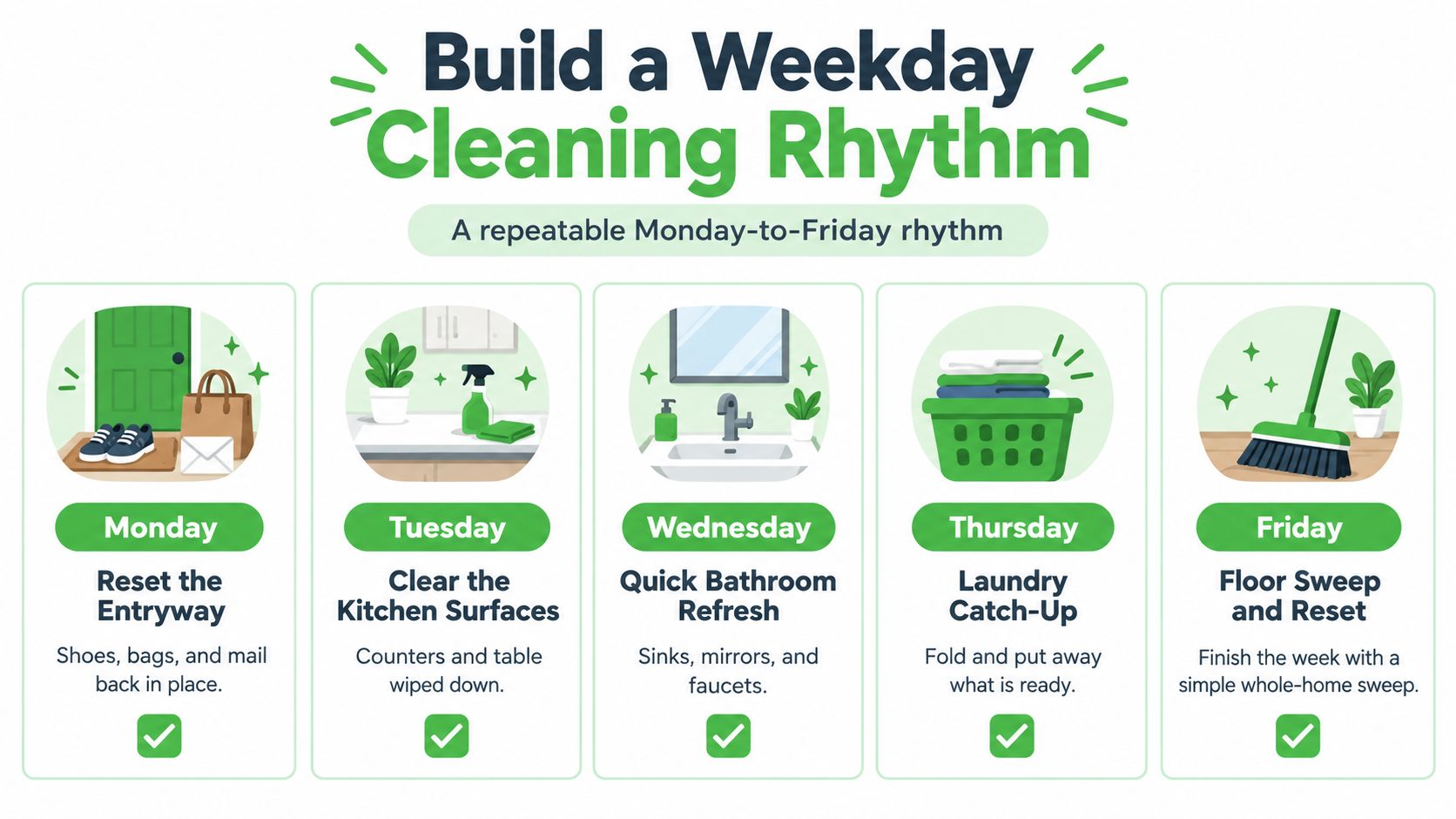
Rotate a single zone on work nights. Monday might be the entry, Tuesday the kitchen in more detail, Wednesday a quick bathroom refresh, Thursday laundry catch-up, and Friday floors. Keep the pattern boring on purpose, the way a simple daily house cleaning list for busy households keeps decisions off your plate. Boring is what survives a hard week.
Layer a brief high-touch pass over that rhythm. CDC cleaning guidance listing high-touch surfaces identifies doorknobs, light switches, countertops, handles, desks, phones, keyboards, toilets, faucets, and sinks as examples, and recommends cleaning frequently touched surfaces regularly. Earlier CDC guidance specifies cleaning them at least once a day, with more frequent cleaning when young children or higher-risk conditions are present.
In a pet-friendly home in Dallas, Plano, or Highland Park, split those spots across the people who already own zones. The kitchen owner wipes handles and counters after dinner. The bathroom owner handles faucets, toilet surfaces, and switches. Whoever parks the backpacks hits the entry doorknob and shared tablets. Nobody does a special lap of the house with a spray bottle, so nobody resents it.
- Kitchen nightly. Counters, sink, stove top, and the fridge handle everyone touches with cooking hands.
- Bathrooms in rotation. A quick pass on sinks, faucets, mirrors, and toilet surfaces beats a Saturday scrub.
- Entry and electronics. Doorknobs, switches, phones, and keyboards collect the day from school, offices, and dog walks.
Broader dusting and full floor care wait for one weekly block, when you've got a little more room to breathe. Baseboards, appliance interiors, and closets wait longer, for a monthly turn or a deep clean before holiday hosting when the house needs more than maintenance.
That line matters. Daily work protects hygiene and sanity. Projects can wait without making anyone sick or the house unlivable. Draw the line clearly, write it on the checklist, and stop renegotiating it every night when you're already tired.
Your rhythm should fit on one page and survive a sick kid, a work trip, or a week of cedar pollen blowing through Dallas. If it doesn't fit on one page, cut it until it does.
Clean High-Touch Spots Without Harsh Products
A fast routine can still leave your house smelling like a chemical headache. In Dallas, where homes stay shut and air-conditioned for months, whatever you spray tends to linger where babies crawl, toddlers drop snacks, and pets nap on cool floors. Strong scent isn't proof anything got clean.
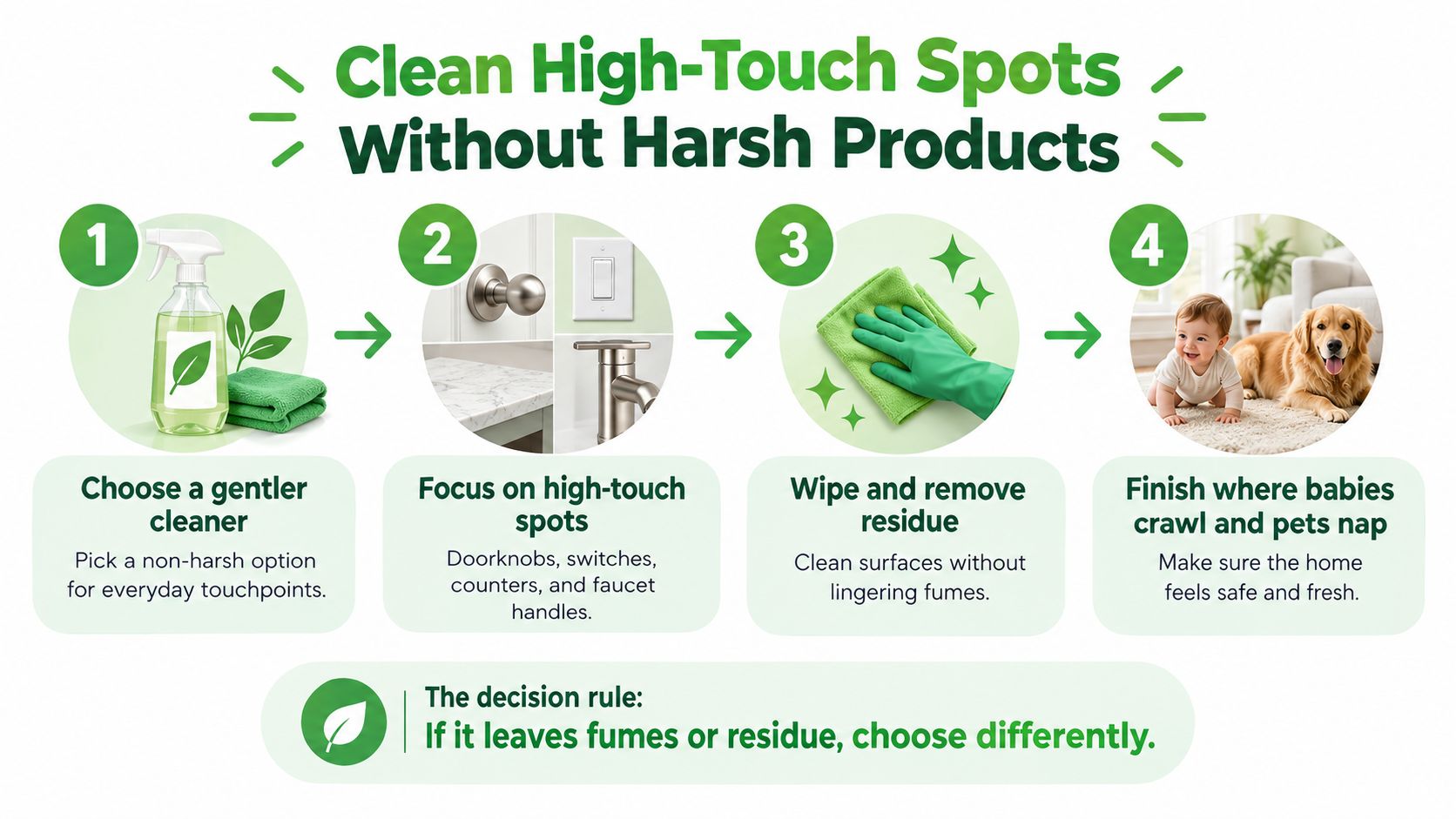
Start with a decision rule that saves you time and product. CDC guidance on when and how to clean and disinfect your home says that in most situations, cleaning with soap and water removes most germs from surfaces, and disinfection at home is generally unnecessary unless someone is sick, someone at higher risk is present, or a sick person has recently visited.
Read that again on a normal Tuesday in Frisco, Richardson, or Oak Cliff. Ordinary cleaning is the routine. Disinfection is the exception you add for a reason, not a nightly performance.
When Illness Changes the Plan
When someone's sick, clean first, then disinfect the spots that matter. Dirt and other impurities can make it harder for disinfecting chemicals to work, so remove visible soil before anything else. Use a product appropriate for the surface, follow the label, and respect the wet-contact time instead of wiping it dry right away, a detail worth understanding when you compare common disinfectant cleaning products and how they should be used. Wiping early can undo the whole point.
Keep that pass targeted. Toilet surfaces, faucets, doorknobs, switches, counters, phones, and keyboards deserve attention. The top of the bookshelf does not, no matter how anxious a stomach bug makes everyone.
- Clean from high to low. Start with cleaner, higher surfaces and move toward dirtier, lower ones so you don't spread grime.
- Separate your cloths. Kitchen cloths stay in the kitchen, bathroom cloths stay in bathrooms, no exceptions.
- Ventilate when you can. Crack a window or run a fan during and after cleaning, even briefly.
Read the Bottle Like It Matters, Because It Does
Skip bleach, ammonia, and synthetic fragrance for everyday upkeep. Choose plant-derived and mineral-based products, use only the amount directed on the label, and keep everything inaccessible to children and pets. Never mix cleaners, especially acids with chlorine products.
Know your words, too. Fragrance-free means synthetic scents are left out entirely. It isn't the same as unscented, which can still include masking ingredients that cover odor with perfume. If fragrance triggers migraines, asthma symptoms, or general misery in your house, that distinction is the whole purchase.
This approach won't promise to prevent illness, and you shouldn't trust any routine that does. It gives you something more useful, high-touch surfaces that get cleaned consistently, with fewer harsh chemicals around kids, pets, pregnant parents, and anyone with allergies, asthma, or chemical sensitivities.
Choose Help That Protects Your Time
At some point the honest question changes. It isn't whether your rhythm works. It's whether you should still be the person carrying the baseline at all. If evenings keep disappearing into bathrooms and floors, the routine isn't broken. It's just assigned to the wrong crew.
You really have three options. Keep everything in-house and accept the weekly cost in time and patience. Add recurring help for the repeatable work and keep only daily life tasks at home. Or book a one-time deep, move-in/move-out, or post-construction clean when the house has slipped past maintenance into catch-up territory. The middle option suits most working parents who can afford it, because it removes the same jobs every visit without asking you to manage a project.
Which Cleaning Cadence Fits a Working Parent
| Cadence | Best fit | Family still owns | Recurring visit covers |
|---|---|---|---|
| Weekly | Young kids, shedding pets, frequent hosting, heavy pollen weeks | Nightly dishes, clutter, laundry decisions | Kitchens, baths, floors, dusting, full reset |
| Biweekly | Most busy professional households keeping a weekday rhythm | Evening reset, high-touch pass, laundry | Kitchens, baths, floors, dusting, mirrors |
| Monthly | Smaller households, older kids, tidy daily habits already working | Most upkeep between visits | Baseline reset, baths, kitchen detail, floors |
Notice what never leaves your house either way. Dishes after dinner, backpacks by the door, and laundry choices stay with the family, because they happen daily. What a team takes over is the scheduled, repeatable cleaning that keeps sliding to your weekends, the work covered by a recurring maid service on a weekly, biweekly, or monthly schedule.
What to Ask Any Team Before You Book
Ask what's in the bottle before you ask about availability. The EPA guidance on identifying greener cleaning products states that volatile organic compounds, or VOCs, in cleaning products can affect indoor air quality and can also contribute to outdoor smog formation. In closed, air-conditioned homes in Uptown, Plano, and Southlake, ingredient-led products and ventilation matter more than a perfumed finish.
Gmaids is one Dallas option built around that idea. Founded by Juan Chaparro and Karen La Spina and serving Dallas–Fort Worth since 2004, the company uses plant-derived and mineral-based products with no bleach, ammonia, or synthetic fragrance, under the promise Healthy Homes, Families and Souls. We green clean without toxic chemicals. Its Gmaids Certified Cleaning Teams® are trained, background-checked, and insured, bring their own supplies, and work on weekly, biweekly, or monthly schedules with the same team when possible.
The trust details are concrete rather than flashy. Gmaids reports serving 7,500+ families, holding a 4.8-star Google rating, and being featured in Forbes and on NBC 5 DFW, with a 24-hour satisfaction policy if something isn't right. Basic cleaning handles routine upkeep, while deep cleaning, move-in/move-out cleaning with inside fridge, oven, cabinets, drawers, and closets, post-construction cleaning, and sanitizing cleaning fit specific moments instead of everyday life.
Pick the cadence that matches how fast your house gets lived in, not the one that sounds most virtuous. Then let the baseline leave your list for good.
Put the Routine to Work This Week
Don't rebuild your whole house system tonight. Start with one calm week and let the evidence from your own evenings make the decisions. You'll learn more from seven tired weeknights than from any chart, including this one.
Tonight, write the minimum standard on one page. Counters clear, sink empty, bathrooms reset, floors passable, laundry moving. Name one owner for kitchen close-down and one for bathrooms, with names, not good intentions. Put the page on the fridge where nobody can claim they couldn't find it.
The Next Seven Days in Dallas
Tomorrow, do only the high-touch reset and park all laundry in a single spot instead of three bedroom floors. Resist adding a bonus project because the reset felt easy. Easy is the point. You're building something you'll still do during oak pollen season with a toddler melting down in the hallway.
Midweek, run one rotating zone and pay attention to friction. Which job does nobody want to own? Which one keeps sliding back to you through reminders and quiet fixes? Write that down without arguing about it yet. That note is your outsourcing list taking shape.
- Tonight. Standard written, two owners named, checklist posted.
- Midweek. One zone per night, friction noted, nobody rescues anyone else's zone.
- Before the weekend. Decide if dust, floors, and bathrooms stay home or move to a recurring visit.
Support services can sit around the routine without becoming more chores for you. A professional organizer can fix the entry closet that defeats every reset, green pest control can handle the kitchen perimeter, and an HVAC checkup helps during long Texas cooling seasons. Hire outcomes, not errands you'll supervise.
Before the weekend, make the call you've been postponing. If bathrooms and floors are still eating the hours you wanted back, get an instant, flat-rate quote online or call 214-997-6918 and price a weekly, biweekly, or monthly visit. A team that brings its own fragrance-free products and trained cleaners removes the baseline. It doesn't hand you another vendor to manage.
Keep the house livable, not perfect. Your kids will remember evenings with you present, not baseboards you defended.
That's the whole shift. A cleaning routine for working moms should return time, not organize its loss more neatly. Protect the evening after work. You already earned it once today.
Gmaids offers non-toxic, fragrance-free recurring maid service across Dallas–Fort Worth, with trained, background-checked teams who bring plant-derived and mineral-based products and carry the weekly baseline so your evenings stay yours. Get an instant, flat-rate quote or call 214-997-6918 to set up a weekly, biweekly, or monthly visit that fits your family's rhythm. Start today at Gmaids and let a healthier clean become the easiest part of your week.


Ready for a healthier, cleaner home?