How to Clean Tub Stains the Non-Toxic Way

A cloudy ring sits at the waterline, and your morning scrub hasn't shifted it. If you're in Dallas, Plano, or Frisco, the problem may not be a lack of effort. A recurring tub mark is a clue: mineral scale, soap film, mold, or a damaged finish each calls for a different response.
The quickest way to waste time is to reach for a stronger product before identifying the stain. More abrasion or incompatible cleaners can leave you with the original mark and a dulled surface. To clean tub stains safely, diagnose the cause first, then use the mildest method suited to the tub.
Table of Contents
- Why That Tub Stain Keeps Coming Back
- Identifying What Is Actually Staining Your Tub
- Clean, treat, rinse, and dry
Why That Tub Stain Keeps Coming Back
A homeowner in a new-build home in Plano or Frisco might scrub a chalky ring around the waterline, rinse, and see it return after a few days of regular use. That doesn't necessarily mean the tub is dirty again. Water can leave mineral deposits as it evaporates, while soap residue can combine with those minerals to form a cloudy film.
Hardness varies from place to place, so a routine that works in one home may disappoint in another. The U.S. Geological Survey's water-hardness guidance explains that water hardness comes from dissolved calcium and magnesium. When hard water is heated or repeatedly evaporates on a surface, calcium carbonate can form scale; hard water can also reduce soap performance and contribute to soap curd on bathtubs. That's why a mark may be a mix of mineral scale and soap residue rather than ordinary dirt.
The consequences of guessing are practical: you can use unnecessary product, scrub a finish until it loses its gloss, or mistake surface damage for buildup that will come off with enough effort. If you're planning a bathroom update because the tub itself is worn, NorCal Construction's bathroom remodel guide offers ideas for thinking about the fixture as part of the wider room.
Start with the cause, not the strongest cleaner. If the stain keeps returning, look for the source of the buildup or moisture before repeating the same treatment.
Treat the mark as a diagnostic clue. A chalky waterline points toward minerals; dark spots in a damp corner raise a different question; a rough, dull patch may be damage rather than dirt. The right response depends on what you see and on whether the tub's material can tolerate the treatment.
Identifying What Is Actually Staining Your Tub
Before cleaning, take a close look in good light. Notice where the stain sits, whether it feels raised or rough, and whether it returns in the same damp spot. This quick check can help you choose a targeted first response instead of trying products at random.
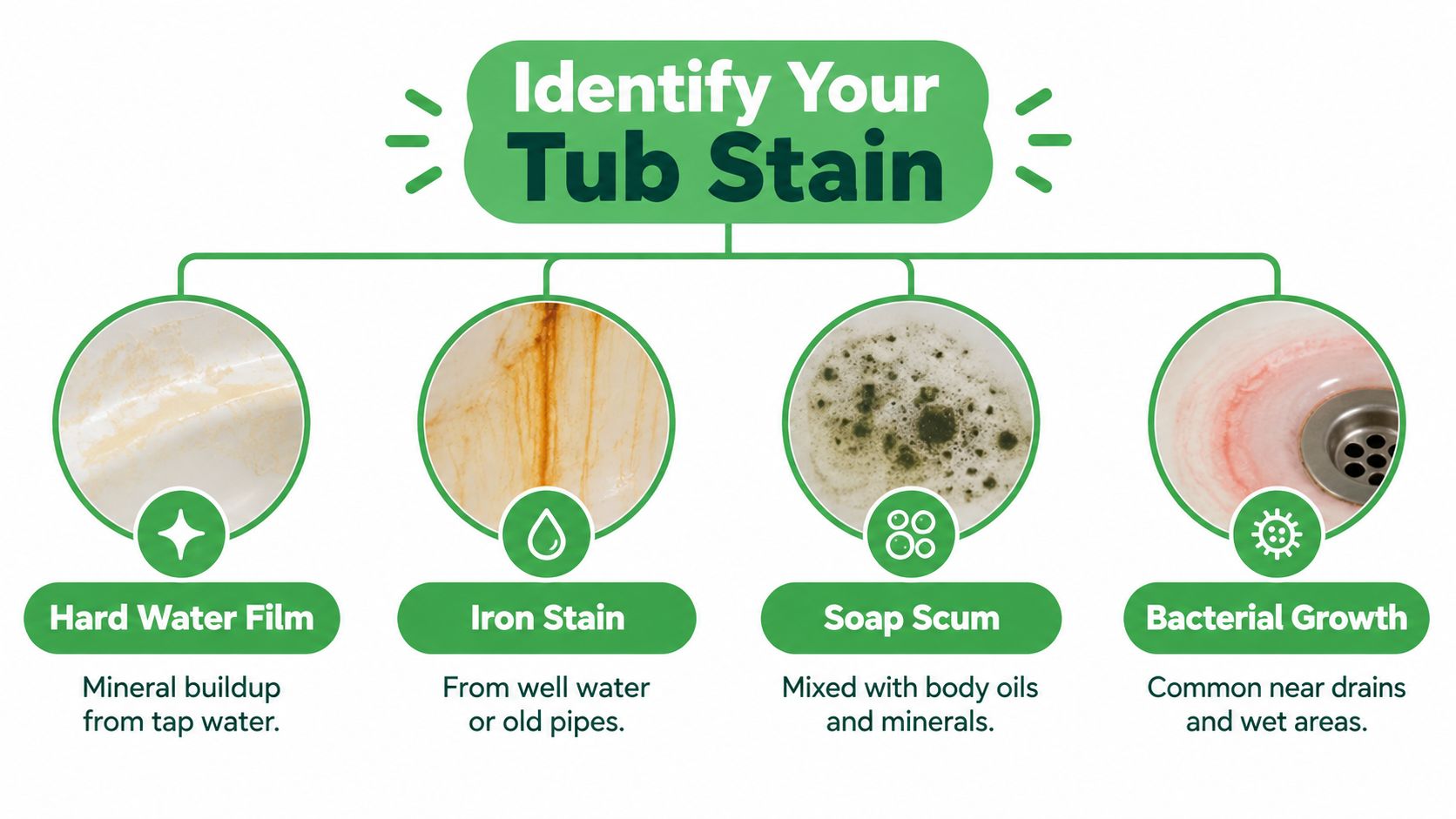
- Chalky white or yellow film: A cloudy waterline or crust near a faucet often points to mineral scale, sometimes combined with soap residue. Start with a neutral, non-abrasive clean, then consider a compatible mild-acid treatment for the mineral deposit.
- Rust-colored streaks: Orange or brown marks near a drain or faucet may be iron staining. Don't assume that a general scrub will solve the source; look for recurring drips or a possible water or plumbing issue, and avoid harsh abrasion.
- Dark spots clustered in grout, corners, or caulk: These may indicate mold or mildew where moisture lingers. Clean hard, nonporous surfaces gently and address dampness rather than repeatedly escalating the product.
- Dull, etched, or rough patches: If the tub's texture or gloss has changed, suspect finish damage. Stop scrubbing. More abrasive cleaning or acid won't restore a worn coating.
North Texas homes can see recurring mineral deposits where hard water leaves residue, while long air-conditioning seasons and bathrooms that stay damp can make moisture-related marks persist. The visual clue matters more than the urge to apply a stronger spray. If your bathroom also has stone, use surface-specific guidance such as this overview of how to remove hard water marks from marble, because natural stone needs different care from a typical tub finish.
Stop rule: If the surface itself feels rough or looks etched, don't keep scrubbing in search of a clean finish. Ask a qualified professional to assess whether the coating needs repair or replacement.
The Safe Cleaning Sequence for Soap Scum and Hard Water
For a tub with soap film and hard-water scale, use a two-stage approach: remove loose organic soil first, then treat mineral deposits. Starting with acid on top of a dirty film can make the job less effective, and applying the wrong treatment to the wrong finish can cause damage. New Mexico State University's guidance on cleaning hard-water deposits and soap film supports mild acids for these deposits and cautions against abrasive or incompatible products.
Clean, treat, rinse, and dry
Begin with a neutral, non-abrasive cleaner and a soft microfiber cloth. Wipe away body oils, loose soil, and soap film, working in small sections. If the remaining mark looks chalky, and the tub's surface is compatible, apply a mildly acidic cleaner such as diluted vinegar or citric acid. Gently agitate with microfiber or a non-scratch pad, then rinse thoroughly and dry the surface.
Never combine products. Don't put an acid on top of a cleaner or disinfectant that hasn't been fully rinsed away, and never combine acidic products with bleach. Ventilate the bathroom, follow product labels, and test an inconspicuous spot before treating acrylic, fiberglass, natural stone, or a refinished tub. Guidance on cleaning acrylic and fiberglass tubs can help you think through material-specific care before you start.
| Tub Surface | Safe First Pass | Acid Treatment | Stop and Call a Pro |
|---|---|---|---|
| Acrylic | Neutral cleaner and soft microfiber | Test a hidden spot first; skip if the manufacturer's guidance rules it out | If gloss changes or the surface roughens |
| Fiberglass | Neutral cleaner and non-scratch pad | Test first and use only if the surface guidance allows it | If the finish is worn or damage is visible |
| Porcelain or enamel | Neutral cleaner and soft cloth | Use a mild acid cautiously after testing | If you see chips, cracks, or persistent discoloration |
| Natural stone | Stone-compatible neutral cleaner | Skip household acids | If marks persist or the stone looks etched |
| Refinished coating | Neutral cleaner and gentle cloth | Don't use unless the coating professional confirms compatibility | If the coating peels, dulls, or feels rough |
Lakewood bathrooms with recurring waterline buildup benefit from careful, targeted treatment rather than aggressive scrubbing. In homes across Irving and Allen, a gentle routine also makes sense when children and pets share the space. For another bathroom buildup zone, these tips on cleaning shower door tracks apply the same principle: remove residue carefully and rinse it away.
When Disinfecting Makes Sense and When to Skip It
A clean-looking tub isn't automatically disinfected, and a disinfected tub isn't automatically free of mineral scale. Stain removal and disinfection are separate jobs. For ordinary household upkeep, a fragrance-free detergent clean followed by thorough rinsing and drying may be all you need. Disinfect only when there's a relevant hygiene reason and choose a product labeled for the tub's material and intended use.
If you do use an EPA-registered disinfectant, follow its label exactly. EPA label examples specify contact times ranging from 3 to 10 minutes, and the product must keep the surface visibly wet for its full labeled time; the EPA label example also requires pre-cleaning visibly soiled areas before a disinfection step. Set a timer and reapply if the surface starts drying before the stated time. Wiping immediately after spraying can prevent the product from completing its labeled contact time.
A strong smell doesn't prove a product is working. Read the label for surface compatibility and wet contact time, and ventilate the room.
Never mix bleach with acidic cleaners or ammonia-containing products. Reactions can release dangerous vapors, and the household-cleaner safety guidance cited by Poison Control describes symptoms that can include coughing, eye irritation, and breathing discomfort. Use one product at a time, rinse between incompatible products, and follow label directions for protective equipment and ventilation.
For a quick decision, ask: Is there a specific reason to disinfect? If not, clean and dry. If yes, select a suitable labeled product and keep the tub wet for its full contact time. These disinfectant product considerations are useful for understanding why the label matters more than a quick spray-and-wipe.
Handling Mold and Mildew the Right Way
Mold on a tub or shower surface is a moisture problem with a cleaning task attached. If moisture remains, the spots can return no matter how vigorously you scrub. The EPA's mold and moisture guidance recommends drying wet areas within 24–48 hours, keeping indoor relative humidity below 60%, and aiming for 30%–50% where possible.
For visible mold on a hard, nonporous surface, scrub with detergent and water, then dry the area completely. Run the exhaust fan during and after showers, squeegee or towel-dry wet surfaces, and fix leaks or a slow tub-spout drip. Damp towels and bath mats left piled up can also keep a bathroom wet, a familiar problem in busy pet-friendly homes in Carrollton and Richardson.
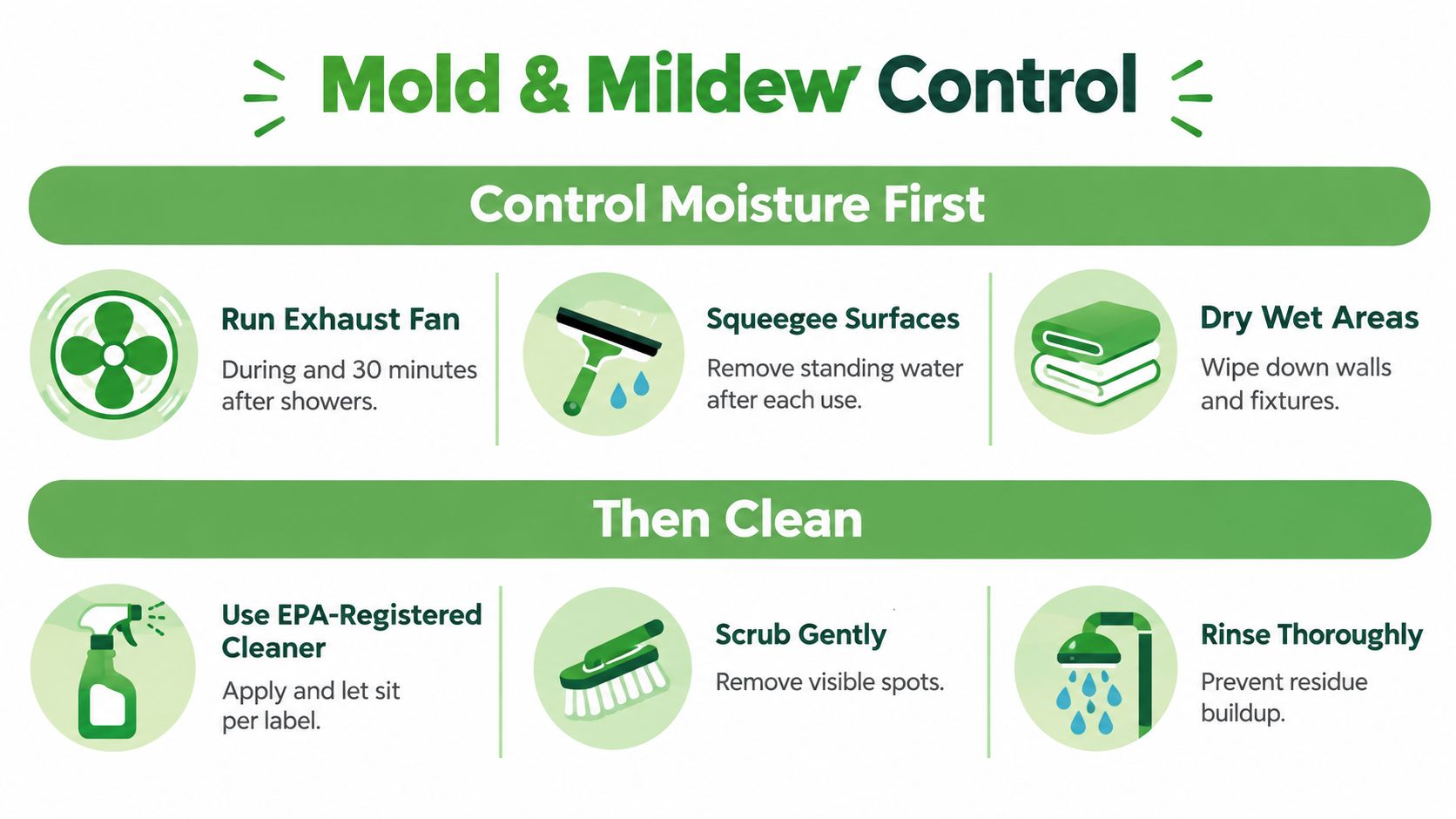
Don't reach for a stronger chemical by default. The CDC's guidance for cleaning and disinfecting says not to mix cleaners or disinfectants unless the label explicitly says the combination is safe. If a product is needed, use it on its own, ventilate, follow the label, and rinse when directed.
An isolated spot on a hard tub surface is different from widespread or recurring growth. The EPA's mold-remediation guidance treats areas from 10 to 100 square feet as generally requiring limited containment and areas greater than 100 square feet as generally warranting full containment; these are remediation thresholds, not a rule that every small spot needs a specialist. If growth keeps returning or you suspect a leak behind the wall, investigate the moisture source and consider professional assessment. For pink or reddish bathroom marks, learn more about what pink buildup in the shower may be before assuming every stain has the same cause.
A Simple Weekly and Monthly Tub Care Routine
A small repeatable routine is easier than waiting for a heavy ring to form. Each week, rinse the tub, remove standing water with a squeegee or towel, and run the exhaust fan after bathing. Drying the surface helps limit the water left behind to form new mineral deposits.
Once a month, clean with a neutral product, then treat a compatible chalky waterline or fixture deposit with a mild acid. Rinse thoroughly and dry. Keep the product sequence simple, and stop if the finish loses gloss or feels rough.

Stop and get help if dark spots keep returning, the tub finish is etched or rough, or you see signs of a leak behind the wall. Don't use repeated harsh treatments to force a damaged surface to look new. For a busy Dallas household, handing off bathroom upkeep can make the routine easier to maintain without layering on stronger products.
Gmaids has served Dallas–Fort Worth since 2004, with fragrance-free cleaning using plant-derived and mineral-based products and teams trained to clean tubs and shower walls. If you'd rather leave the buildup and routine bathroom care to a cleaning team, get an instant, flat-rate quote online or call 214-997-6918.
For a fragrance-free bathroom clean that tackles tub buildup without relying on bleach, ammonia, or synthetic fragrance, explore Gmaids. Get an instant, flat-rate quote online or call 214-997-6918 to arrange a cleaning for your Dallas–Fort Worth home.


Ready for a healthier, cleaner home?