What Is the Pink Stuff in the Shower and How to Remove It

The pink stuff in the shower is most likely a moist bacterial biofilm, often involving Serratia marcescens and its red pigment prodigiosin. Color alone can't identify it, so a pink film in Dallas shower corners, grout, or around the drain is a clue, not a diagnosis.
That's why the same patch can look light pink one week and deeper red or purple later. In a busy Dallas bathroom, especially one that stays damp after morning showers, the film usually tells you there's a moisture-and-residue problem hiding in plain sight.
Table of Contents
Spotting the Pink Stuff in a Dallas Shower
You notice it after a rushed school morning, or right before guests come over for dinner in Dallas. A pink edge gathers where the shower wall meets the caulk, or a slimy line shows up around the drain and fixture bases, and suddenly the bathroom feels harder to ignore.
That film is usually a moist biofilm containing Serratia marcescens, rather than ordinary soap residue alone, and it likes exactly the places where water lingers and residue collects academic source. Soap scum, skin oils, mineral deposits, and damp surfaces help it hang on, which is why it keeps showing up in grout, corners, and around fixtures.
What you're really seeing
The surface color gets all the attention, but the important part is the texture and location. A thin, slippery film in a constantly wet area points toward a living buildup, not just a stain.
Practical rule: if it's pink, slimy, and keeps returning in the same damp spot, think biofilm first.
That matters in Dallas homes where showers work overtime, AC runs for long stretches, and bathrooms can stay cooler and wetter than the rest of the house. In a Frisco or Plano home with a packed family schedule, nobody wants a science lesson before work, so the simplest answer helps: the pink stuff is usually microbial, moisture-fed, and stubborn because the conditions are still there.
The good news is that the fix is straightforward once you know what you're looking at. Identify the film, remove the buildup, and then make the shower less welcoming to it.
What Serratia Marcescens Is

Serratia marcescens is a Gram-negative, rod-shaped bacterium found in soil, water, plants, animals, and other damp environments academic source. Some strains produce prodigiosin, a red pigment that can appear bright red, pink, orange, purple, or pale depending on temperature, the surface it grows on, and colony age.
Why the color shifts
The history matters because it shows that red discoloration was recognized as microbial growth long before modern bathroom cleaning habits. Bartolomeo Bizio identified and named Serratia marcescens after reports of red polenta near Padua in 1819. The pigment can deepen as colonies age, which is why the same shower film may look different from one cleaning to the next historical reference.
A 1979 laboratory study tested 114 strains and found that 99% developed visible colors ranging from violet to pink, while more than 70% of clinical and nonclinical isolates were estimated to be non-pigmented under ordinary conditions academic source. The organism can still be present when the dramatic red color is faint or absent.
Why your shower invites it
Damp surfaces, soap residue, skin oils, and mineral deposits give the film the moisture and nutrients it needs to persist. That is why it collects in shower corners, grout, drains, and around fixtures, especially when the room stays wet after use.
The pink film in a shower is often a mixed community rather than a single microbe acting alone. The color draws the eye, but the true story is a living layer that keeps returning wherever moisture and residue stay behind. Recurrence usually points to a damp surface problem more than a cleaning failure.
Why Color Alone Cannot Identify the Biofilm
A pink bathroom film can look straightforward until you inspect what is growing there. Color hints at a microbial problem, but it does not identify the organism, and it does not prove the film is made of one microbe only.
Mixed communities are common
A peer-reviewed survey found pink biofilms were predominantly associated with Methylobacterium, and some strains formed especially dense biofilms. The same survey also noted that the film survived contact with 1.0% cleaning agents for 24 hours peer-reviewed survey. That helps explain why a quick spray-and-wipe routine often disappoints.
In practice, the pink layer can be a mixed community living in soap residue, body oils, and steady moisture. So “pink mold” usually names the color you see, not the full biology underneath.
| Clue | Bacterial Biofilm | Iron or Manganese Staining |
|---|---|---|
| Texture | Slimy or slippery | Dry, crusty, or gelatinous |
| Location | Wet corners, drains, caulk, shower edges | Fixtures, glass, grout, plumbing surfaces |
| Likely cause | Moisture plus residue | Dissolved metals in water |
| What wiping does | Removes some visible film, but recurrence is common if dampness stays | May lift surface dust, but the stain often returns until the water issue is addressed |
When appearance misleads
Pink or red shower marks can come from different causes. Dry, crusty orange or reddish-brown deposits point more toward iron, while black or dark deposits can suggest manganese or iron-associated bacteria Penn State Extension. A shower wall scrub does not correct a water chemistry issue.
Texture and location are the best first clues. A slick film in a damp corner usually calls for cleaning residue and improving drying. A mark that appears on several fixtures points you toward the water itself. For homeowners comparing treatment paths, find whole-house iron bacteria solutions can help frame the mineral side of the problem before you start guessing.
Biofilm Staining Versus Iron and Manganese Staining
A pink film that feels slick and keeps coming back in a damp corner usually points to biofilm. A mark that stays dry, crusty, orange, reddish-brown, or black on a fixture or glass surface points more toward mineral staining.
The practical difference
Iron and manganese can leave reddish-brown, black, or gelatinous deposits in plumbing and on fixtures, and iron levels around 0.30 mg/L are commonly used as a staining threshold by water-quality guidance Penn State Extension. Once the residue is mineral-based, wiping the shower wall only clears the surface.
For homes with a private well, or for anyone seeing the same marks on several fixtures, the incoming water deserves a closer look. Treatment choices can include oxidation plus filtration, aeration plus filtration, or ion exchange, but the right setup depends on the measured water chemistry.
For a quick check, use the texture and the pattern of return. Slick and returning in wet corners usually means biofilm. Dry and crusty across fixtures usually means it is time to test the water.
If the buildup is more likely mineral than microbial, find whole-house iron bacteria solutions before guessing at a fix.
What to do with the result
A disinfectant will not solve a mineral stain. A descaler will not fix a damp corner that keeps feeding biofilm. The material matters because the source of the residue matters.
Look at where it shows up before you reach for a bottle. That habit saves time, cuts down on overcleaning, and keeps a water issue from being treated like a soap issue.
Health and Odor Concerns Worth Taking Seriously
For most healthy people, pink shower residue is more of a hygiene annoyance than an emergency. It looks bad, can smell stale when it builds up, and makes the bathroom feel less clean than it should.
When the risk picture changes
Municipal guidance says Serratia marcescens is usually not considered a household health risk, but recommends medical guidance for immunocompromised people, and notes that the organism can cause urinary, wound, respiratory, and bloodstream infections in healthcare settings municipal guidance. That's why the same film deserves a calmer, more careful response in some homes than in others.
The concern rises when the bathroom is shared by someone with open wounds, a catheter, contact lenses, or a weakened immune system. In those homes, keep the residue from spreading, improve drying, and avoid stirring the buildup into the air.
A pink stain on the tub doesn't mean anyone's sick, but it does mean the room is staying wet long enough for microbial growth to stick around.
That nuance matters in Dallas homes with pets too. If water bowls, bath mats, or shared bathroom floors sit in the same moist environment, it's smarter to keep the surfaces cleaner and drier without reaching for harsh fumes.
If you're noticing other bathroom odors along with the film, this shower drain guide is a useful next read because drain buildup and pink residue often show up in the same damp corners. The point isn't fear, it's matching the cleanup to the actual problem.
Safe Removal Methods Without Harsh Chemicals
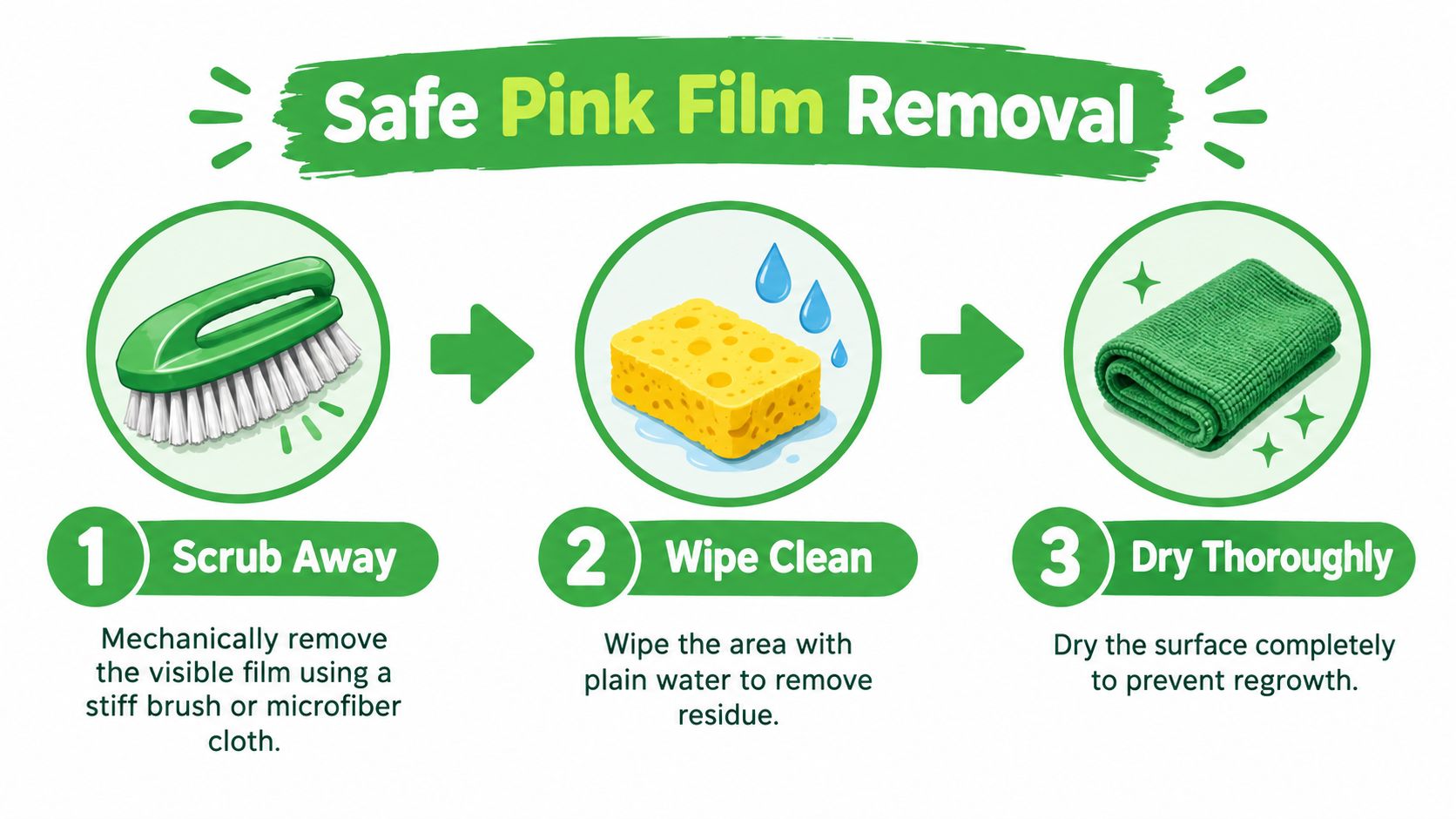
Start with the visible film, not the strongest bottle under the sink. The goal is to lift the buildup, rinse away what feeds it, and leave the surface dry enough that it doesn't rebound right away.
A simple non-toxic routine
- Scrub away the film. Use a stiff brush or microfiber cloth to mechanically remove the visible residue from grout, corners, and around fixtures.
- Wipe clean. Rinse away detergent residue and loosened buildup with plain water so the surface isn't left with a sticky film.
- Dry thoroughly. Wipe the area completely dry after cleaning and after each shower if you can, because damp corners are where the film restarts.
Practical control of pink shower biofilm is source reduction, so mechanical removal matters more than a quick scent-masking spray Durham city guidance. Improve ventilation, dry surfaces after use, and never mix chlorine products with acids or ammonia.
A fragrance-free, plant-derived or mineral-based cleaner can fit into that routine without adding synthetic scent or unnecessary fumes. That's especially helpful in Dallas, Plano, and Richardson homes where kids, pets, and pregnant moms all use the same bathroom air and surfaces.
For grout-specific maintenance, Western Bathroom Renovations grout advice is a useful reference when you're trying to understand why buildup clings so stubbornly to porous lines. Grout and caulk hold moisture differently, and that changes how aggressively you need to scrub.
Wear gloves, keep the bathroom ventilated, and don't turn a wet shower into an aerosol cloud.
If you're cleaning shower tracks too, this shower door track guide pairs well with the same routine because tracks trap residue in a way that's easy to miss.
Preventing the Pink Film From Coming Back
The pink film usually returns because the bathroom stays damp long enough for biofilm to regrow. Cleaning helps, but drying habits do the heavier lifting.
Moisture habits that matter
The City of Frederick advises keeping the bathroom ventilated during a shower and for 30 minutes afterward, and it recommends using a squeegee on shower doors and walls to reduce moisture and the residue that feeds biofilm city guidance. That kind of routine sounds small, yet it changes the surface conditions pink film depends on.
A steady prevention routine is straightforward:
- Squeegee walls and glass. Pull water off shower doors and tile right after use so it does not sit in corners.
- Run the fan. Keep the bathroom fan on during bathing and after, especially in humid Dallas weather and during long AC seasons.
- Leave the door open. Let air move through the room once the shower is finished.
- Fix leaks fast. Slow drips and worn caulk keep surfaces damp even when no one is showering.
Choose gentler disinfecting products for routine upkeep. See our guide to disinfectant cleaning products so weekly maintenance does not depend on harsh chemicals.
Why Dallas homes notice it again and again
In newer homes around Frisco, Prosper, and McKinney, tighter construction can trap moisture if ventilation is not doing enough work. In older Dallas neighborhoods, worn caulk or weak airflow can make the same pink line reappear after every cleaning.
A product like water filtration from Ring Hot Water may appeal to homeowners looking at the shower setup more broadly, but prevention still comes down to drying the room and keeping residue from building up. The organism is naturally present in the environment, so the goal is management, not permanent elimination.
If the pink film keeps coming back, persistent dampness is usually the reason. That points to moisture control, not a lack of effort at cleaning.
Bringing It All Together for a Healthier Dallas Bathroom
The pink stuff in the shower usually means you're seeing a moist bacterial biofilm, not just soap residue. Sometimes it's associated with Serratia marcescens, sometimes pink bathroom biofilms are tied to other organisms such as Methylobacterium, and the color by itself can't tell you which one you've got.
The useful response stays simple. Remove the film mechanically, rinse away residue, and keep the room dry enough that the buildup doesn't have an easy comeback. For most healthy households, that approach is about cleanliness and comfort, while homes with immunocompromised residents, open wounds, or other sensitivities should be more careful about exposure and drying.
In Dallas, that often means paying attention to the details that live in the margins, shower corners, grout, drains, shower tracks, and caulk lines. It also means noticing when a “cleaning problem” is really a ventilation problem, a leak problem, or a residue problem.
Gmaids has served Dallas–Fort Worth since 2004 with non-toxic, fragrance-free cleaning using plant-derived and mineral-based products, and the work is done by Gmaids Certified Cleaning Teams® who are trained, background-checked, and insured. That can be a practical fit for basic cleaning, deep cleaning, move-in/move-out cleaning, post-construction cleaning, or recurring weekly, biweekly, or monthly maid service when the bathroom needs more than a quick wipe-down.
If you're tired of the pink film coming back, Gmaids can help with a cleaner bathroom routine that fits Dallas homes, pet-friendly households, and sensitive households alike. Get an instant, flat-rate quote online at Gmaids or call 214-997-6918 to schedule the kind of cleaning that keeps the shower looking fresher between visits.


Ready for a healthier, cleaner home?