How to Clean Shower Door Tracks Safely
You've wiped the shower glass, rinsed the walls, and still find a dark line of sludge hiding beneath the door. In Dallas bathrooms, that track can collect soap film, mineral scale, hair, dust, and standing water faster than the rest of the enclosure because its low, horizontal channel catches nearly every runoff.
The answer isn't to flood the track with a strong-smelling product. A controlled, fragrance-free method can loosen buildup while protecting the metal finish, concealed drainage openings, indoor air, children, and pets. Here's how to clean shower door tracks safely, without forcing grime beneath the panels or adding bleach, ammonia, or synthetic fragrance to a small bathroom.
Table of Contents
Why Shower Tracks Trap Grime and Toxins
Shower door tracks are a high-deposition zone by design. Their horizontal geometry holds soap residue, mineral scale, and water after each shower, especially in corners and recessed sections. In hard-water areas, a mineral layer can rebuild within just a few showers unless an acidic cleaner such as vinegar or citric acid is used for descaling, as described in this guide to why shower door tracks stay dirty.
That explains the familiar cycle. You wipe the visible surface, the door looks better for a short time, and then a gray or brown line returns beneath the glass. The residue isn't just dirt sitting on top. It's a combination of deposits that cling to metal, seals, and narrow channels where an ordinary cloth can't reach.
Why harsh products aren't the solution
A confined bathroom gives fumes nowhere to go quickly. In Dallas, long air-conditioning seasons can mean closed windows and continued indoor air circulation, so spraying bleach or ammonia near the shower door can make the room unpleasant for kids, pets, pregnant moms, and people with allergies, asthma, or chemical sensitivities. Strong fragrance doesn't make a product safer. Fragrance-free means synthetic scents are left out entirely, not that another chemical has been added to mask the smell.
A better routine uses targeted application, adequate contact time, gentle agitation, and complete drying. Plant-derived and mineral-based products can remove buildup without leaving harsh chemical residues on the floor where babies crawl or pets nap.
If a track is leaking, damaged, or connected to a broader plumbing concern, cleaning won't solve the underlying problem. A resource such as kitchen and bath pipe services can help separate a surface-cleaning issue from a repair need.
Preparing the Track and Protecting Weep Holes
Dry preparation is the step most readers skip, and it's one of the reasons a cleaning session becomes harder than it needs to be. Loose grit, hair, and dust turn into an abrasive paste as soon as liquid is added. That paste can be pushed into corners or dragged across a coated metal finish.
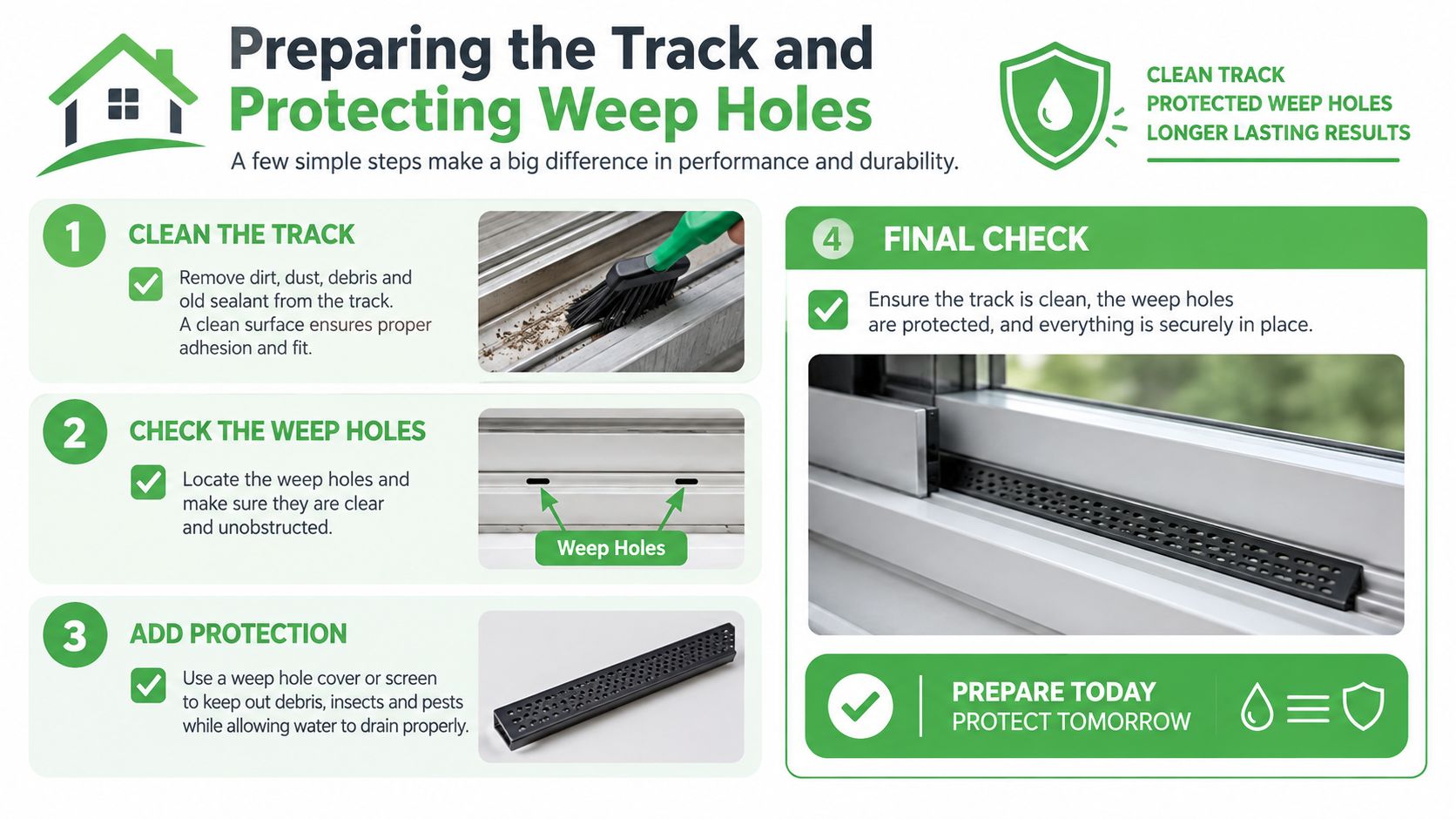
Start with the door closed and the area around the threshold clear. Use a crevice tool or handheld vacuum to lift dry debris from the channel, corners, and exposed sections beneath the panels. If the door slides, move it gently only as far as it normally travels so you can reach the track in sections. Don't force a panel that drags or catches.
Find the drainage points before adding liquid
Many shower tracks have small weep holes or concealed drain openings that allow water to escape from the channel. They may be easy to overlook because they sit beneath a lip, near an end cap, or behind the moving panel. Flooding the track can send loosened sludge toward these openings and under the glass, where it's difficult to retrieve.
Use a flashlight and inspect the full channel before cleaning. Keep liquid on the visible deposit rather than spraying broadly across the entire enclosure edge. A small squeeze bottle, dampened cloth, or cotton swab gives you more control than a pressurized spray.
Practical rule: Loosen residue where it sits. Don't wash a whole track full of grime toward a drain opening.
Protect nearby flooring with a towel, but don't pack material into the weep holes or seal the openings shut. The aim is controlled cleaning, not turning the track into a basin. This preparation also helps preserve door alignment because you're not pushing sludge into rollers, guides, seals, or recessed hardware.
Non-Toxic Descaling and Agitation Techniques
Once the loose debris is gone, choose the mildest method that matches the buildup. Light soap film usually responds to a mild bathroom cleaner and a narrow brush. Mineral scale needs contact time because wiping immediately often removes only the surface.
Apply white vinegar or a mild bathroom cleaner to the affected section, keeping the liquid away from finishes that the manufacturer identifies as acid-sensitive. Let it dwell for 5 to 15 minutes, a practical range supported by this shower-track cleaning guidance. For heavier encrustation, vinegar-soaked paper towels can sit against the deposit for about 15 to 30 minutes, according to this detailed shower-door-track method.
Match the tool to the surface
Use a soft-bristle detail brush, old toothbrush, cotton swab, or pipe cleaner for corners. Work in short strokes instead of grinding back and forth. A plastic scraper can lift softened scale from a flat section, but metal blades, wire brushes, and abrasive pads can scratch anodized aluminum, chrome, or coated finishes.
For buildup that remains after the vinegar dwell, make a paste from baking soda and water. Apply it with a toothbrush or microfiber cloth, allow it to sit for 30 minutes to an hour, then scrub gently, as described in this baking soda shower-door cleaning guide. Baking soda provides mild abrasion, so it should support the cleaning solution rather than replace careful technique.
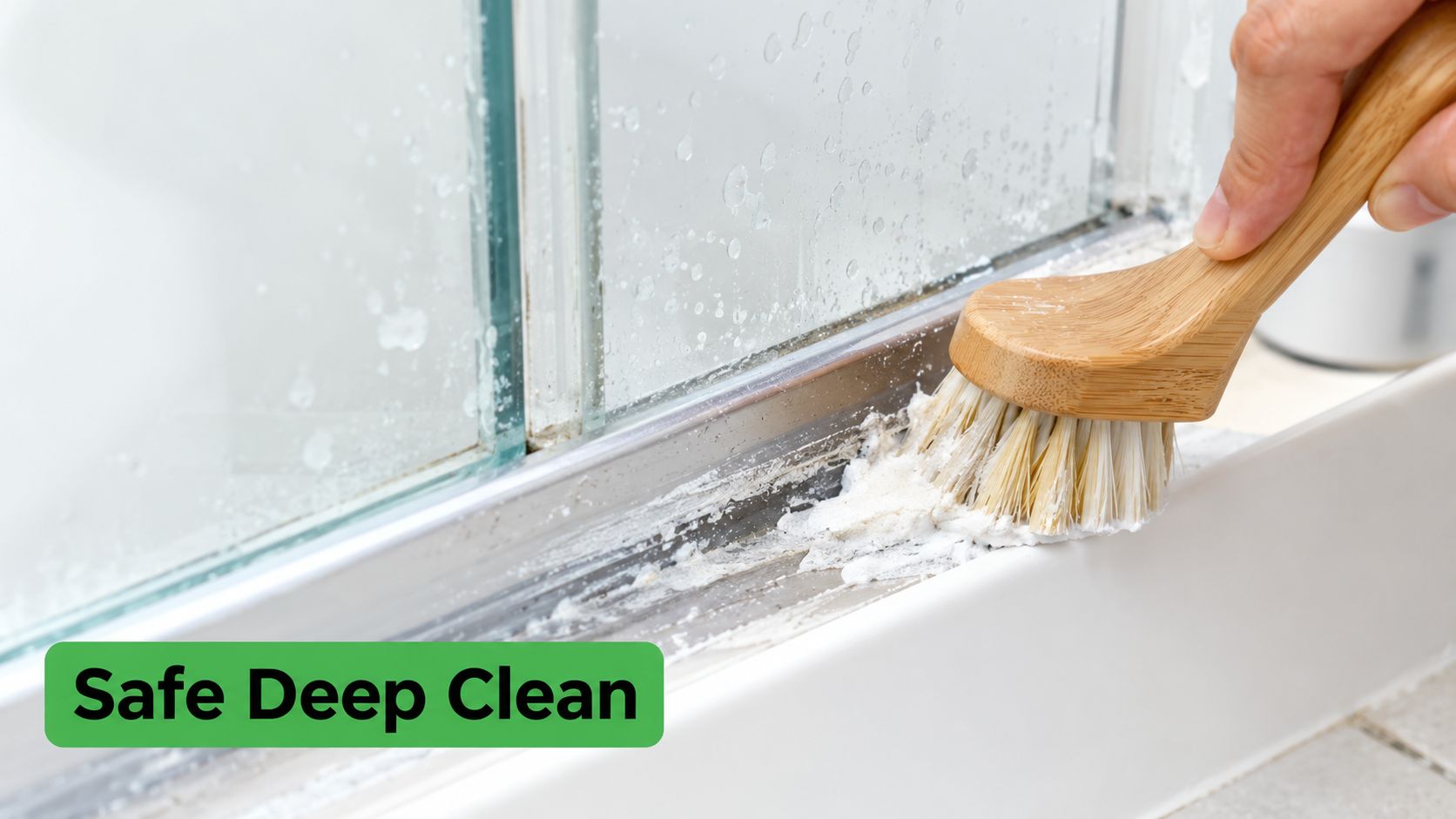
Vinegar and baking soda are often used as a two-stage approach. Let the acidic solution loosen mineral deposits first, remove the residue, then use the paste for remaining film. Don't combine random cleaners, and don't add bleach or ammonia. If you're cleaning adjacent glass, a foaming glass cleaner guide may offer useful product-handling context, but track finishes and seals still require label checking.
For households choosing plant-derived and mineral-based products, the same principle applies: dwell first, agitate second, remove residue third. Gmaids also shares practical guidance on pet-safe cleaning products, which is useful when cleaning a bathroom used by children and animals.
Rinsing and Moisture Control for Mold Prevention
Loosened sludge and dirty rinse water can settle back into a track that looks clean. Lift the residue with a lightly damp microfiber cloth, rinsing the cloth often so you do not spread grit through the channel. For narrow corners, draw out liquid with a folded paper towel or cotton swab.
Rinse with a small amount of clean water rather than a forceful spray. Keep the water on the accessible track surface and direct it away from concealed weep holes, seals, and panel gaps. Flooding those openings can push moisture into spaces that are difficult to inspect and dry. Wipe until the cloudy film is gone, then dry the channel immediately.
Dry the lowest points
Because the track collects shower runoff, its lowest points deserve a deliberate final pass. Press a dry microfiber cloth into the channel, use a fresh folded paper towel in narrow grooves, and check each corner with a clean cotton swab. The shower-glass cleaning resource also identifies rinsing and complete drying as final steps.
Skip extra chemical spray during this stage. Clean water, controlled wiping, and airflow remove residue without adding fumes to the bathroom or exposing children and pets to unnecessary products.
Moisture control must continue after the track is dry. Keep relative humidity below 50 percent and run the exhaust fan for at least 20 minutes after showering; Consumer Reports recommends 30 minutes for bathrooms with persistent moisture. Use the fan after every shower when practical, and position the bathroom door to support airflow if the layout allows it. These steps limit the stagnant moisture that encourages mineral staining and microbial growth.
Persistent mold beyond a small surface area, recurring water intrusion, or moisture that returns despite drying calls for a closer assessment. Review when to call Eagle Restoration for mold instead of repeatedly scrubbing the same symptom.
Establishing a Realistic Maintenance Cadence
Track care works better as a small routine than as an occasional rescue project. The channel accumulates fresh residue every time water runs across it, so waiting until the buildup becomes hard and dark makes the job more aggressive and less pleasant.
A practical cadence has two layers:
- Weekly wipe: Remove loose debris and surface film with a damp microfiber cloth. Focus on the exposed track, corners, and threshold, then dry the channel.
- Monthly deep clean: Descale recurring mineral deposits, inspect concealed corners, and use a soft brush for residue that a wipe cannot reach.
- After heavy use: Holiday hosting, frequent family showers, or a period of renovation dust may justify an extra visual check before the next scheduled clean.
A cleaning guide recommends weekly wiping for loose debris and monthly deep cleaning to control recurring buildup, while also noting that hard-water deposits can return quickly. Those time-based controls are more realistic than promising a permanently spotless track.

Know when the routine has reached its limit
DIY maintenance may not be enough when the track has deep recessed geometry, severe scale, inaccessible drainage points, or residue beneath a fixed panel. A door that scrapes, sticks, leaks, or shifts out of alignment may need hardware attention rather than more pressure from a brush. Never force the glass to move.
For busy professional families in Plano or Frisco, a recurring service can take this task off the weekend list. That's especially useful in new-construction homes, where fine dust can settle into narrow channels, and in pet-friendly households where bathroom floors need careful residue removal.
A deep house cleaning service can address shower tracks as part of broader bathroom detailing. Choose weekly, biweekly, or monthly recurring maid service based on how quickly your household produces buildup, not on an unrealistic promise that one intensive clean will eliminate future maintenance.
When to Call in the Non-Toxic Cleaning Experts
A careful DIY routine is excellent for upkeep, but a neglected bathroom often needs more than a quick wipe. Professional cleaning makes sense when mineral scale has hardened in recessed channels, when multiple bathrooms need attention, or when your family schedule leaves no reliable time for detailed track work.
Gmaids uses non-toxic, fragrance-free, plant-derived, and mineral-based products, with no bleach, ammonia, or synthetic fragrance. That approach reduces exposure to harsh fumes and residues in rooms where children may crawl and pets may rest nearby. It also avoids using fragrance to mask chemical odors, which matters to households managing allergies, asthma, or chemical sensitivities without making medical promises.
The service is performed by Gmaids Certified Cleaning Teams®, who are trained, background-checked, and insured. The Dallas-based company has served DFW since 2004, including homes in Uptown, Preston Hollow, Highland Park, University Park, Lakewood, East Dallas, Lake Highlands, M Streets, Bluffview, Kessler Park, and Bishop Arts/Oak Cliff, as well as North and Northwest suburbs such as Plano, Frisco, and Southlake.
For a broader reset, homeowners can choose basic cleaning, deep cleaning, move-in/move-out cleaning, post-construction cleaning, recurring maid service, office cleaning, commercial cleaning, or sanitizing cleaning. The Gmaids green cleaning approach fits households that want fewer harsh chemicals without giving up detailed bathroom care. Gmaids also offers a 24-hour satisfaction policy. If something isn't right, let the team know within 24 hours and they'll make it right.
Gmaids can clean shower doors, tracks, bathroom surfaces, and the surrounding floors with non-toxic, fragrance-free products suited to family and pet-friendly homes. Visit Gmaids for an instant, flat-rate quote online, or call 214-997-6918 to schedule service in Dallas and throughout DFW.


Ready for a healthier, cleaner home?