My Shower Drain Stinks: Causes, Easy Fixes, and Prevention
You step into the guest bathroom in your Dallas home, turn on the light, and notice it immediately. The shower drain smells sour, swampy, or unmistakably like rotten eggs. You may have already scrubbed the shower, sprayed the room, and opened the door, but the odor returns the next time the bathroom sits closed.
When someone says, “My shower drain stinks,” the answer isn't always more cleaning. The smell can come from residue inside the drain, or from sewer gas slipping past the plumbing seal. Those problems can feel identical at first, but they need different solutions.
Table of Contents
- Biofilm and trapped organic residue
- A dry or leaking P-trap
- A blocked or poorly working vent
- Hard-water scale that catches more debris
Why Your Shower Drain Smells in the First Place
A homeowner in Dallas once described the odor as appearing only after the guest bath had been closed for several days. The shower looked clean, the tile was dry, and nothing seemed obviously wrong. Yet the first person to open the door got hit with a sour, rotten-egg smell.
That situation usually falls into one of two cause families:
- Organic buildup: Hair, soap, skin oils, and biofilm collect around the drain opening or farther inside the pipe. The material holds moisture and creates a musty or sour odor.
- Sewer-gas entry: The water seal inside the shower's P-trap has dried out, leaked, or been siphoned away. Without that barrier, gases can travel upward from the drainage system.
A shower's P-trap is the U-shaped section of pipe beneath the drain. Water normally stays in that bend and blocks sewer gases from entering the room. Public-health guidance identifies dried traps, cracked drain lines, blocked or leaking roof vents, and other plumbing openings as possible routes for sewer gas to enter indoor air. Arizona public-health guidance on sewer gas and indoor air also explains why an odor can continue even when the visible grate looks clean.
Why DFW bathrooms can make the problem noticeable
A warm, humid shower area near an air-conditioning vent can give organic residue a comfortable place to linger. North Texas homes also commonly have guest bathrooms that sit unused while busy families spend their time in the main suite. During long AC seasons, a rarely used trap can lose water, removing the seal that normally blocks odors.
That doesn't mean every smelly drain is dangerous, and it doesn't mean your bathroom is dirty. A local odor can come from harmless residue at the opening, while a fast-returning rotten-egg smell may indicate a plumbing fault. If you want more background on moisture and shower buildup, this guide to mold prevention for Florida showers offers useful cleaning context, even though Dallas homes have their own climate and plumbing patterns.
The useful question isn't “What can I pour down the drain?” It's “Where is the odor starting, and does it return after the trap is refilled?”
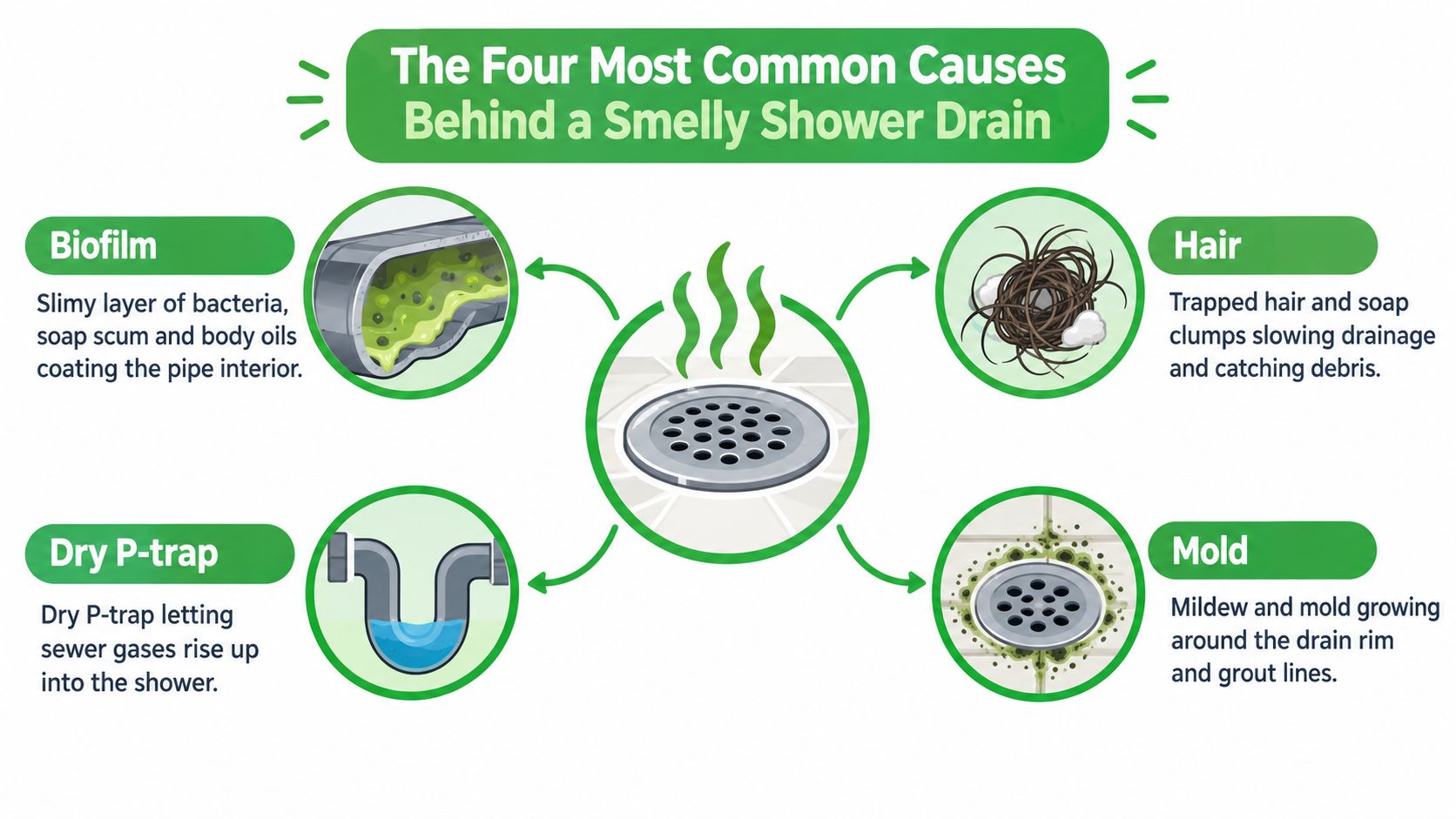
The Four Most Common Causes Behind a Smelly Shower Drain
The fastest way to understand the odor is to match its timing and location to the likely source. A shower drain that smells during use behaves differently from one that smells only after the bathroom has been closed.
Biofilm and trapped organic residue
A slimy film can coat the inside of the drain opening. It may contain soap residue, body oils, skin particles, hair, and other organic material. The clue is usually a musty or sour smell strongest near the grate, especially when the drain is slow or visibly coated.
Pulling out the material near the opening may improve the odor. If the smell remains, the buildup may be farther down the line.
A dry or leaking P-trap
A dry P-trap often affects an infrequently used shower, guest bath, or vacant property. The odor may be strongest after the room has been closed, then lessen after water runs through the drain.
The trap may also lose its seal because of a leak or another plumbing defect. Adding water is a reasonable first check, but a seal that repeatedly disappears needs professional attention.
A blocked or poorly working vent
Drain vents balance air pressure in the plumbing system. If a vent is blocked, leaking, or incorrectly installed, water can be siphoned out of the P-trap after the shower runs. Gurgling sounds are an important clue, particularly when another fixture drains.
You may notice the smell after flushing a toilet, running a vanity sink, or draining a nearby tub. That pattern points away from surface dirt and toward the plumbing system.
Hard-water scale that catches more debris
Dallas water is reported at approximately 140 to 160 milligrams per liter of hardness, or about 8 to 9 grains per gallon. Dallas water-quality information describes hardness as not a health concern, but mineral deposits can leave rough scale on fixtures.
That rough coating gives soap residue and hair more places to cling. A drain can therefore smell even when the original problem began as mineral buildup rather than a dry trap.
A Quick Safe Check You Can Do Before Reaching for Any Product
You don't need to start with bleach, ammonia, synthetic fragrance, or a caustic drain opener. A short, fragrance-free inspection can tell you whether the odor is probably local buildup or something a plumber should evaluate.
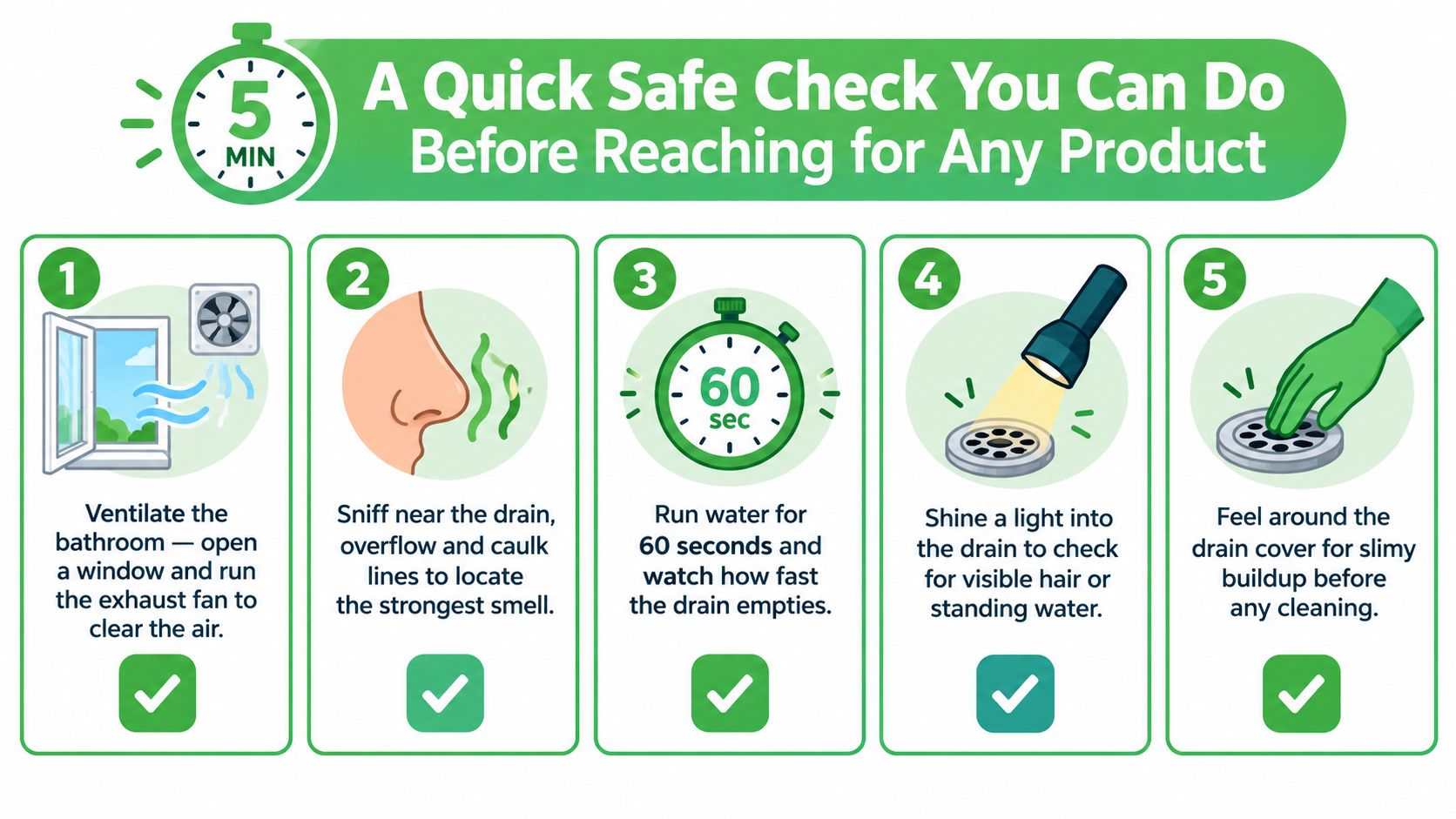
Start with the air and the location
Ventilate first. Open a window if conditions allow and turn on the exhaust fan. This clears stale air and helps you identify whether the strongest smell is at the drain, overflow opening, toilet base, vanity, or cabinet void.
Refill the trap. Run water down the shower drain for roughly 30 to 60 seconds. If the bathroom has been unused, adding approximately 1 to 2 quarts of water gives the trap a practical refill. Then wait and reassess the odor after about 30 minutes. Guidance on dry traps and sewer gas explains that standing water acts as the odor barrier. A homeowner's dry-drain-trap explanation describes the same basic diagnostic.
Track the timing. Does the smell appear while water is running, right after a shower, or hours later? Does another fixture gurgle when the shower drains? Write down the pattern instead of relying on memory.
Inspect the opening. Remove the grate carefully with a screwdriver if it is designed to come off. Shine a flashlight inside and look for hair, soap scum, standing water, or a slimy film. Don't dismantle the P-trap or climb onto the roof to inspect a vent.
Decide whether the trap test worked. If the odor drops after adding water and stays away, evaporation may have been the cause. If it returns within minutes, or if several fixtures smell, repeated cleaning won't address the likely plumbing problem.
The EPA's household environmental inspection guidance recommends checking traps, drain-line breaks, blockages, and vent-system integrity. If the odor is strong, widespread, or accompanied by dizziness, eye irritation, nausea, or breathing difficulty, leave the area, ventilate it, and seek qualified or emergency help as appropriate.
How to Clean a Smelly Shower Drain Without Harsh Chemicals
If the smell is clearly coming from visible residue at the drain opening, cleaning can help. Keep the process simple and fragrance-free. You don't need to coat the bathroom in a scented product that only covers the odor.
Remove the cover and visible debris. Wear gloves, lift off the grate or strainer, and pull out hair and gunk with gloved fingers or a plastic zip tool. Put the debris in a bag. Don't push it farther into the pipe or flush it through the system.
Apply baking soda. Pour approximately half a cup of baking soda into the drain opening. Let it sit for 10 to 15 minutes so it can contact the damp residue.
Rinse carefully. Follow with 2 to 3 cups of very hot, but not boiling, water. Boiling water can be unnecessarily hard on some plumbing materials and seals. If you prefer a mild bubbling treatment, use white vinegar only as a separate, controlled step. Never combine it with bleach, ammonia, acids, or a commercial drain opener.
Clean the cover separately. Make a paste from baking soda and water, then scrub the removed grate with an old toothbrush. If your drain has overflow holes, rinse them gently so residue doesn't remain around the openings.
Finish with water. Run the shower briefly to confirm the drain clears and the P-trap contains water. A local, visible buildup problem should begin to smell better within 24 hours and remain improved through subsequent showers. If the odor returns immediately, stop repeating the treatment.
A mild enzyme-based drain maintenance product can be another option for organic residue. Choose a fragrance-free product and follow its label, particularly if your home uses a septic system. Enzymes are intended to digest organic buildup rather than attack the pipe itself, but they won't repair a failed trap or vent.
For a severe blockage or a smell that appears with slow drainage, a professional drain service may be more appropriate than repeated home treatments. This overview of emergency drain cleaning in Boerne provides useful context about when a drain issue needs plumbing attention. For nearby shower surfaces, you can also use this guide to clean shower door tracks, where soap residue often collects.
Why Bleach, Ammonia, and Scented Cleaners Usually Make It Worse
A strong cleaner can make a bathroom smell “clean” without fixing the drain. Chlorine bleach and ammonia may affect organisms on an exposed surface, but they don't reliably reach residue deeper in the P-trap or repair the water seal. The odor can return while chemical residue remains on the drain, floor, and nearby surfaces.
Mixing products creates a more serious problem. Never combine bleach with ammonia, acids, caustic drain openers, or another cleaner. Chemical reactions can release hazardous vapors, and a drain may already contain product left by a previous attempt. Drain openers containing sodium hydroxide or sulfuric acid can also harm skin and eyes and may damage some older plumbing components.
Synthetic fragrance creates a different kind of confusion. Fragrance-free means synthetic scents are left out entirely. Unscented products may still contain odor-masking ingredients, so reading the label matters if you have children, pets, asthma, allergies, or chemical sensitivities in the home.
Masking a sewer odor doesn't remove the trap, vent, or drain-line problem underneath it.
| Product | Why It Falls Short | Safer Swap |
|---|---|---|
| Bleach | May not reach deeper biofilm and can create hazardous reactions with other products | Physical debris removal, baking soda, and hot water |
| Ammonia | Adds irritating fumes and must never be mixed with bleach | Ventilation and fragrance-free cleaning |
| Caustic drain opener | Can burn skin and eyes and may damage plumbing materials | A plastic zip tool or qualified drain service |
| Synthetic fragrance spray | Covers the smell without correcting its source | Fragrance-free cleaning and odor tracing |
A label-conscious household can still clean effectively. Baking soda, controlled hot-water rinsing, careful scrubbing, and a suitable enzyme product address organic residue without adding bleach, ammonia, or synthetic fragrance. For more guidance on choosing products around pets, see pet-safe cleaning products.
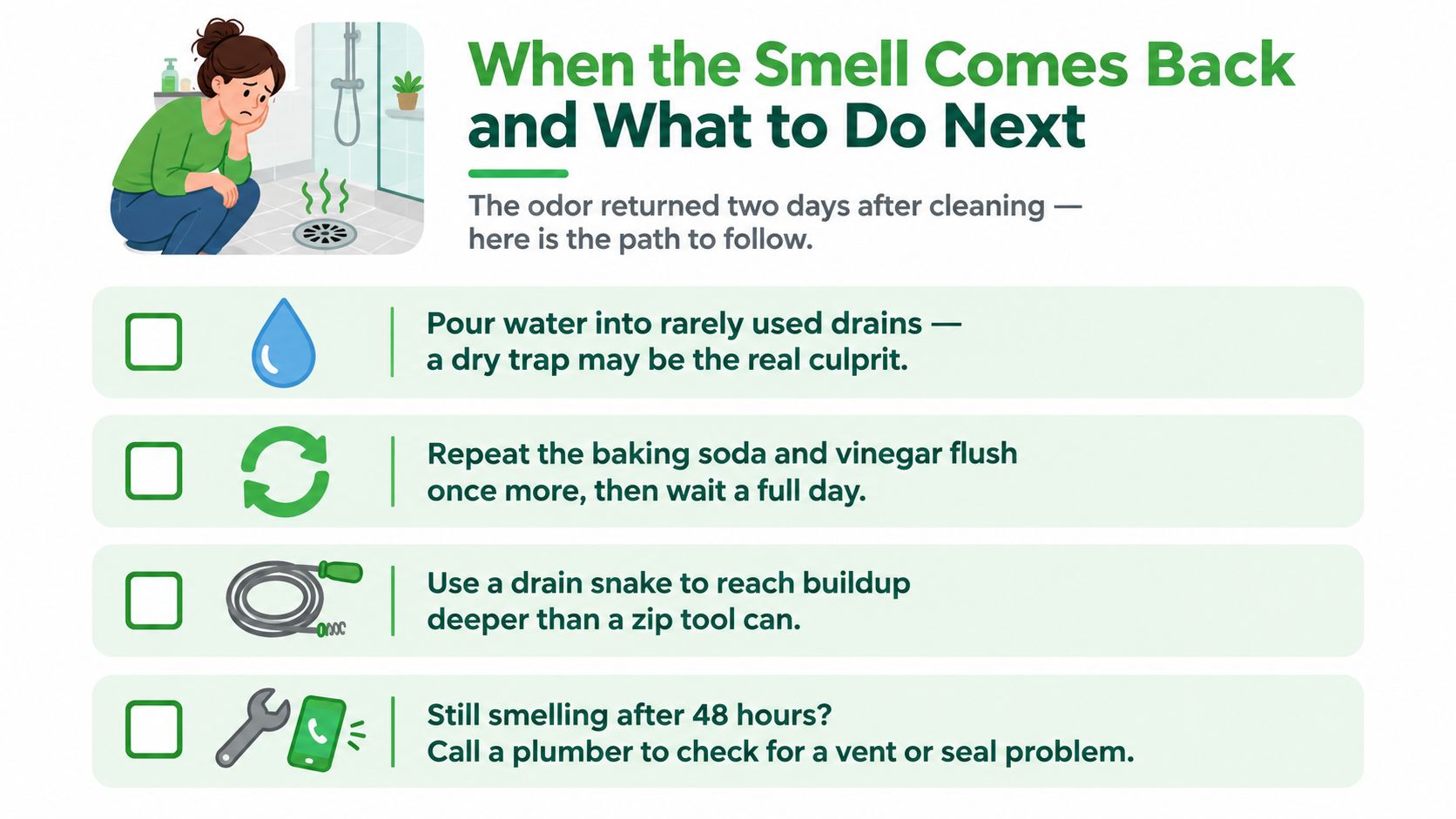
When the Smell Comes Back and What to Do Next
A homeowner cleans the grate, removes a wad of hair, rinses the drain, and feels relieved. The next shower smells fine. Then the odor returns by the following day.
That quick return changes the diagnosis. If the smell comes back within hours, check whether it is musty and local, or sulfur-like and present beyond the shower. A deeper layer of biofilm may need professional drain cleaning, while a rotten-egg odor across multiple fixtures suggests a dry, cracked, or poorly vented part of the drainage system.
Let the symptoms narrow the path
- Gurgling during drainage: Water and air may be competing in a partially blocked branch line, or the vent may be siphoning water from the trap.
- Several fixtures smell: Check the vanity, toilet area, tub, and floor drains. Sewer gas can enter through more than the visible shower opening.
- The toilet or nearby tub loses water without use: A changing water level deserves plumbing evaluation rather than another surface treatment.
- A vacant bathroom smells when opened: Restore water to the trap, ventilate, and call a licensed plumber if the odor returns.
- Slow drainage and recurring odor appear together: The obstruction may be farther down the branch line. A camera inspection can provide better information than repeating drain chemicals.
Hydrogen sulfide is strongly associated with a rotten-egg smell, but odor alone can't measure concentration. Official health information notes that irritation, headache, tiredness, balance problems, memory problems, and breathing difficulty can occur with exposure, particularly for people with asthma, while ordinary household odors are often far below immediately life-threatening levels. Health information about hydrogen sulfide exposure explains why a persistent odor deserves attention without assuming that every smelly drain is an emergency.
If symptoms are severe, the smell is widespread, or you suspect a significant gas problem, leave the area and contact local emergency or fire authorities. Don't climb onto the roof, dismantle hidden plumbing, or pour another chemical into the line while you're trying to find the source.
Keeping the Smell Away and Bringing in Professional Help
Prevention in a Dallas home is mostly about keeping small changes from becoming hidden plumbing clues. Guest baths, half baths, and showers in vacant properties need attention even when nobody is using them.
Give rarely used drains a little water
Run water in guest and half baths weekly so the P-traps stay wet. A short Sunday routine can include the shower, vanity, and any floor drain. If a drain repeatedly dries after you refill it, the problem may involve siphonage, a leak, or venting rather than evaporation alone.
Pour hot, not boiling, water down the shower drain as part of ordinary upkeep. Wipe the grate and stopper so hair, soap, skin oils, and pollen don't create a fresh food supply for residue. During spring oak pollen and winter cedar pollen seasons, extra dust and outdoor material can enter busy bathrooms on clothing, paws, and shoes.
Match the handoff to the right professional
Use a fragrance-free enzyme or bacteria-based maintenance product according to its label if organic buildup is the concern. Contact a licensed plumber for an odor that persists after cleaning, a sewer smell in multiple fixtures, gurgling, or slow drainage affecting more than one drain. A cleaner can remove buildup around the shower, but a plumber is the right person to inspect a trap, vent, drain-line break, or deeper blockage.
For Dallas families, pet owners, renters, landlords, and property managers who want the surrounding bathroom cleaned without bleach, ammonia, or synthetic fragrance, non-toxic recurring maid service in Dallas can handle shower surfaces, tile, tubs, and other areas where residue collects. Gmaids has served DFW since 2004, using trained, background-checked, and insured Gmaids Certified Cleaning Teams®. Its fragrance-free approach is designed for homes with kids, pets, pregnant moms, and people who prefer fewer harsh chemicals.
The company offers basic cleaning, deep cleaning, move-in and move-out cleaning, post-construction cleaning, recurring weekly, biweekly, and monthly maid service, office cleaning, commercial cleaning, and sanitizing cleaning. Move-in and move-out service includes the inside of the fridge, oven, cabinets and drawers, and closets. That can be useful in North Texas new-construction homes, rental turnovers, and homes preparing for holiday hosting.
If your shower drain smells because residue has collected around the bathroom, Gmaids can clean the shower, tile, grate, and surrounding surfaces with non-toxic, fragrance-free products. Visit Gmaids for an instant, flat-rate quote online, or call 214-997-6918 to arrange service in Dallas, Plano, Frisco, or another DFW area.


Ready for a healthier, cleaner home?