8 Cleaning Tips for Allergy Sufferers in Dallas Homes
Cedar pollen hits first, then oak, and by the time your sinuses stage their annual protest the air conditioner has been running for weeks. The ceiling fans wear a gray fuzz. The window sills have a visible coat of dust. Someone in the house sneezes every morning before school and again at bedtime, and nobody can quite say why.
Here's the part most allergy advice skips. Cleaning itself can make things worse. Dry dusting launches fine particles back into the air. A vacuum with a tired bag blows them out the exhaust. A lemon-scented spray adds a fragrance layer on top of whatever you were trying to remove. You finish with a better-smelling room and the same irritated nose.
The scale of it is bigger than people assume. Americans spend about 90% of their time indoors, where concentrations of some pollutants run 2 to 5 times higher than typical outdoor levels, according to the U.S. Environmental Protection Agency's indoor air quality report. That same agency lists dust mites, mold, pet dander, cockroach allergens, environmental tobacco smoke, and particulate matter among the indoor triggers for asthma.
So the goal isn't a better scent. It's fewer particles and fewer chemicals in the rooms where your family sleeps, crawls, and naps. These eight cleaning tips for allergy sufferers are built for a Dallas house with the AC on.
Table of Contents
- 1. Choose Fragrance-Free, Plant-Derived and Mineral-Based Cleaners
- 2. Damp Dust Instead of Dry Dusting
- 3. Use HEPA-Filtered Vacuuming
- 4. Wash Bedding in Hot Water on a Regular Schedule
- 5. Replace HVAC Filters on a Regular Schedule
- 6. Create a Shoes-Off Landing Zone at the Entry
- 7. Manage Humidity and Wipe Up Moisture Quickly
- 8. Rinse Floors and Surfaces to Remove Residue
- Eight Allergy-Friendly Cleaning Habits at a Glance
- Make Your Dallas Home Easier to Breathe In
1. Choose Fragrance-Free, Plant-Derived and Mineral-Based Cleaners
Start with the bottle, not the vacuum. A conventional all-purpose spray can carry synthetic fragrance that settles on counters and drifts through the room long after the surface is dry. That fragrance doesn't clean anything. It masks the smell of the surfactants underneath and adds a layer of airborne material for a sensitive nose to deal with.
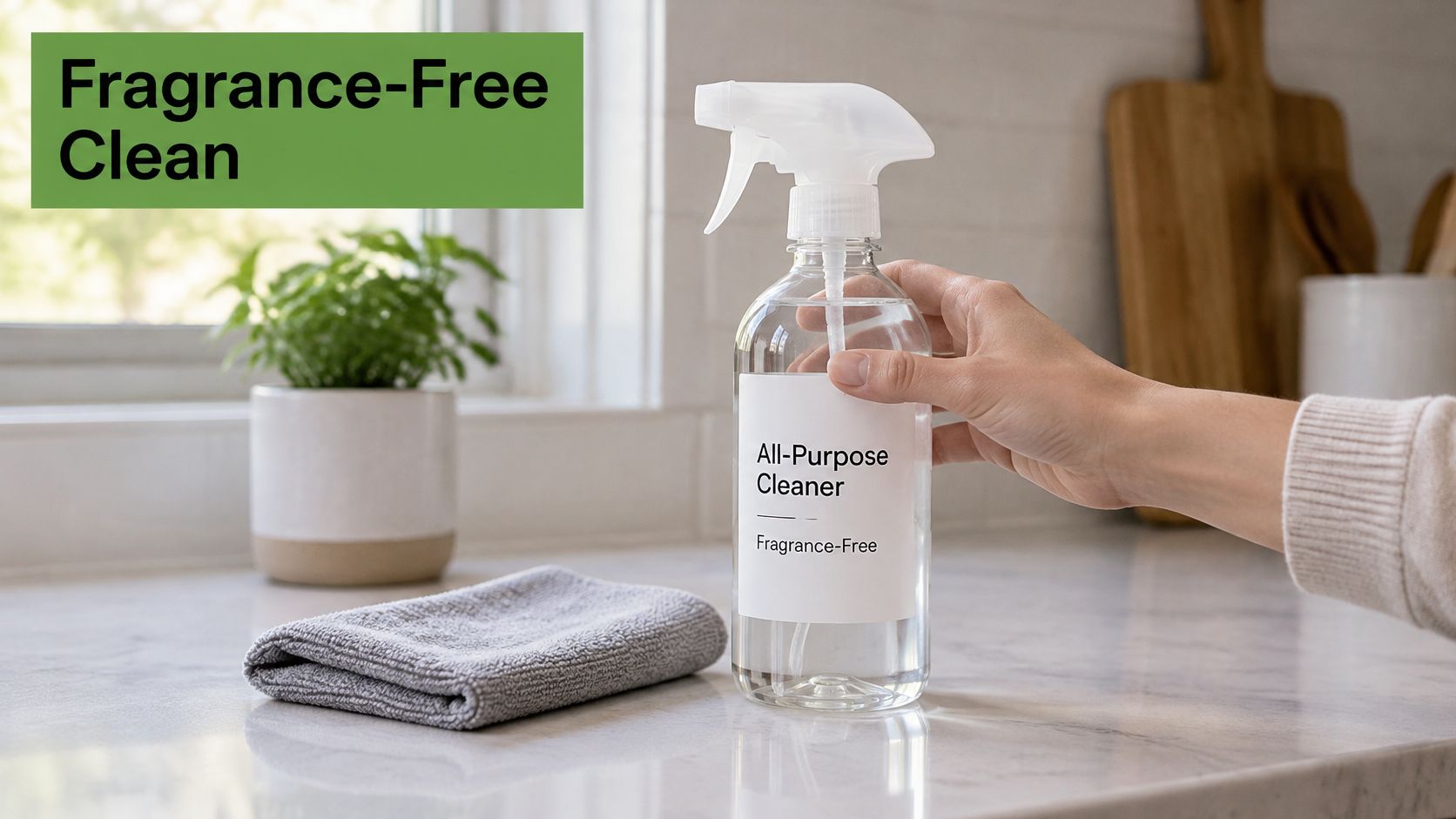
Fragrance-free means synthetic scents are left out entirely. Unscented is a different claim, and a weaker one. An unscented product may still contain a masking fragrance added to cover the raw smell of the formula, so the label tells you less than it appears to. For a household with allergies, asthma, or chemical sensitivities, that distinction is the whole point.
Plant-derived and mineral-based formulas are the practical middle path. They cut grease and lift soil without bleach or ammonia, which matters in rooms where residue ends up on a toddler's hands and a dog's paws. Gmaids has cleaned this way since 2004, using fragrance-free products with no bleach and no ammonia in homes across Dallas, Plano, and Frisco. If you're learning to read labels, this guide to fragrance-free household cleaners is a good place to start.
Read the back of the bottle, not the front
- Scan the full ingredient list. If "fragrance" or "parfum" appears anywhere on it, the product is not fragrance-free, whatever the front label promises.
- Ask the question before you buy. "Is this fragrance-free or unscented?" gets two different answers from most brands, and the answer changes what you bring home.
- Label your bottles. Decanted cleaners in unmarked spray bottles get mixed up. A strip of tape with the product name and the date keeps everyone honest.
Practical rule: If a scent lingers after the surface has dried, something in that product is still releasing into the room.
Say you clean a small Uptown bathroom with a scented foaming spray and shut the door behind you. Two hours later the room still smells like lemon. That smell is material suspended in the air, and it's the part your family breathes.
2. Damp Dust Instead of Dry Dusting
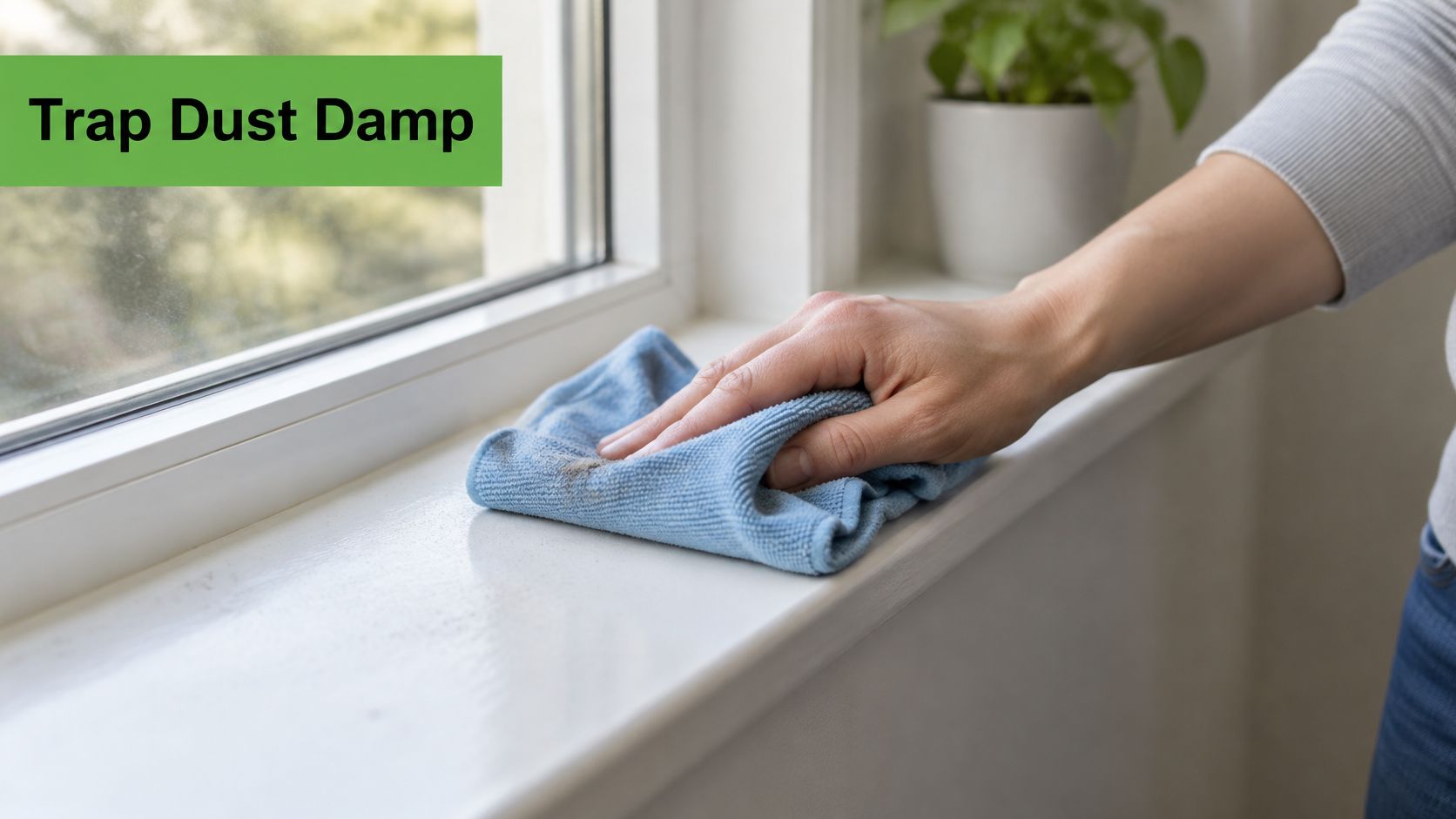
A feather duster is a particle launcher. So is a dry microfiber wand waved at a bookshelf. Both lift settled dust into the air, where it drifts for a while and then settles back onto the same surfaces you just finished.
The EPA's guidance on indoor particulate matter recommends damp-cloth dusting specifically so settled dust is captured rather than redistributed, along with weekly vacuuming of carpets and upholstered furniture and more frequent cleaning where it's needed (EPA, sources of indoor particulate matter). The same guidance says sensitive occupants should leave the area during vacuuming, and that a vacuum with a HEPA filter or a central system vented outdoors reduces how much vacuumed dust escapes back into the room.
Work from the ceiling down
- Wring the cloth out. Damp, not dripping. A wet cloth streaks paint and leaves a film on wood.
- Take the high surfaces first. Ceiling fan blades, blinds, shelf tops, then window sills and baseboards, then the floor.
- Skip fabric softener on microfiber. Softener coats the fibers and kills their grab, which is the entire reason you bought them.
In a Lake Highlands house with ceiling fans running from April into October, the top of each blade collects a gray felt of dust and pollen. Wipe one blade with a damp cloth, rinse the cloth in the sink, move to the next. Dry dusting those blades just spreads that felt across the room in a fine mist.
The same logic applies to blinds and baseboards during cedar season, when the outside air carries material that finds its way onto every horizontal edge indoors. A damp cloth takes it off. A duster moves it three feet.
3. Use HEPA-Filtered Vacuuming
Every vacuum pulls air in and pushes air out. On a cheap machine, that exhaust carries fine dust straight back into the room, which is why some people sneeze harder after vacuuming than before. A sealed HEPA filter catches the particles the machine would otherwise return to the air.
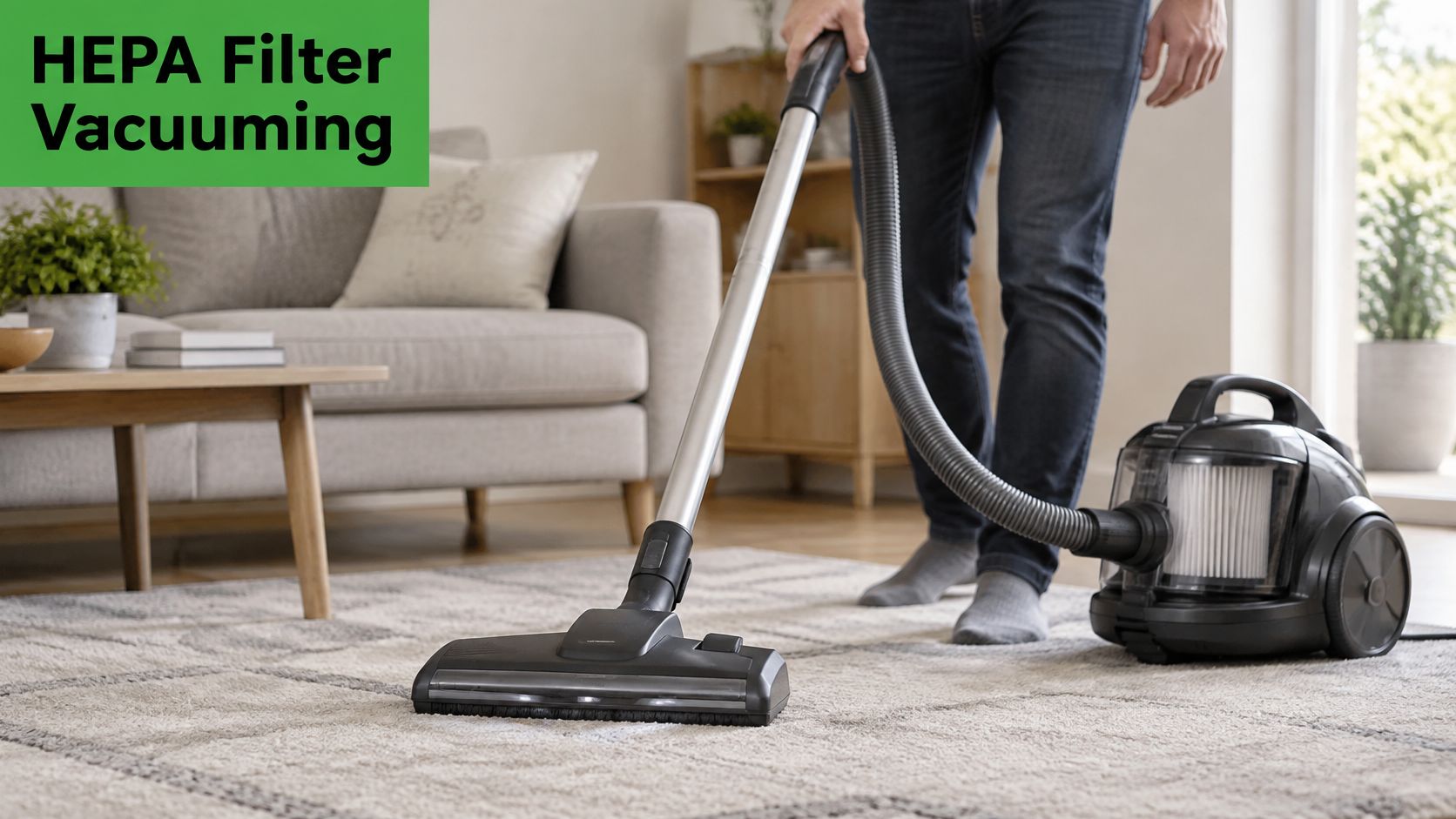
The American Academy of Allergy, Asthma & Immunology recommends a vacuum with a HEPA filter or a double-layered bag, and notes that an allergy sufferer may want to wear a dust mask or hand the job to someone else. Its cleaning guidance calls for vacuuming carpet weekly with a small-particle or HEPA filter (AAAAI, managing indoor allergens).
The payoff is measurable. In a controlled household study of 52 families with allergic children, central, HEPA-filter, and micro-filter vacuum cleaners cut dust-mite allergen concentration by about 10 to 50% after five weeks, and the total mite-allergen quantity in the areas studied fell by 50 to 85% (EPA record of the vacuum cleaner study). That drop came from pulling allergen out of carpet and upholstery. It did not come from an air purifier humming in the corner.
Slow passes beat fast laps
- Vacuum slowly, with several passes over high-traffic lanes, the path from the door to the kitchen, and the strip of carpet beside the bed.
- Empty the canister or change the bag before it's full. A packed bag kills suction, and weak suction means more passes for less pickup.
- Vacuum before you damp dust. The machine stirs a little material into the air, and a damp cloth pass afterward catches what settles.
For a pet household in Lakewood, the sofa and the rug in front of it are the two biggest reservoirs in the house. Two slow passes across each, weekly, with the canister emptied afterward, does more for that room than an air purifier running all day.
A note on timing: the person with allergies should be in another room, or out of the house, while the vacuum runs.
4. Wash Bedding in Hot Water on a Regular Schedule
You spend more hours with your face near a pillow than near anything else in your home. Bedding collects dust mites, pet dander, and pollen, and a weekly wash is the most reliable way to strip that load out.
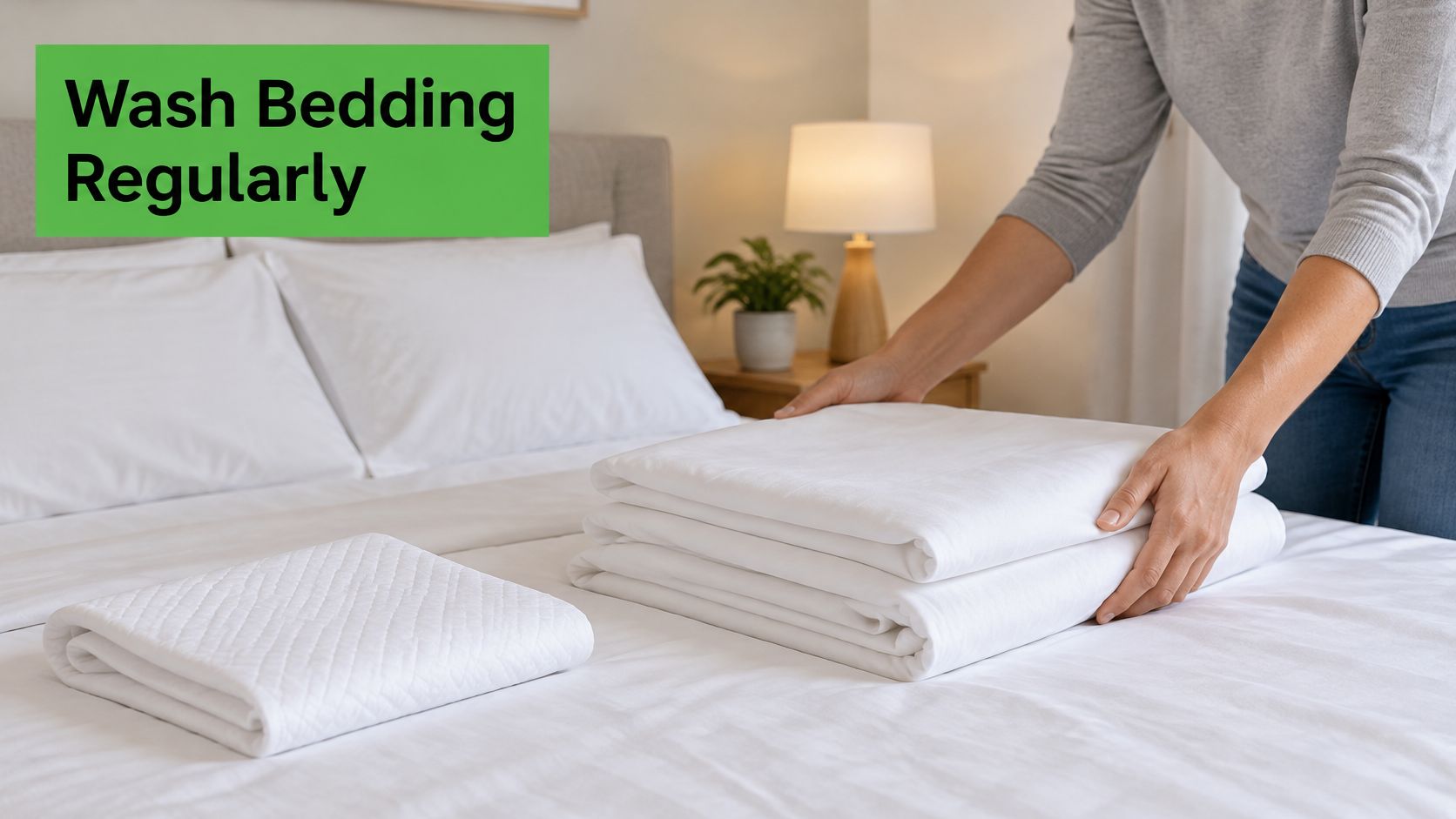
Mayo Clinic recommends washing sheets, blankets, pillowcases, and bedcovers weekly in water heated to at least 130°F (54.4°C), and notes that an item which can't go straight into hot water can go into a dryer for at least 15 minutes above 130°F first, then be washed and dried (Mayo Clinic, dust mite allergy).
Temperature guidance does vary. The American College of Allergy, Asthma & Immunology puts hot-water washing in a range of roughly 120°F to 130°F and recommends encasing mattresses, box springs, and pillows in dust-mite-proof covers (ACAAI, dust allergy). Follow the care label and your allergist's instructions, then pick the hottest setting the fabric will survive.
Don't stop at the sheets
- Check care labels first. Hot water shrinks wool and fades some dyes, and a ruined duvet helps nobody.
- Use fragrance-free, plant-based detergent and skip dryer sheets. Dryer sheets are a fragrance delivery system, and the coating they leave behind is the opposite of clean.
- Wash pet bedding on the same schedule. The dog's bed holds the same allergens yours does, and it sits in the same house.
For new builds in Frisco, Allen, or McKinney, the first months bring construction dust settling onto every soft surface. Washing bedding weekly through that stretch, and putting covers on the mattresses before the first night, gets a fresh start off on the right footing. If you're building a rotation, this guide to fighting dust mites with clean linens covers how often each item needs a wash.
5. Replace HVAC Filters on a Regular Schedule
In North Texas the air conditioner runs for most of the year, which means the filter is on duty for most of the year. A loaded filter restricts airflow, and a filter past its useful life lets dust and pollen pass straight into the rooms you live in.
The American Academy of Allergy, Asthma & Immunology advises cleaning or replacing small-particle filters in central heating and cooling systems, and in room air conditioners, at least monthly. The EPA recommends a filter rated MERV 13, or the highest rating your system's fan and filter slot can handle, and notes that MERV 13 and higher filters must demonstrate at least 50% removal efficiency for the smallest particles tested (EPA, guide to air cleaners in the home).
That monthly target is the one most households miss. Filtration also isn't a substitute for source control. A good filter catches what's already airborne, while the carpet, the sofa, and the bedding keep producing more.
Three habits that keep it honest
- Write the date on the frame. A marker line on the filter edge ends the guessing about when it went in.
- Check more often in spring pollen season and in homes with pets. A Dallas house with two dogs can load a filter well before the calendar says it's due.
- Ask a licensed HVAC technician which rating fits your system. Too restrictive a filter on a system with a small blower can cost you airflow, and this is worth one professional opinion.
Say a Plano family changes the filter in October and forgets until March. Those are the months when cedar and oak pollen arrive and the system runs daily, so the filter spends the entire season loading up. If you want the bigger picture on filtration, ventilation, and dust, this guide to improving indoor air quality at home lays out where each piece fits.
6. Create a Shoes-Off Landing Zone at the Entry
Pollen doesn't knock. It rides in on soles, on pet paws, and on the cuffs of jackets, then works its way from the entry tile onto the rug, into the carpet, and eventually into the bedroom.
A landing zone is the least expensive allergy change you can make. The idea is to give outdoor residue one place to stop before it reaches the surfaces you clean.
What the zone actually needs
- Two mats, not one. A coarse mat outside the door scrapes the bulk off, and an absorbent mat inside catches what's left.
- A tray or bin in the walking line. Shoes come off where the person stops, so put the bin there rather than across the room.
- A small towel by the door for paws. Wiping a dog's feet after a walk takes ten seconds and keeps the trail off the sofa.
Wash the entry mats on a regular rotation with a fragrance-free cleaner, and shake them out away from open windows. In busy professional households around Irving and Uptown, where the door opens and closes a dozen times on a weekday, the zone takes two minutes to set up and earns its space in the first week.
The test: if you have to walk more than a step to put your shoes away, the zone will get ignored.
For households with dogs, a carpet and upholstery cleaner earns its fee once or twice a year, pulling out what the mats didn't catch. The rest of the year, the zone does the work.
7. Manage Humidity and Wipe Up Moisture Quickly
Humidity is the control point almost nobody checks. The EPA recommends keeping indoor relative humidity between 30% and 50% and below 60%, because damp conditions support biological contaminants, and dust mites grow especially well in warm, humid environments (EPA, biological contaminants and indoor air quality).
A hygrometer costs less than a spray bottle and tells you what the air is doing. In Dallas, with the AC running from spring into fall, the equipment is already in the house. Adjust the thermostat, run the bath fan, or add a dehumidifier in the rooms that stay sticky.
Where moisture hides
- Run the bathroom exhaust fan during and after showers. Leaving it on for fifteen minutes after you step out does more than a quick burst.
- Wipe condensation off window sills as you see it. Standing water on a sill is a head start for mold.
- Clean mold-prone surfaces with a plant-based product and dry them fully. Damp grout and damp paper both stay damp in a closed-up room. This guide to getting rid of mildew in a shower covers the method.
The buying order matters. An EPA evidence summary reports that repeated HEPA vacuuming substantially reduced carpet dust-mite allergen loading, while adding dry steam produced only a modest additional benefit (EPA, improving your indoor environment). So measure the bedroom humidity, fix the leaks, wash the bedding weekly, and improve the vacuum before you spend on a steam cleaner.
The order I'd spend money in: a hygrometer first, better filtration second, a steam cleaner last.
Nighttime comfort is where people notice the difference, and this piece on bedroom air moisture and sleep is a reasonable next read if you're weighing a humidifier against a dehumidifier for the room you sleep in.
8. Rinse Floors and Surfaces to Remove Residue
A clean floor isn't a floor with cleaner on it. Leftover product attracts dust, and it sits exactly where babies crawl and pets nap. That film is also why some rooms smell like the cleaner for days after you finish.
The fix is a second pass. On hard floors, go over the surface once with your diluted cleaner and once more with a damp microfiber mop and clean water. On counters, wipe with a clean damp cloth after the product has done its work. Let floors dry fully before kids or pets come back into the room.
Removing allergens and avoiding exposure are two jobs
The EPA's indoor air quality guide notes that vacuuming can raise airborne mite allergens and other biological contaminants, which is why allergic people should leave the area while it happens, and recommends damp dusting and damp mopping because wet methods keep settled particles from becoming airborne (EPA, the inside story on indoor air quality).
Read that as two separate tasks. One is getting the allergen out of the house. The other is keeping it out of your lungs while you do the work. Schedule cleaning when the allergic person is away, ventilate afterward if outdoor conditions allow, damp-wipe hard surfaces before the floors, and skip dry dusting entirely.
- Dilute per the label. More product isn't more clean. It's more residue to rinse.
- Use one cloth for product and one for the rinse. The second cloth is the step everyone skips.
- Ask for fragrance-free methods if someone else cleans. It's a reasonable request, and a crew that works this way routinely won't blink at it.
Gmaids Certified Cleaning Teams® follow this sequence in Dallas, Plano, and Southlake homes, with inspections and standardized checklists that keep it consistent from visit to visit.
Eight Allergy-Friendly Cleaning Habits at a Glance
| Tip | Main Allergen Targeted | Effort Level | Best For |
|---|---|---|---|
| Choose fragrance-free, plant-derived and mineral-based cleaners | Fragrance and chemical irritants | Low | Allergy- or asthma-sensitive households |
| Damp dust instead of dry dusting | Dust and pollen | Low | Weekly dusting routines |
| Use HEPA-filtered vacuuming | Fine dust and pet dander | Moderate | Homes with pets, carpets, or rugs |
| Wash bedding in hot water on a regular schedule | Dust mites, pet dander, and pollen | Moderate | Cleaner, allergy-conscious sleeping areas |
| Replace HVAC filters on a regular schedule | Airborne dust and pollen | Low | Homes with frequent HVAC use or pets |
| Create a shoes-off landing zone at the entry | Tracked-in pollen and dust | Low | Busy households aiming to keep floors cleaner |
| Manage humidity and wipe up moisture quickly | Mold and mildew | Moderate | Damp areas such as bathrooms and laundry rooms |
| Rinse floors and surfaces to remove residue | Cleaner residue and related irritants | Moderate | Homes with babies, pets, or surface sensitivities |
Make Your Dallas Home Easier to Breathe In
Allergy-friendly cleaning works best as a steady routine. In Dallas, that means keeping pollen and dust from settling back into the air through cedar and oak seasons, and managing indoor dust during long months of air conditioning. Fragrance-free products, damp dusting, HEPA-filtered vacuuming, clean bedding, fresh HVAC filters, an entry landing zone, moisture control, and rinsed surfaces all play a part.
Keep the habits simple and repeatable. Wipe fans when you dust, and note filter changes on the same calendar you use for washing entry mats. A damp cloth picks up dust rather than sending it airborne, while rinsing surfaces helps remove cleaning residue. Regular upkeep can take less time than repeatedly trying to mask odors or dust with another spray.
Gmaids has served Dallas–Fort Worth since 2004 and uses non-toxic, fragrance-free products with no bleach or ammonia. For households mindful of scent and residue, that offers a practical option for routine cleaning. Service is available across Dallas and surrounding cities. Visit Gmaids or call 214-997-6918 to ask about cleaning services.
If you would rather leave routine upkeep to a cleaning team, Gmaids offers Basic Cleaning for homes in good condition and Deep Cleaning for first-time visits, seasonal resets, or homes that have not been professionally cleaned recently. Vacuuming is done with a HEPA-filtered vacuum so allergens do not recirculate. Keeping a regular cleaning rhythm can help maintain the habits above without turning each weekend into a dusting project.


Ready for a healthier, cleaner home?