Office Cleaning Checklist: 8 Essential Tasks
By the time a Dallas office opens, dust may already be collecting at the entry, pollen may have come in on shoes, shared desks may show fingerprints, and the break room may be carrying yesterday's lunch into today. Restrooms need attention before the next workday, especially when employees, clients, and visitors share the same facilities. A practical office cleaning checklist keeps those demands visible without asking one nightly visit to do everything.
The most useful approach separates daily essentials from weekly, biweekly, monthly, and event-based work. Traffic, office type, shared equipment, seasonal dust, and after-hours access should shape the schedule. A quiet private suite in Preston Hollow won't need the same rhythm as a busy coworking space in Plano or a client-facing practice in Dallas.
Gmaids uses non-toxic, fragrance-free cleaning, with plant-derived and mineral-based products and no bleach, ammonia, or synthetic fragrance. Fragrance-free means synthetic scents are left out entirely. That matters for teams with allergies, asthma, chemical sensitivities, children, or pets at home. For broader seasonal planning, this Dallas–Fort Worth spring cleaning checklist offers useful context for the dust and pollen that can move indoors.
Table of Contents
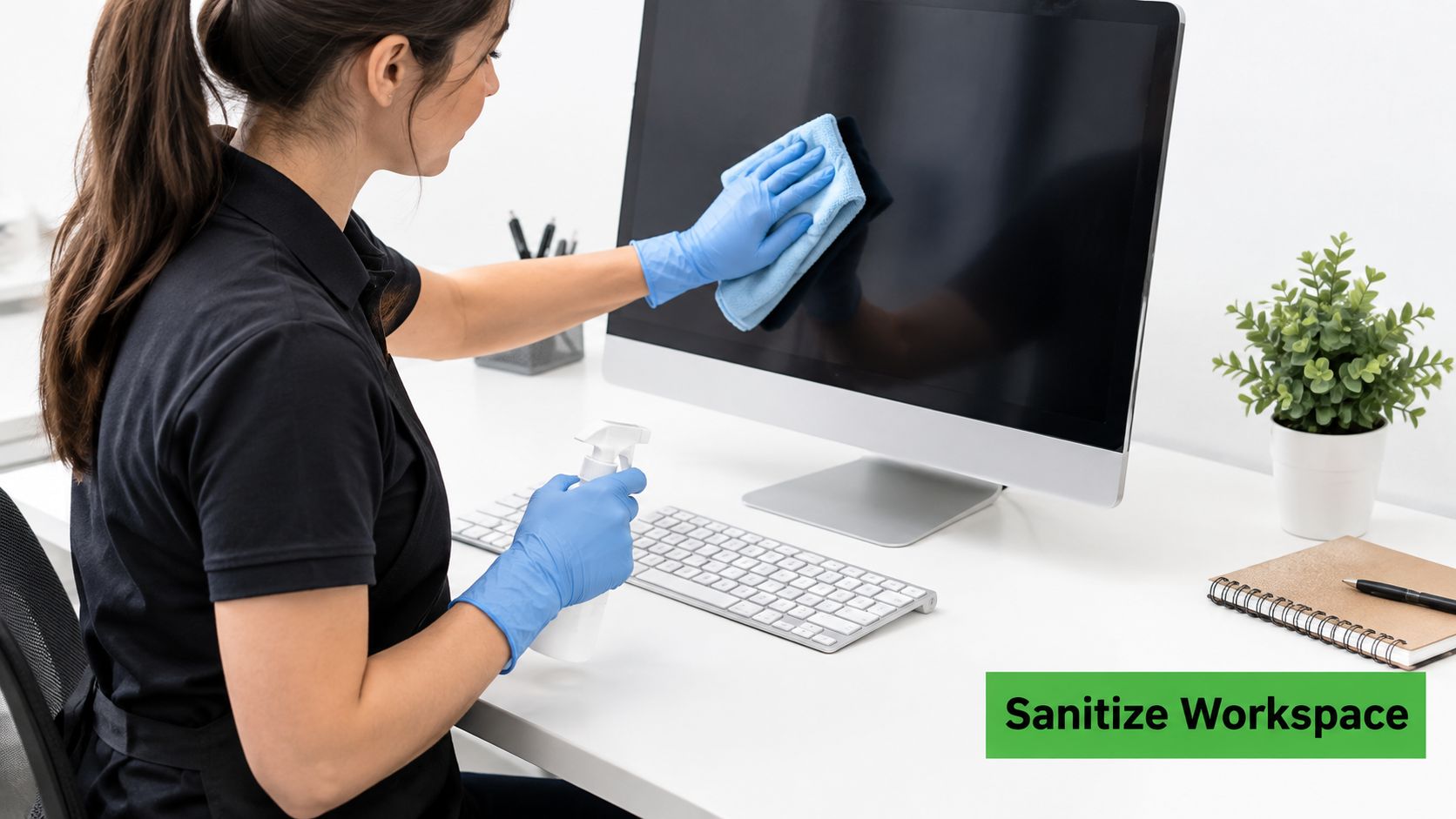
1. Desk and Workspace Surface Sanitizing
Workstations deserve more than a quick pass over the desktop. A complete routine includes clear desk surfaces, monitor exteriors, keyboards, mice, phones, chair arms, drawer pulls, and shared equipment. Door handles, push plates, light switches, copier panels, conference-room controls, and elevator buttons also belong on the same high-touch map.
The CDC distinguishes cleaning from disinfecting. Cleaning removes dirt and some germs with soap and water or detergent, while disinfecting uses a product designed to kill germs. In administrative offices, detergent and water can be adequate for routine surface cleaning, so disinfectant doesn't need to be applied indiscriminately. Use an appropriate disinfectant when risk, contamination, or illness exposure justifies it, and follow the product's label contact time. See the CDC's infection-control recommendations for the distinction and scheduling principles.
Gmaids teams use fragrance-free, plant-derived and mineral-based products, without bleach, ammonia, or synthetic fragrance. That reduces concerns about strong fumes and lingering residues on surfaces where employees rest their hands throughout the day.
Make shared workstations easy to service
Staff should clear papers, food, and personal items before a visit. In hot-desking environments, sanitize the workstation between users rather than treating the whole floor as though every desk has identical exposure.
- Schedule thoughtfully: Early morning or after-hours cleaning limits disruption.
- Record the scope: Note the date, time, technician, product, contact time, and any inaccessible areas.
- Adjust to traffic: A shared reception counter needs more attention than a private office used occasionally.
- Support sensitive teams: Choose low-odor products, avoid spraying near occupied workstations, and increase air circulation during cleaning.
For a workplace-specific program, review Gmaids' office cleaning service. A medical practice in Highland Park, a law office in Dallas, and shared offices in Addison may all need different frequencies even when the same surfaces appear on the checklist.
2. Floor Cleaning and Vacuuming for Carpet and Hard Surfaces
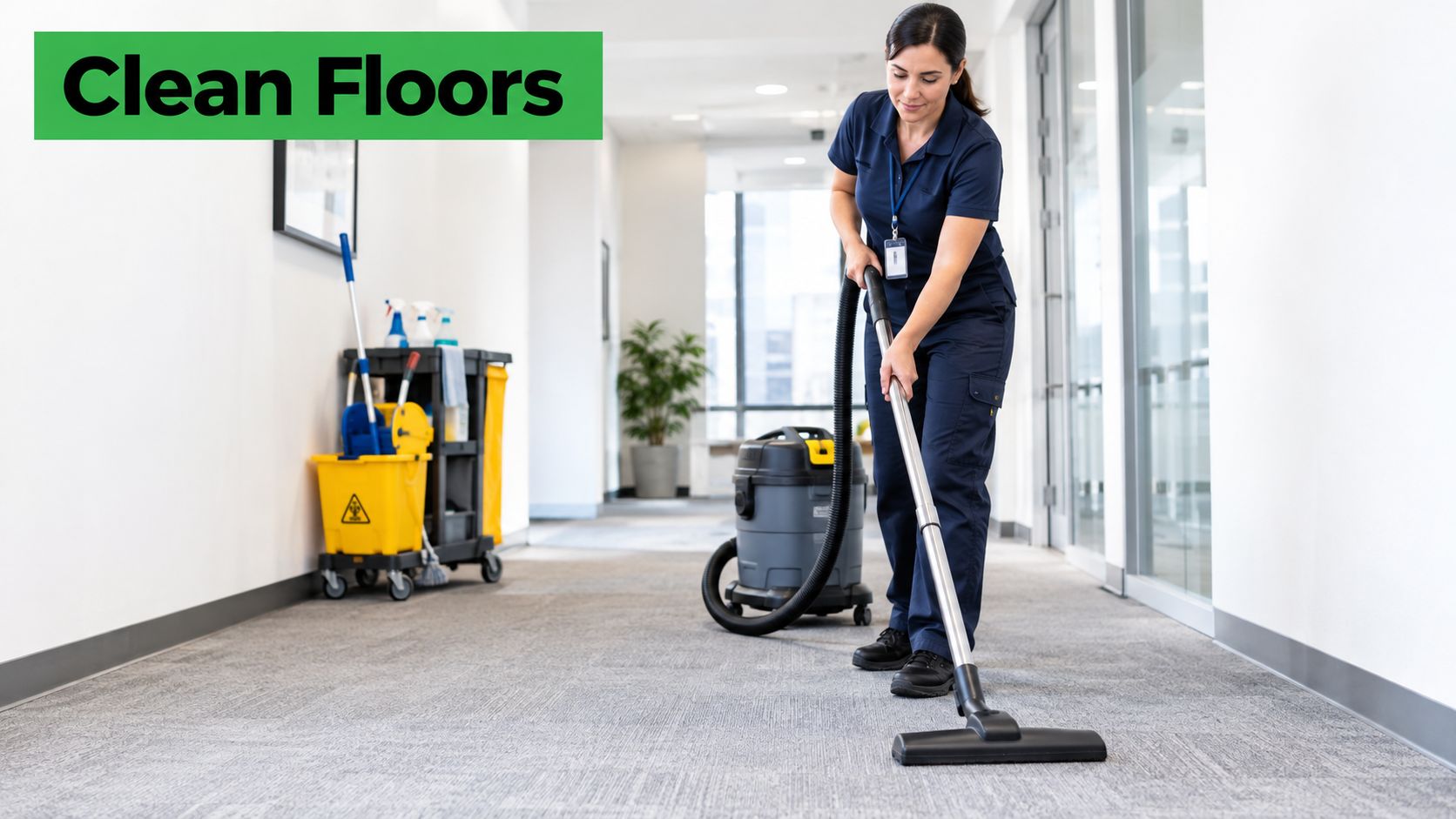
Floors collect what the building brings inside. In Dallas, heat, long air-conditioning seasons, outdoor dust, and pollen can make entryways and traffic lanes look tired quickly. Oak and cedar pollen seasons add another reason to pay attention to what shoes carry through the lobby, corridors, and shared spaces.
Carpeted areas need regular vacuuming that reaches edges, corners, and reachable areas beneath furniture. Where dust control matters, OSHA recommends methods that minimize airborne dust clouds and calls attention to overlooked areas such as ledges, stair rails, equipment, ducts, and other horizontal surfaces. Its housekeeping guidance also supports including high ledges and vents in a fuller office routine, not only visible floors.
Hard floors should be dust-mopped or vacuumed before damp cleaning. That sequence keeps loose grit from becoming a wet film and helps avoid slippery residue. Gmaids uses plant-derived and mineral-based solutions rather than synthetic fragrance intended to mask odors.
Match floor work to the season and layout
A lobby in Southlake, a hallway in McKinney, and a private office in downtown Dallas don't carry the same load. Place durable mats at entrances, inspect them regularly, and give high-traffic paths priority.
Practical rule: Clean spills and visibly soiled areas as soon as they're found. Calendar frequency supports the routine, but surface condition should always override the calendar.
A floor schedule might include daily attention to entrances and main lanes, a regular full-office vacuum, and deeper carpet or hard-floor care when buildup becomes visible or the surface requires equipment. Coordinate floor work with after-hours access so carpets can dry and employees aren't walking through damp areas.
3. Restroom and Break Room Sanitizing
Restrooms are the clearest test of whether an office cleaning program is being managed or merely performed. A large workplace survey found that 86% of office employees identified cleanliness as the most important feature of a good work environment, while 85% said restroom cleanliness reflects the building's overall cleanliness. 67% were more likely to complain about restroom conditions than any other office area, and restrooms generated more than 45% of reported office-building complaints, according to Tork's workplace satisfaction research.
Those figures make a generic “restrooms cleaned” line inadequate. Record each zone and each important point separately:
- Fixtures: Toilets, urinals, flush handles, faucets, sinks, and dispensers.
- Visible surfaces: Mirrors, counters, partitions, floors, grout edges, and ledges.
- Supplies: Soap, paper towels, toilet tissue, and liners.
- Touchpoints: Door handles, push plates, light switches, and stall hardware.
- Condition notes: Odor, spills, visible soil, leaks, damage, and restocking needs.
The CDC recommends regular cleaning of floors and tabletops, immediate action for spills or visible soil, and additional disinfection where someone has obviously been ill. It also calls for worker training and disinfectants appropriate to the known germ. That supports a risk-based schedule rather than automatic chemical treatment of every surface.
Keep break rooms on the same risk map
Break-room sinks, faucet handles, refrigerator pulls, microwave controls, counters, appliance handles, and tables need routine attention. Restroom and kitchen cleaning should happen during lower-use windows where possible, with ventilation and product contact time respected.
Gmaids' approach is fragrance-free and avoids bleach and ammonia. This is especially practical in enclosed restrooms and food areas, where strong fumes can linger. For product-selection details, see the Gmaids guide to disinfectant cleaning products.
4. Trash Removal, Recycling, and Waste Management
A clean office can still feel neglected when bins are full, liners are leaking, or food waste sits in a warm break room. Waste removal belongs in the core office cleaning checklist, not as an optional task after the visible surfaces are finished.
Empty desk-side bins, conference-room receptacles, kitchen containers, and restroom wastebaskets. Replace liners when needed and inspect the inside and outside of bins for residue. Food waste deserves particular attention during hot Dallas weather, when odors can develop quickly in enclosed areas.
Recycling also needs a defined process. Employees should know which materials belong in each container, and signs should sit directly above the relevant bins rather than in a distant policy folder. A recycling plan can reduce contamination and make responsibilities clearer, as explained in this office recycling service overview.
Build waste work into the service sequence
Trash is often best removed near the end of the visit. That prevents a cleaned area from receiving new waste while the team is still working. It also gives the cleaning crew a final opportunity to check break rooms, restrooms, reception areas, and conference rooms before locking up.
- Separate streams clearly: Label trash, recycling, and any approved special collection.
- Check food areas: Look for leaks, residue, and containers left beside rather than inside bins.
- Coordinate access: Confirm loading areas, service elevators, keys, alarms, and collection points.
- Document exceptions: Note overflowing bins, damaged containers, contamination, or supplies that need replacement.
A law office in Lakewood may have a different waste pattern from a technology workplace in Carrollton, but both benefit from a named process. Gmaids can include trash and recycling removal within office and commercial cleaning schedules, with timing arranged around the building's access rules.
5. Kitchen and Break Room Deep Cleaning
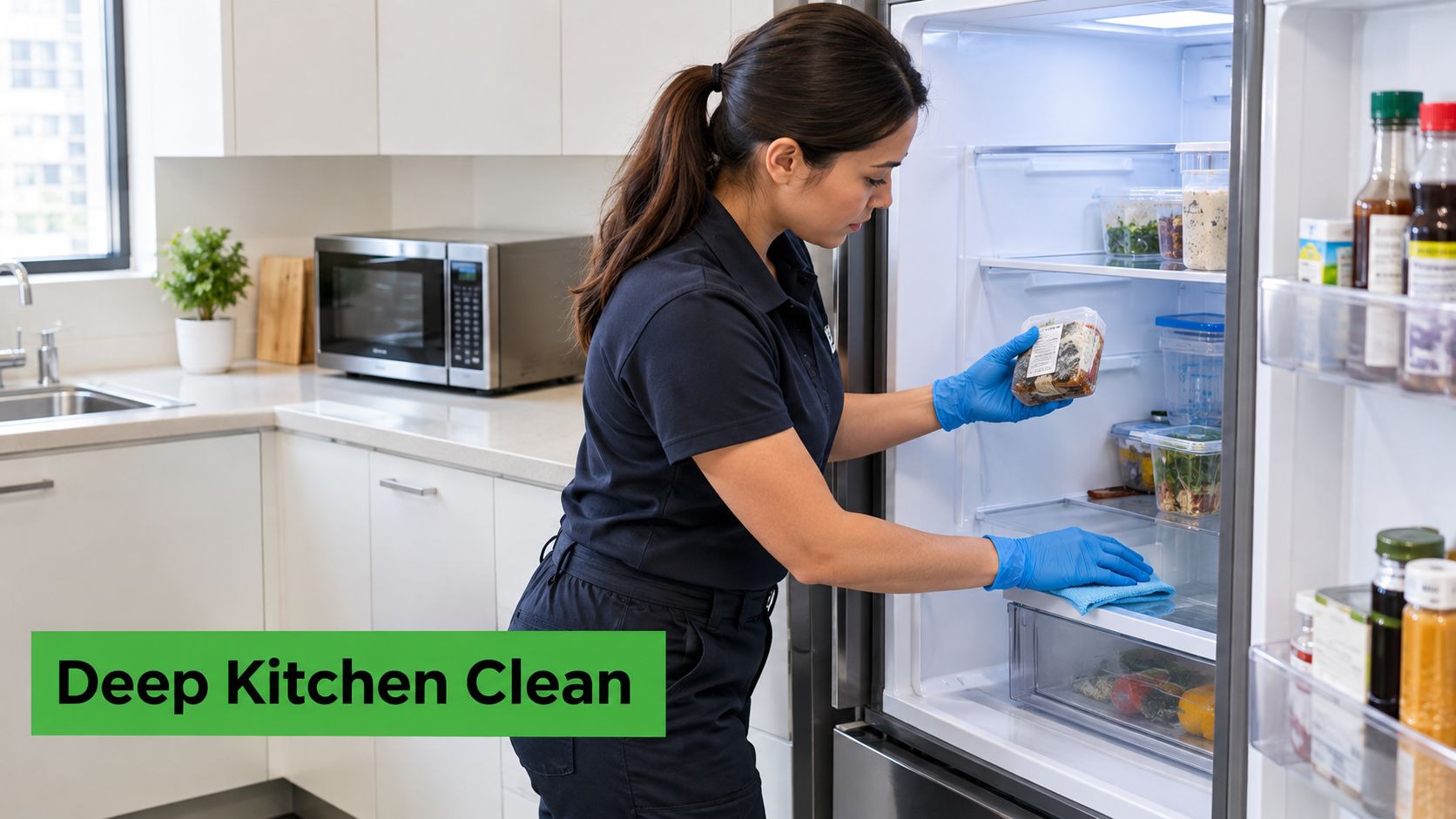
Daily wiping keeps a break room usable. Deep cleaning addresses the places a quick pass misses, including refrigerator shelves, microwave interiors, cabinet faces, appliance seals, backsplash areas, and the floor beneath reachable equipment.
Food debris, spills, standing moisture, and frequent hand contact make these rooms demanding. The work should stay separate from restroom cleaning, with clean microfiber cloths and tools assigned appropriately to reduce cross-contamination. Counters and tables need cleaning before targeted disinfection when the situation calls for it.
Put the deeper work on a visible rotation
Notify employees before refrigerator service so they can remove personal food. Decide in advance whether the office manager or cleaning team handles expired items, because personal property and unopened food shouldn't be discarded without an agreed policy.
A workable rotation may include routine counters, sinks, tables, appliance handles, and floors during regular visits. Add microwave interiors, refrigerator shelves, cabinet fronts, appliance seals, and hard-to-reach edges on a weekly or biweekly cycle, depending on use. A busy office in Uptown may need more attention than a small suite used only a few days a week.
Use low-odor, fragrance-free products in food-preparation areas. Gmaids avoids bleach, ammonia, and synthetic fragrance, using plant-derived and mineral-based products instead. The purpose isn't to perfume the room. It's to remove soil and residue while leaving the space comfortable for employees who are sensitive to strong scents.
For offices improving their coffee and break-room setup, this guide to elevating a break room with PureHQ offers a complementary facilities perspective. Cleaning still needs its own schedule, especially when food, coffee, and shared appliances create daily residue.
6. Glass, Mirror, and Window Cleaning
Glass tells visitors how carefully the rest of the office is maintained. Fingerprints on entry doors, streaks on conference-room partitions, and dust on window sills are easy to see even when desks and floors look orderly.
The Dallas–Fort Worth climate adds practical pressure. New-construction offices in Prosper, Frisco, and Southlake may have expansive glass doors, sidelights, and partitions that collect fingerprints and outdoor dust. Interior glass can usually be handled during a regular rotation. Exterior windows require safe access, suitable weather, and coordination with the building or property manager.
Separate appearance frequency from risk frequency
Glass rarely needs the same cadence as restrooms or shared touchpoints. Entry doors, reception glass, and conference-room partitions may need weekly attention in a busy office. Private interior windows can rotate less often, while mirrors in restrooms should be checked during every restroom service.
Use ammonia-free, fragrance-free glass products and clean with suitable microfiber cloths to limit streaking. Clean during lower-glare periods when possible, particularly on sun-facing glass. Water spots may require a different treatment from ordinary fingerprints, so record the condition rather than asking a team to repeat the same wipe indefinitely.
- High-touch glass: Prioritize entry doors, handles, partitions near reception, and frequently used conference rooms.
- Visible glass: Include lobby panels, client-facing doors, and interior windows facing common areas.
- Hard-to-reach glass: Confirm equipment and access requirements before scheduling.
- Seasonal review: Inspect exterior glass after pollen-heavy periods and dusty weather.
A clean glass program supports professional appearance without consuming time better spent on high-contact surfaces. The checklist should make that trade-off explicit.
7. Carpet Spot Treatment and Upholstery Care
A coffee spill on a lobby chair can become a permanent-looking mark if nobody reports it. Carpet and upholstery need routine vacuuming, but spot treatment works best when the cleaning team knows what happened and where it happened.
Use a documented spot log for reception seating, conference rooms, private offices, and shared lounges. Record the location, approximate time, material, and stain type when known. Coffee, food, ink, and tracked-in soil may require different techniques, and aggressive DIY products can spread a mark or set it deeper into a fabric.
Protect the surfaces people notice first
Client-facing areas should receive regular visual checks. A law office in Dallas may prioritize conference-room chairs and reception furniture, while a Plano office with frequent lunches may find carpet spots concentrated around break-room routes. A pet-friendly workplace in Addison also benefits from fragrance-free, low-residue products around animals and employees who are sensitive to strong scents.
Gmaids uses plant-derived and mineral-based solutions and avoids bleach, ammonia, and synthetic fragrance. That approach focuses on lifting soil and treating odors without masking them with perfume. It also avoids leaving unnecessary residues on upholstery and carpet where employees, children, or pets may come into contact with the material.
Report spills promptly, then keep people off the treated area until the surface is ready for use.
Add weekly spot checks in food and beverage areas, and place upholstery care on a weekly, biweekly, or monthly rotation according to traffic. Deeper carpet extraction and upholstery cleaning should be scheduled as separate restorative work when routine vacuuming no longer restores the appearance.
The checklist should also identify carpet edges, under-chair areas, casters, and fabric panels. These places accumulate dust even when the central walking lane looks clean. Where fine particles matter, ask about dust-controlled vacuuming and appropriate equipment rather than relying only on fragrance or surface appearance.
8. Sanitizing Fogging and Deep Pathogen Disinfection
Fogging is not a substitute for cleaning. Visible soil, spills, dust, and residue still need to be removed first. If a workplace uses an advanced disinfection method, the scope should identify the product, EPA registration where applicable, dilution, application method, required wet or contact time, ventilation plan, re-entry conditions, and responsible technician.
The EPA advises reserving disinfectants for areas where people are likely to contact contaminated surfaces, such as bathroom fixtures and doorknobs. General-purpose cleaning of low-contact surfaces such as walls and floors typically doesn't require disinfectant. Its guidance on greener cleaning products also notes that cleaning products can affect indoor air quality, which is why fragrance-free selection and ventilation belong in the written plan.
Use escalation instead of blanket treatment
Routine daily cleaning remains the foundation. Targeted disinfection makes sense when high-touch areas need it, while a more intensive response may be considered after a confirmed illness or in settings with particular operational requirements. The CDC advises increasing air circulation during cleaning and following a disinfectant's required wet time.
For a medical practice, shared office, or client-facing workplace, document the affected area and close the loop after service. Remove or protect items that shouldn't be treated, notify occupants, and follow the product label rather than assuming a finer mist is automatically better.
Gmaids offers sanitizing and disinfecting fogging for Dallas offices as part of a broader sanitizing cleaning approach. The service should be scheduled after hours when possible, with enough time for contact requirements and ventilation before reoccupancy. Don't ask for fogging only because the checklist feels incomplete. Ask whether the workplace's circumstances justify it, and pair any enhanced treatment with ordinary cleaning of soil and high-touch surfaces.
For sensitive teams, avoid synthetic fragrance and don't mix chemicals. Product choice, airflow, staff notification, and documentation are as important as the application itself.
8-Point Office Cleaning Checklist Comparison
| Service | Implementation Complexity 🔄 | Resource Requirements ⚡ | Expected Outcomes 📊 / ⭐ | Ideal Use Cases 💡 | Key Advantages ⭐ |
|---|---|---|---|---|---|
| Desk and Workspace Surface Sanitizing | Low, routine wipe-downs; minimal training | ⚡ Minimal: microfiber, plant/mineral disinfectant, safe-for-electronics supplies | ⭐⭐⭐⭐, reduces surface pathogens and sick days; contact-time dependent | Medical offices, law firms, coworking, tech companies | Non-toxic, fragrance-free; safe for electronics; EPA-approved botanicals |
| Floor Cleaning and Vacuuming (Carpet & Hard) | Medium, scheduled cycles; some technique for surfaces | ⚡ Moderate: HEPA vacuum, mops, non-toxic floor solutions | ⭐⭐⭐⭐, lowers allergens, protects finishes, improves appearance | Mixed-floor offices, allergy-prone teams, retail, medical spaces | HEPA filtration, no slippery residue, fragrance-free cleaning |
| Restroom and Break Room Sanitizing | Medium, frequent, high-touch focus; consistent protocol | ⚡ Moderate: EPA-approved disinfectants, PPE, restocking supplies | ⭐⭐⭐⭐⭐, significantly reduces pathogen transmission when frequent | Medical/dental practices, shared buildings, food-service businesses | Reduces illness spread; safe for sensitivities; odor control without masking |
| Trash Removal, Recycling & Waste Management | Low–Medium, coordination with vendors and routing | ⚡ Low: liners, sorting bins; vendor pickups/composting as needed | ⭐⭐⭐, prevents odors/pests and reduces cross-contamination | Corporate offices, shared workspaces, medical, retail | Prevents pests/odors; supports recycling and sustainability goals |
| Kitchen & Break Room Deep Cleaning | Medium–High, appliance interiors and degreasing require time | ⚡ Moderate–High: degreasers, non-toxic disinfectants, extra labor time | ⭐⭐⭐⭐, reduces foodborne risks, removes grease/odors, extends appliance life | Shared kitchens, corporate break rooms, medical offices, coworking | Food-safety focused; non-toxic degreasers; prevents pest attraction |
| Glass, Mirror & Window Cleaning | Medium, interior routine; exterior/high-rise needs specialists | ⚡ Moderate: ammonia-free glass cleaners, squeegees, possible safety gear | ⭐⭐⭐⭐, streak-free appearance, better light, no ammonia fumes | Modern glass-heavy offices, client-facing spaces, headquarters | Streak-free results; improves natural light; safe for chemical sensitivities |
| Carpet Spot Treatment & Upholstery Care | Medium, stain identification and timely action required | ⚡ Moderate: plant-derived spotters, spot-clean tools, optional fabric protection | ⭐⭐⭐⭐, removes fresh stains, eliminates odors, extends fabric life (limited on old set-in stains) | Upscale offices, law firms, pet-friendly workplaces, coworking spaces | Non-toxic spotting; protects fabrics; cost-effective vs. replacement |
| Sanitizing Fogging & Deep Pathogen Disinfection | High, specialized process, after-hours, evacuation recommended | ⚡ High: fogging equipment, EPA-approved botanical/mineral disinfectants, PPE | ⭐⭐⭐⭐⭐, comprehensive pathogen reduction including vents and crevices | Medical/dental practices, health clinics, shared workspaces with outbreaks | Reaches hard-to-clean areas; non-corrosive to equipment; fragrance-free thorough disinfection |
Turn the Checklist Into a Schedule That Sticks
An office cleaning checklist becomes useful when someone can act on it, inspect it, and adjust it. Start with the surfaces that degrade fastest: workstations, shared equipment, restroom fixtures, break-room touchpoints, entry hardware, and traffic-path floors. Service them daily or according to actual traffic, occupancy, and exposure.
Keep waste removal on a dependable routine, with food waste checked more often when the break room is busy. Schedule full floor care regularly, then increase attention during dusty periods and pollen seasons in Dallas. Put break-room deep cleaning and upholstery care on weekly or biweekly rotations based on use. Glass can follow appearance and client traffic, while high ledges, vents, sills, baseboards, and other overlooked surfaces need a monthly or planned detail cycle.
A few management habits make the schedule easier to maintain:
- Clear the work area: Ask employees to remove papers, food, and personal items before workstation service.
- Define access: Provide badge, alarm, elevator, storage, and after-hours instructions in writing.
- Track exceptions: Record blocked desks, spills, damaged fixtures, missing supplies, and areas that couldn't be reached.
- Match products to occupants: Choose fragrance-free options for teams with allergies, asthma, chemical sensitivities, or strong low-odor preferences.
- Review the cadence: A private office, coworking floor, medical practice, and retail space won't have the same cleaning demands.
- Inspect completion: A checklist should identify who performed the work and who verified it.
Gmaids provides office and commercial cleaning across Dallas–Fort Worth, including Dallas, Plano, and Frisco. Its Certified Cleaning Teams® are trained, background-checked, and insured, and services can be arranged for recurring weekly, biweekly, or monthly schedules, as well as after-hours office access. Options include basic cleaning, deep cleaning, post-construction cleaning, move-in/move-out cleaning, office cleaning, commercial cleaning, and sanitizing cleaning.
Gmaids has served DFW since 2004, was founded by Juan Chaparro and Karen La Spina, and uses the promise, “Healthy Homes, Families and Souls. We green clean without toxic chemicals.” The company is also associated with a 24-hour satisfaction policy. If something isn't right, let the team know within 24 hours and it will be addressed. Those details matter because a recurring program succeeds through communication, consistent scope, and follow-through, not through a checklist that nobody reviews.
For Dallas offices balancing busy professional families, pet-friendly households, new construction dust, and fragrance-sensitive teams, the practical choice is a schedule that removes unnecessary chemical exposure while keeping high-demand surfaces under control. Start with the areas employees touch and visitors see, then build the less frequent work around them.
Choose a recurring office cleaning plan from Gmaids for fragrance-free, non-toxic service across Dallas–Fort Worth, including workstation, restroom, floor, waste, break-room, and sanitizing care. Get an instant, flat-rate quote online or call 214-997-6918 to build a schedule around your office's traffic and access needs.


Ready for a healthier, cleaner home?