Apartment Move Out Cleaning Dallas Checklist

The usual advice for apartment move-out cleaning in Dallas is to wipe everything down, vacuum, and leave the place smelling fresh. That can still leave you unprepared for key return. On a Dallas move-out morning, an apartment may look tidy from the doorway while grease remains beneath the stove lip, dust fills the closet tracks, and sticky spills hide under the refrigerator bins.
Table of Contents
- Why a Tidy Dallas Apartment Is Not Deposit-Ready
- Make empty and wiped mean something
- Check the edges before taking photographs
- What if pet urine has reached the carpet backing or subfloor?
- What if the landlord rejects the clean?
- What if the apartment smells musty after cleaning?
Why a Tidy Dallas Apartment Is Not Deposit-Ready
Say the movers have left your Dallas apartment and the living room looks spotless. During the walkthrough, the manager opens the oven, checks a bathroom drawer, and runs a finger along a closet shelf. Those are the places a doorway glance misses.
Deposit-ready means removable dirt, food film, hair, and debris are gone, the cleaning matches the lease's requirements, and you have dated photographs showing the condition at handoff. It doesn't mean cleaning can erase ordinary wear, repair a broken fixture, fix failed caulk, or deal with abandoned belongings.
Apartment handoffs affect a substantial part of the regional rental market. A Redfin-based analysis reported by Bisnow found that apartments in large multifamily buildings represented more than 29% of Dallas–Fort Worth's rental supply in 2014, rising to over 46% by 2024. A repeatable cleaning checklist matters both to tenants protecting a deposit and to managers preparing a unit for its next resident.
Practical rule: Inspect the places that become visible only after the apartment is empty.
In Plano or Frisco, a well-kept apartment near new construction can still have fine dust on cabinet tops and window tracks. During North Texas's long AC season, accessible return grilles deserve attention too. Neither situation calls for stronger fragrance, just a more deliberate inspection.
Start with the actual rooms and hidden interiors. Then match that work to the lease, preserve evidence, and choose a cleaning schedule that leaves time for a final walkthrough rather than a hurried key drop.
Deposit-Ready Checklist by Room
| Area | Finish before inspection | Often treated as incomplete | Not a cleaning fix |
|---|---|---|---|
| Kitchen | Degrease surfaces; clean inside fridge, oven, cabinets, and drawers | Grease film, sticky shelves, full crumb trays | Broken appliance, missing part |
| Bathroom | Remove soap film, clean toilet, mirrors, fan cover, and corners | Hair, soap scum, cloudy fixtures | Failed caulk, cracked tile, damaged tub |
| Floors | HEPA-vacuum edges and carpet; damp-mop hard floors | Tracked dirt, pet hair, dusty baseboards | Normal carpet wear from foot traffic |
| Closets and cabinets | Empty, wipe shelves, vacuum floors | Leftover items, crumbs, shelf dust | Holes from removed hardware |
| Walls and touch points | Spot-clean marks; wipe switches, handles, and doors | Fingerprints and food splatters | Nail holes and paint damage beyond the lease |
| Windows, sills, and tracks | Wipe interior glass, sills, and tracks | Grime and debris in tracks | Broken seals or exterior-only glass |
Make empty and wiped mean something
Request the property's written move-out sheet before you start. Use it alongside this checklist, marking any additional spaces or appliances your lease covers. A true move-out clean reaches inside the fridge, oven, cabinets, drawers, and closets, rather than stopping at the visible surfaces included in a basic tidy.
In the kitchen, remove food before washing refrigerator shelves and door bins. Let cold glass shelves warm before washing them, and dry the interiors before replacing removable parts. Clean the stovetop, backsplash, range drawer where accessible, sink, and disposal splash zone without putting your hand into the disposal.
Use a surface-compatible, fragrance-free degreaser and a non-scratch pad for cooking residue. Follow the oven manufacturer's instructions, especially around heating elements and special coatings. Don't pull out connected appliances unless the property authorizes it.
For bathrooms, work on soap film rather than just polishing over it. Clean the toilet bowl, seat, hinges, exterior, and base with separate cloths from those used on the vanity. Dust the accessible fan cover, remove hair from corners, and report loose caulk instead of scrubbing until it tears.
Check the edges before taking photographs
Vacuum where furniture stood, including carpet edges and closet floors. Damp-mop hard flooring with a clean microfiber pad and a product compatible with the floor finish, changing dirty water rather than spreading a gray film across the room.
- Storage: Remove every hanger, liner, forgotten toiletry, and bag before wiping shelves and drawer interiors.
- Touch points: Wipe door edges, handles, and switch plates with a lightly damp cloth, keeping moisture out of electrical openings.
- Glass and tracks: Clean interior panes, lift loose debris from tracks, and wipe sills without forcing water into the window assembly.
Home Removals Sydney's cleaning advice for Sydney renters moving out offers another practical moving-day reference, but your Dallas lease remains the standard for this handoff.
Open the blinds and photograph each completed room the same day. Include wide views and close-ups inside appliances and storage spaces. Keep nail holes, cracked tile, appliance faults, and persistent smoke or moisture odors on a separate condition list so they aren't mistaken for unfinished cleaning.
Texas Deposit Rules and Your Lease Clause
The Texas Attorney General's renter guidance says a landlord generally must return the security deposit, minus lawful deductions, within 30 days after move-out, provided the tenant supplies a forwarding address; it also explains itemized deductions and notes that many leases require 30 days' advance notice as a condition of deposit return.
Those are separate responsibilities. Scheduling a thorough clean doesn't substitute for giving proper notice, supplying an address, or surrendering possession as required by the lease.

Separate soil from wear and damage
Normal deterioration isn't the same as abnormal damage. The Attorney General's examples distinguish carpet wear from ordinary foot traffic from mildew caused by a leaking water bed. One reflects everyday use; the other may support a charge.
A cleaning invoice alone doesn't explain why an entire deposit should be withheld. Any disputed charge needs to be assessed against legally chargeable damage or an applicable lease obligation, not just the presence of an invoice.
For renters in Dallas, Lake Highlands, and Richardson, put the lease cleaning clause beside the property's instructions. Plan for the more demanding written cleaning requirement where they're consistent, but ask for clarification if the documents conflict. A move-out sheet doesn't automatically make every requested charge lawful.
Assemble a useful handoff packet
Keep the evidence together rather than scattered through texts and camera folders:
- Written standards: Save the lease clause, move-out sheet, and any clarification from management.
- Finished-condition evidence: Retain dated photos or video taken after belongings are removed.
- Condition history: Include the move-in report and correspondence about pre-existing damage or unresolved maintenance.
- Handoff records: Save requested meter readings, proof of forwarding-address delivery, and key-return confirmation.
A cleaning receipt shows work was purchased. Photographs help show the condition that was actually handed over.
RentReboot lets readers find guidance on protecting tenancy deposits in its London-focused guide. Use it as a comparison for recordkeeping, not as a statement of Texas law.
For owners and managers, a consistent packet supports a clearer inspection and more specific records. Arrange the final clean close enough to the walkthrough that movers, maintenance work, or another round of foot traffic won't undo it. If the deposit becomes disputed, preserve the original files and seek Texas-specific tenant guidance rather than relying on a cleaning company to interpret the lease.
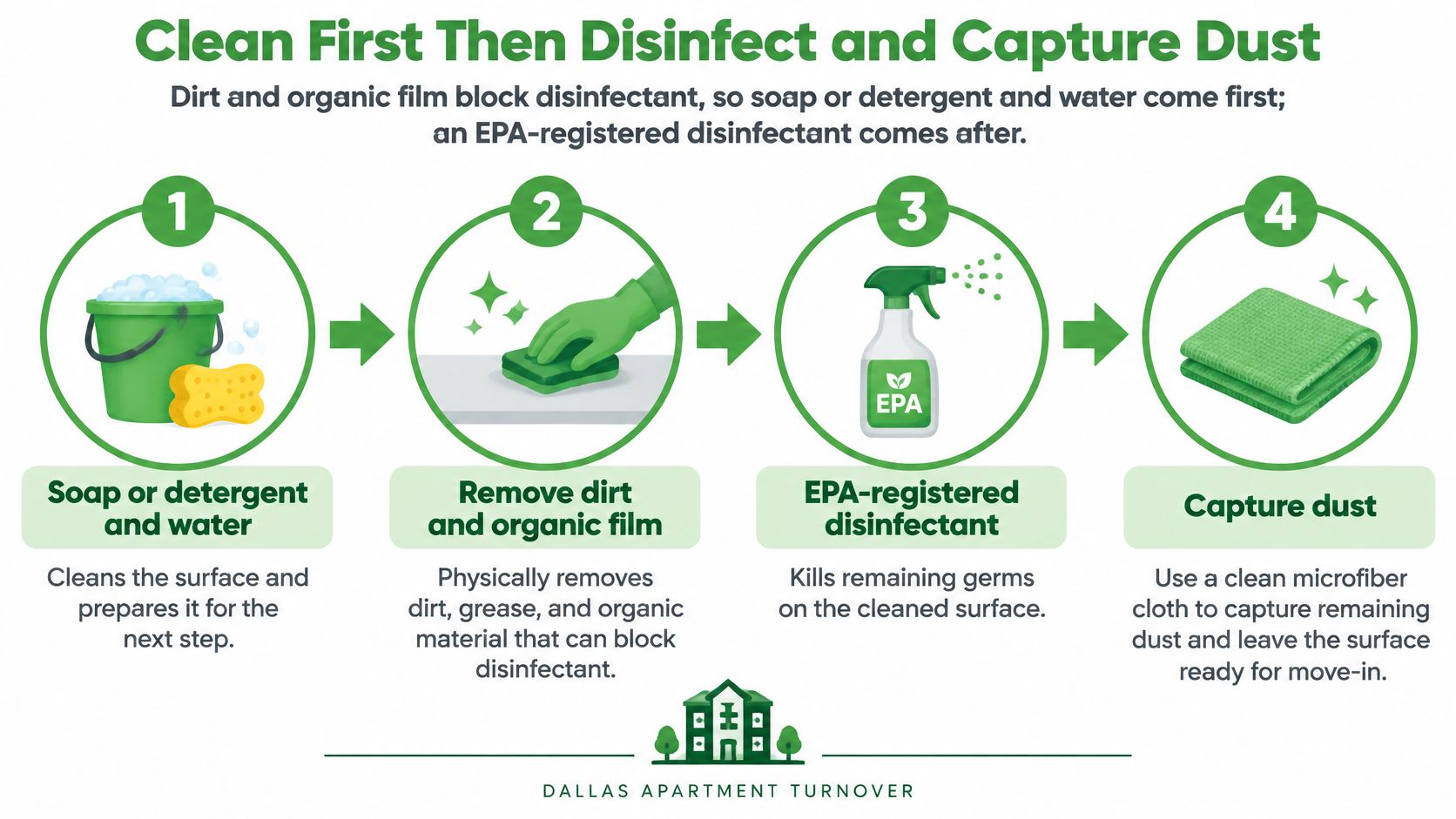
Clean First Then Disinfect and Capture Dust
A refrigerator handle with a greasy fingerprint needs cleaning before any disinfecting step. Spraying disinfectant over that film and immediately wiping it away isn't equivalent to following the product's directions.
The CDC's home cleaning and disinfecting guidance explains that dirt can interfere with disinfection: clean with soap or detergent and water first, then use an EPA-registered disinfectant when needed, keeping the surface visibly wet for its labeled contact time.
Give each product a defined job
Use a damp microfiber cloth and a compatible detergent to remove residue from the handle. If disinfection is appropriate, apply the selected product according to its directions and allow the full wet contact time. Don't invent a universal waiting period, because products have different requirements.
Entry handles, switches, cabinet pulls, faucet handles, toilet controls, and appliance handles are sensible places to evaluate that second step. There's no reason to indiscriminately coat every wall with disinfectant. For help distinguishing product purposes, consult the guide to disinfectant cleaning products.
- Check compatibility: Confirm the product is suitable for the surface, including painted finishes and natural stone.
- Keep products separate: Never mix cleaners or add another chemical to strengthen a solution.
- Record the method: If management requests sanitizing documentation, note the product, application method, and labeled dwell time.
Capture dust rather than chase it
A dusty baseboard needs a different approach from a greasy handle. First remove loose debris, then damp-wipe upper shelves, ledges, and accessible surfaces from high to low. Let disturbed dust settle before the final vacuuming and floor cleaning.
Use a HEPA-capable vacuum on carpets, edges, closet floors, accessible vent covers, and hard floors with the correct attachment. Keep cloths folded so you can turn to a clean face instead of dragging the same dusty patch around the apartment.
Dallas households may be dealing with pet hair alongside oak or cedar pollen carried indoors during allergy seasons. Work with the building's ventilation rules: open windows or doors when practical, or use appropriate exhaust ventilation without directing fans at dusty surfaces.
If an odor remains after the soil is removed, stop adding products. Note where it's strongest and ask management to investigate rather than trying to make the apartment smell perfumed.
DIY or a Crew for Your Dallas Move-Out
A lightly soiled studio in Uptown can be a reasonable DIY project if you have an uninterrupted day after the movers leave. Bring fragrance-free detergent, microfiber cloths, non-scratch tools, gloves, and a HEPA-capable vacuum, not a collection of scented sprays.
A pet-friendly apartment in Lake Highlands presents a different workload. Carpet edges, accumulated hair, and an oven with baked-on residue can turn a planned evening into unfinished rooms. In Plano or Frisco, visible construction dust on cabinet tops and tracks may call for a discussion about post-construction cleaning rather than assuming an ordinary move-out scope covers it.

Match the workload to the available window
These are planning allowances, not promised completion times. Ask a crew to confirm timing after describing the actual condition.
| Situation | DIY fit | Hire fit | Planning time |
|---|---|---|---|
| Lightly soiled studio, flexible day | Strong if supplies are fragrance-free | Optional backup | Reserve most of a day for yourself |
| Small apartment with pets or carpet | Easy to miss hair and edges | Usually the better handoff | Ask about a half-day crew block; protect a long solo day |
| Full fridge, oven, cabinets, and closets | Often skipped when time runs out | Included in move-out scope | Reserve an extra block beyond a surface tidy |
| Keys due the next morning | High risk of an unfinished room | Book ahead of the walkthrough | Preserve a same-day photo window after the clean |
| Sensitive household or next tenant unknown | Only with no bleach, ammonia, or fragrance | Fragrance-free, non-toxic crew is a sensible default | Allow ventilation before photos and lockup |
Ask about equipment, not just availability
The EPA's guide to indoor air quality recommends high-efficiency or HEPA vacuuming when vacuum exhaust remains indoors and warns that conventional vacuuming can increase airborne dust and allergen levels. That makes filtration a useful booking question for carpeted apartments and pet households.
Ask whether the crew brings appropriate equipment and whether appliance and storage interiors are explicitly included. The distinction between deep cleaning and regular cleaning can help you describe buildup, but an empty-apartment handoff still needs its own written scope.
Hiring makes sense when you'd otherwise skip interiors, rush the documentation, or keep children and pets in an unsettled apartment while you scrub. DIY makes sense when the workload is manageable and you can finish without borrowing time from key return.
Coordinate any lease-required professional carpet treatment separately. Confirm the sequence with the carpet specialist so nobody walks across freshly treated flooring to finish cabinets.
How to Choose a Fragrance-Free Move-Out Team
A deposit-ready handoff depends on more than a clean-looking room. Ask what products a crew uses, what the move-out service includes, and whether the agreed scope will be written down. Start with the label, not the scent left behind: are bleach, ammonia, and added fragrance excluded, and can the team identify any disinfectant it plans to use?
Fragrance-free isn't the same as unscented. Fragrance-free products leave out added scents; unscented products may include ingredients that mask odors. A strong smell does not show that a surface is clean, and no scent does not prove it either.
The EPA's information on indoor particulate sources explains that cleaning solutions and fragranced products can contribute to indoor particles, and that some compounds can react with ozone to form additional pollutants. Reducing unnecessary fragrance and ventilating are practical steps, not reasons to fear every cleaning product.
Choose by ingredients and scope
For parents, pregnant women, pet owners, and people with asthma, allergies, or chemical sensitivities, fewer harsh chemicals can be a practical preference. Consider what may remain on floors where babies crawl and pets nap, as well as fumes during cleaning. A service should not present product choices as a medical guarantee.
- Request product details: Ask for product names or labels instead of relying on a green-cleaning description.
- Confirm the exclusions: State that you want no bleach, ammonia, or synthetic fragrance.
- Check the work order: Confirm that appliance interiors and storage areas are included, not left as optional extras.
The guide to fragrance-free cleaning service offers more context for assessing product choices.
A local option with an explicit handoff scope
Gmaids is a Dallas–Fort Worth house cleaning service established in 2004. It uses non-toxic, fragrance-free products and supplies its own equipment. Its trained, background-checked, insured Certified Cleaning Teams® perform move-in/move-out cleaning that includes the inside of the fridge, oven, cabinets, drawers, and closets.
Before booking, send the property's checklist and ask for written confirmation of the cleaning scope. A clear work order helps connect the service to the actual handoff: which interiors will be cleaned, and what the lease or property checklist requires. The service category and written scope matter more than a reassuring name on a booking confirmation.
Book the Clean and Close the Handoff
Treat the final week as a sequence of handoffs, not a single cleaning appointment. Everyone needs to know when the apartment will be empty, who can enter, and when possession ends.
- Read the requirements. Compare the lease with the property's move-out sheet. Identify carpet treatment, repairs, or disposal tasks that sit outside the cleaning scope.
- Complete the paperwork. Give notice and provide your forwarding address through the required channels. Save confirmation rather than assuming a conversation was recorded.
- Empty the apartment. Remove food, toiletries, hangers, donations, and trash. Cleaners shouldn't have to guess which belongings you intend to keep.
- Book the correct service. Specify move-out cleaning and the required interiors. Disclose pets, heavy buildup, construction dust, and any same-day inspection.
- Arrange access. Confirm parking, elevators, fobs, loading restrictions, and office procedures in Dallas or Richardson. TLC Moving & Storage's a renter's guide to building access can help you think through apartment logistics.
- Inspect the completed work. Walk with the checklist, open blinds, and capture the final condition. Record unresolved odors or damage separately from any missed cleaning.
- Close the handoff. Return keys as directed and keep the complete packet somewhere you can access after moving.
Leave room for a final check
Don't schedule key return so tightly that you can't inspect the work or contact the team about a missed area. Confirm the appointment's completion window before committing to a walkthrough.
For property managers, the same written scope makes turnover easier to evaluate consistently. The next resident should arrive to cleared storage, clean appliances, and floors without the previous occupant's debris.
Dallas Move-Out Cleaning FAQs
What if pet urine has reached the carpet backing or subfloor?
Surface cleaning and ventilation may not remove an odor that has reached beneath the carpet. Photograph visible staining before cleaning, note its location in writing, and tell management so the affected materials can be assessed. Avoid repeated applications or fragrance to cover the smell. A problem in the subfloor needs assessment beyond surface cleaning.
What if the landlord rejects the clean?
Ask which specific areas failed the written standard and request an itemized explanation of proposed deductions. Compare the claims with your lease, move-out instructions, original condition records, and dated photos of the finished apartment. A rejected clean alone does not show that every charge is justified, and hiring a cleaning crew does not resolve a dispute about deductions.
If the concern is a missed cleaning task, send the service clear photos promptly so it can assess the issue. Keep that discussion separate from disputes about wear, repairs, or the legal basis for withholding money.
What if the apartment smells musty after cleaning?
Tell management where the odor is strongest, such as near a drain, cabinet, window, or AC grille. Moisture, a dry plumbing trap, or an HVAC issue may need attention from the appropriate trade rather than another cleaning product. Photograph visible staining or dampness, but don't open walls, disturb suspect materials, or attempt repairs without authorization.
Before lockup: Record unresolved conditions in writing instead of using an air freshener to hide them.
A clean apartment is only one part of the handoff. Gmaids offers non-toxic, fragrance-free move-in/move-out cleaning that includes appliance and storage interiors. Request a quote at Gmaids, or call 214-997-6918 with your move-out date, building access details, and property checklist.


Ready for a healthier, cleaner home?