Commercial Cleaning Checklist: 8 Tasks for Offices
You open the office, switch on the lights, and notice yesterday's fingerprints on the entrance glass. There's dust along the lobby edges, the restroom paper towels are running low, and someone's lunch has left its mark inside the microwave. Before the workday starts, you're already managing cleaning details.
Dallas workplaces need more than a general promise to tidy up. Texas dust, seasonal pollen, long air-conditioning seasons, and daily foot traffic call for a commercial cleaning checklist that names the surface, method, schedule, and person responsible. A busy retail entrance and a quiet conference room shouldn't receive identical attention.
Build your schedule around practical priorities:
- Daily: Restrooms, waste, shared kitchens, high-traffic floors, and defined high-touch surfaces.
- Weekly: Floor edges, detailed dusting, interior glass, and supply reviews.
- Monthly: Higher surfaces, appliance interiors, and a review of recurring problems.
- After an incident: Spills, illness, renovation dust, and hazards that need separate procedures.
Documentation matters as much as the task itself. Managers who document commercial kitchen cleaning results can apply that same habit to shared workplace kitchens: record what was cleaned, what needs attention, and who verified completion.
For fragrance-sensitive employees, parents, and pet owners, the product list belongs beside the task list. Clean should mean visibly clean, not heavily perfumed.
Table of Contents
1. Restroom Sanitation and Restocking
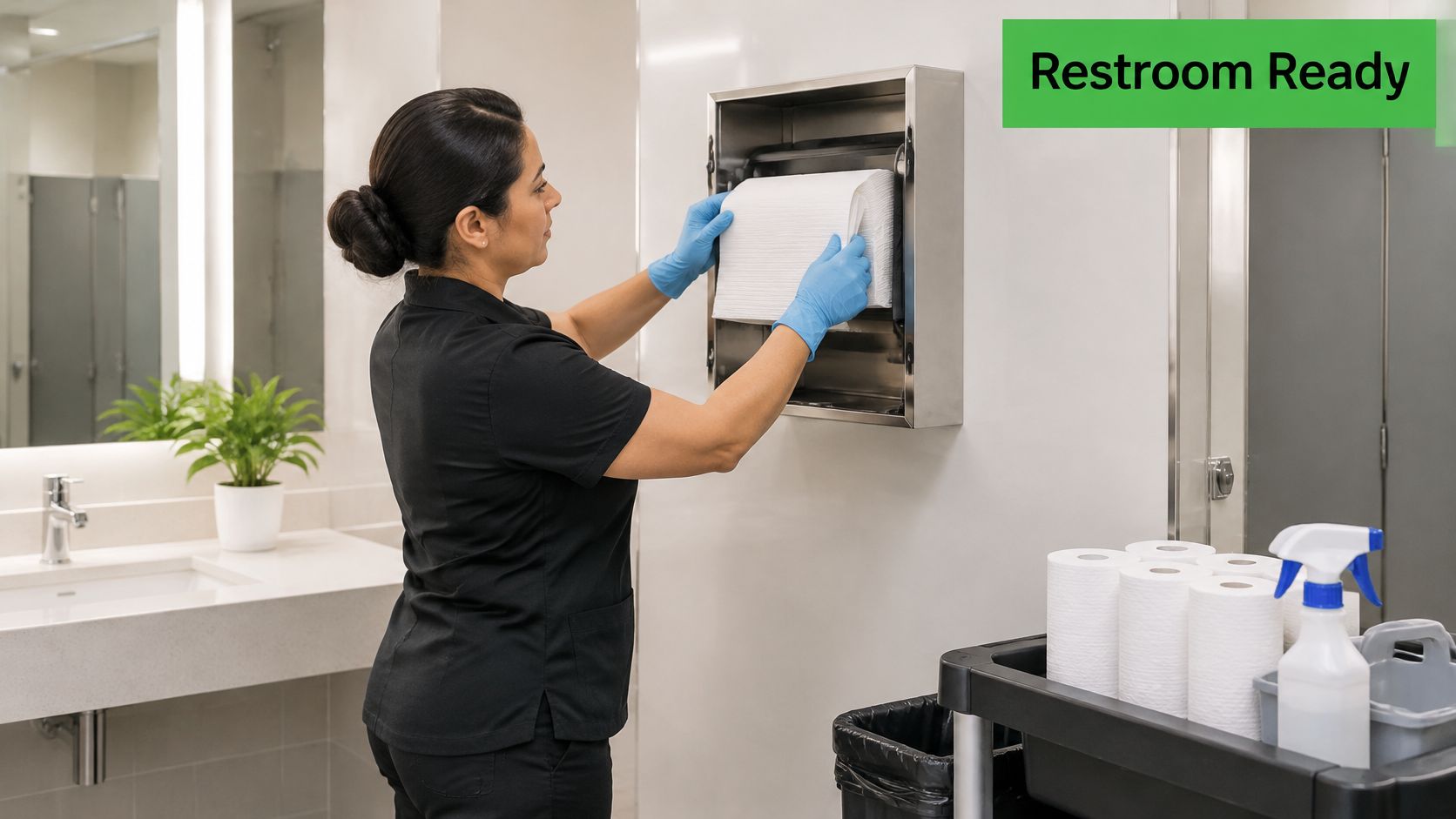
A restroom isn't finished when the fixtures shine but the soap dispenser is empty. Treat cleaning, restocking, and inspection as parts of the same visit.
List toilets, urinals, sinks, faucets, partitions, mirrors, dispensers, and floors separately. Include handles and dispenser touchpoints rather than hiding them under a vague instruction to “clean bathroom.” For an additional planning reference, consult VirusFAQ's restroom cleaning guide alongside your facility's approved procedures.
Separate tools and make shortages visible
Use color-coded or otherwise segregated tools so staff don't clean sinks with materials used around toilets. Work through cleaner areas before more heavily soiled areas, and follow the approved product directions for any disinfection.
- Fixtures: Remove visible soil and check bases, hinges, faucet surrounds, and splash marks.
- Supplies: Refill toilet paper, paper towels, fragrance-free soap, and liners as needed.
- Floors: Address moisture, corners, and the areas behind doors, keeping wet-floor controls in place.
- Reporting: Record leaks, blocked fixtures, damaged dispensers, and supplies approaching reorder levels.
For a patient-facing practice in Plano, a workable arrangement might be a morning reset followed by an afternoon supply check. A Dallas retailer could add a restroom check during holiday shopping periods. These are scheduling options, not universal requirements; adjust them to actual use.
Gmaids Certified Cleaning Teams® use fragrance-free, plant-derived and mineral-based products, without bleach, ammonia, or synthetic fragrance. Skip scented air fresheners that obscure rather than resolve an odor complaint. Post a dated service log inside the restroom, but keep personnel details and sensitive incident notes in the manager's shared record.
2. High-Touch Surface Sanitizing
A quick spray followed by an immediate wipe isn't a reliable disinfection procedure. The checklist must specify what product to use, where it belongs, and how long the surface needs to remain wet.
Inventory door handles, switches, railings, elevator buttons, shared phones, keyboards, and equipment controls. Follow device manufacturers' instructions for electronics, and distinguish ordinary cleaning from sanitizing and disinfection rather than treating those terms as interchangeable.
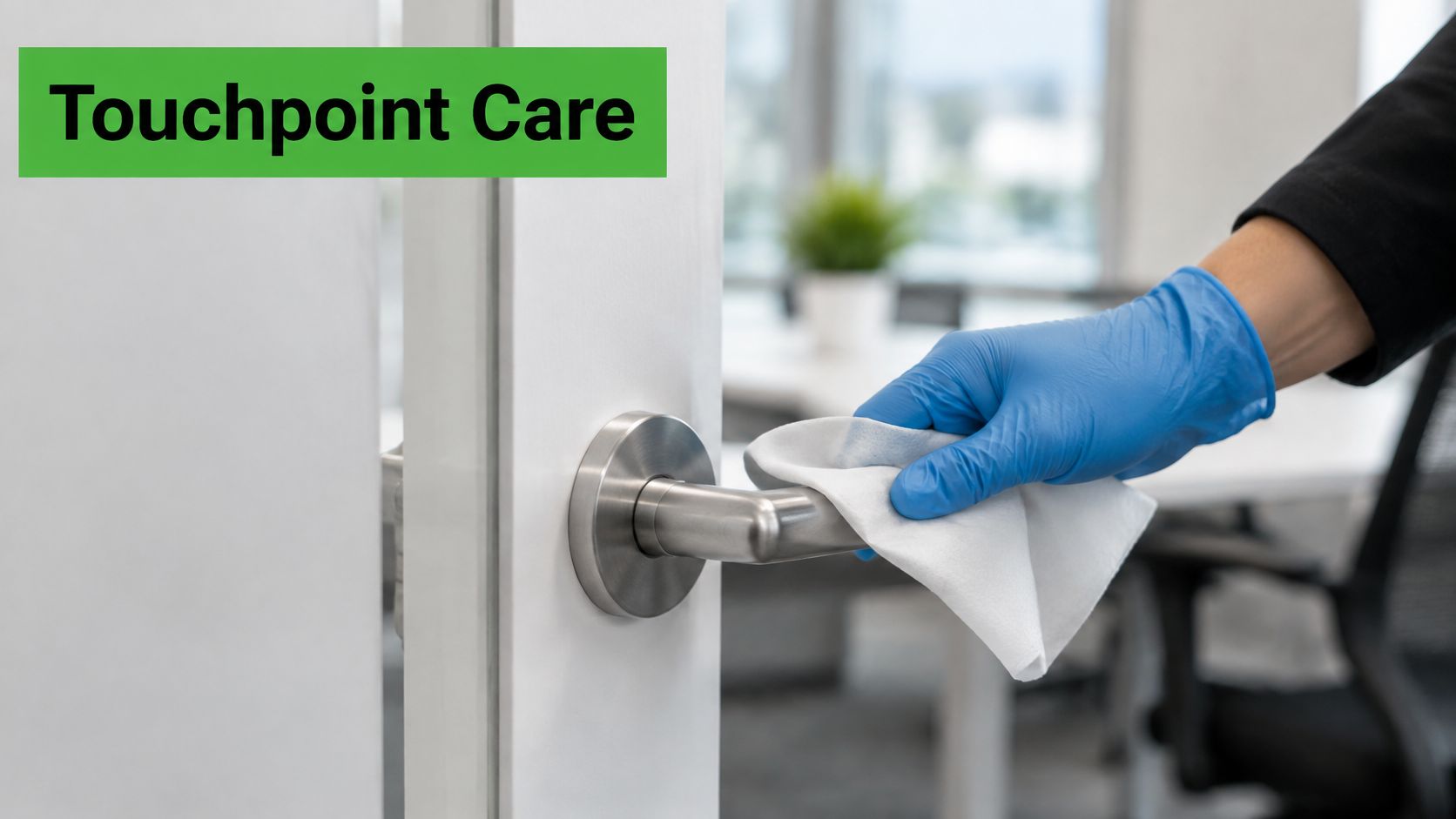
According to CDC facility cleaning and disinfection guidance, routine cleaning is appropriate for most surfaces, with disinfection especially relevant after illness and for frequently touched surfaces. Clean visible soil first, select an appropriate EPA-registered product, follow its label, and provide ventilation during use.
Practical rule: Write the required wet contact time beside the product name. Don't leave technicians to guess from memory.
EPA's disinfectant guidance explains that contact time depends on the product and target organism, and the surface must stay visibly wet throughout. Include a check for reapplication if it dries early.
Match the method to the setting
A Dallas coworking manager might assign evening attention to shared desks and appliance handles. A Frisco clinic should instead define patient-area responsibilities through its own clinical protocols, supported by a specific medical office cleaning service scope.
Gmaids offers sanitizing cleaning with EPA-registered disinfectants, botanical solutions, and advanced fogging options. Botanical ingredients don't establish disinfectant performance by themselves. As the CDC guidance explains, fogging isn't a default primary surface-disinfection method; product-label permission and appropriate safety controls are essential.
3. Floor and Entryway Care
Start at the entrance rather than chasing tracked-in soil throughout the building. Inspect exterior scraper mats, interior absorbent mats, thresholds, door frames, and the adjacent flooring before moving into occupied areas.
In Dallas–Fort Worth, construction dust and seasonal pollen make entryway maintenance particularly relevant. Vacuum or dust mop before damp mopping, so loose debris doesn't become a dirty film.
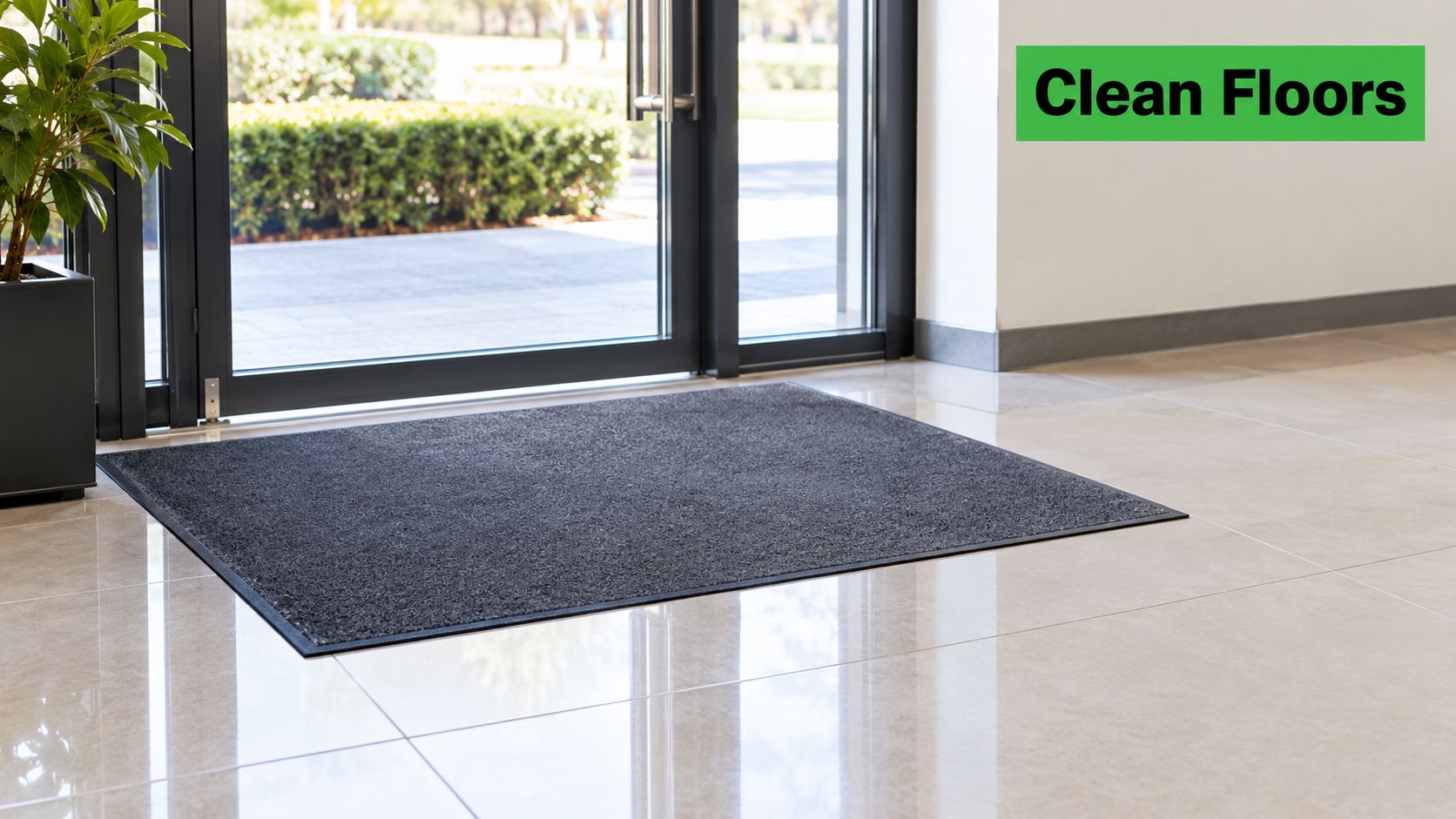
- Daily traffic areas: Vacuum mats and carpet lanes, remove loose soil, and address visible spills.
- Detailed coverage: Clean accessible edges, corners, thresholds, and areas beneath movable furnishings.
- Product selection: Confirm floor compatibility and follow dilution directions for a neutral, fragrance-free cleaner.
- Safety checks: Inspect curled mat edges, damaged flooring, moisture, and equipment condition.
A multi-tenant office in Addison could schedule nightly hallway vacuuming and adjust damp mopping to the condition of its hard floors. Near new construction in Frisco, additional entrance checks may be more useful than applying extra cleaner throughout the building.
Avoid residue and unnecessary wetness
More detergent isn't better floor care. Measure the product, change dirty solution, and investigate recurring tackiness instead of adding another layer. Gmaids' guidance on why a floor feels sticky after mopping is a useful troubleshooting reference.
For carpet and dusty conditions, specify HEPA-filtered vacuuming where appropriate. Healthy-facility cleaning guidance supports HEPA equipment and ventilation considerations, especially after illness or during dust-heavy work.
Use non-toxic, fragrance-free products appropriate to the surface, but still follow handling instructions. Keep people away from wet sections until they're ready for use, and record flooring defects rather than assuming cleaning will correct them.
4. Break Room and Kitchen Cleaning
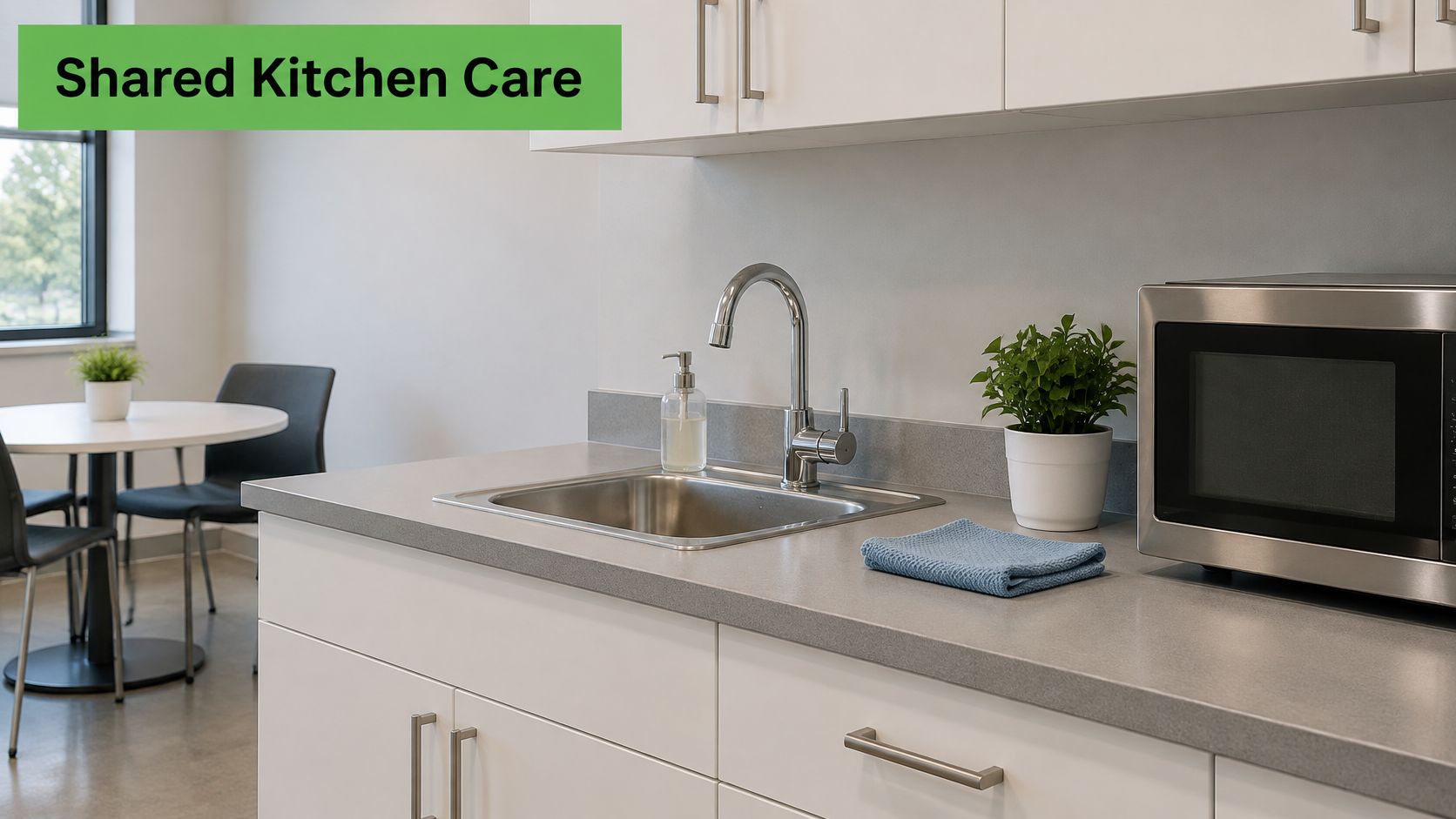
Coffee rings, crumbs, food splashes, and forgotten containers need different responses. Give employees responsibility for their belongings, and give the cleaning team a clear scope for the shared surfaces around them.
A Coppell office might adopt a Friday refrigerator review, while a Richardson practice could prioritize microwave splashes and counters during each service visit. Present these as agreed routines so nobody assumes someone else has emptied the fridge.
Give food-contact surfaces their own procedure
Clean counters, tables, sinks, faucets, microwave interiors, appliance handles, and floors according to their materials. Use dedicated cloths for food-contact surfaces rather than carrying a cloth from cabinet fronts or restroom work into food-preparation areas.
- Daily reset: Clear approved items, remove crumbs and spills, and clean sinks and shared eating surfaces.
- Weekly review: Identify expired or abandoned food under a written disposal policy.
- Scheduled interior work: Include refrigerator shelves and microwave interiors explicitly, with permission to move contents.
- Product directions: Follow any required rinse step before a food-contact surface returns to use.
Fragrance-free doesn't mean residue-free, so correct application still matters. Gmaids uses plant-derived products without synthetic fragrance, but technicians must still follow product instructions and avoid leaving unnecessary cleaner on surfaces where people prepare food.
Food debris also deserves attention when reviewing how sanitation helps prevent pest infestations. Record pest evidence for management instead of treating it as an ordinary wipe-down task.
Agree on an end-of-day dish policy and an owner for appliance clean-outs. Cleaning teams can maintain accessible surfaces more consistently when counters aren't covered with unclaimed dishes and personal containers.
5. Trash and Recycling Removal
An overflowing break-room bin needs attention even when nearby desk bins are nearly empty. Schedule waste checks by contents, traffic, and location, not just by the number of containers on the floor plan.
For example, an Irving retailer could add an evening bin inspection during holiday shopping periods. An Allen office could establish clearly labeled recycling stations rather than leaving employees to guess which materials belong where. Neither change requires a complicated system, just clear responsibilities.
Define the route before service begins
Document the disposal location, access hours, building rules, and any separation between tenant waste and common-area waste. Gmaids technicians follow the client's sorting requirements and agreed liner and handling practices.
- Collection: Empty designated bins before they overflow and replace liners as needed.
- Condition: Wipe soiled lids, rims, handles, and exteriors; report damaged or leaking containers.
- Transport: Use an agreed route that avoids leaving bags in occupied corridors.
- Supplies: Keep suitable spare liners in the designated storage area.
- Exceptions: Stop and report sharps, unidentified chemicals, bodily-fluid waste, or suspicious materials.
Don't ask routine cleaning staff to reach into bins or sort unfamiliar waste by hand. Medical practices need a clear boundary between ordinary refuse and waste governed by their clinical procedures.
A bin that still smells after emptying needs inspection, not fragrance. Check the container, surrounding floor, and possible leakage before choosing the next step.
In the Facility Cleaning Management Study, 49% of respondents selected preventing cross-contamination as a cleaning-plan priority. For waste handling, translate that concern into separate tools, appropriate protective equipment, and a clear handoff to the next task.
Finish by verifying that disposal-area doors are secured and that no bags obstruct an exit or walkway.
6. Dusting Vents, Blinds, and Ceiling Fans
Look above eye level during your walkthrough. Return grilles, blinds, ceiling fans, light fixtures, and cabinet tops deserve named entries on the checklist, not an occasional instruction to “dust everything.”
Dallas's long AC season makes coordination with building operations important. Oak and cedar pollen seasons also provide useful reminders to inspect entry areas and dust accumulation, without assuming every dusty surface requires chemical treatment.
OSHA's building-operations guidance identifies ventilation and indoor and outdoor contamination as important indoor-air-quality concerns. Its recommended controls include HVAC maintenance, routine cleaning, and proper chemical storage.
Capture dust without expanding the job unsafely
Use suitable extension tools, damp microfiber methods on compatible surfaces, and HEPA-filtered equipment where appropriate. Avoid rapid dry dusting that scatters visible debris into an occupied workspace.
A Carrollton office might include blind dusting in its monthly detail plan. A clinic could inspect accessible vent covers more frequently while leaving internal HVAC work to its maintenance provider.
- Vents and returns: Clean accessible exterior surfaces without opening equipment or obstructing airflow.
- Blinds: Work from top to bottom, following the material's care instructions.
- Fans: Confirm power is off and use safe access equipment before cleaning blades.
- High surfaces: Identify anything beyond the team's safe reach and escalate it.
- HVAC coordination: Report staining, unusual odors, condensation, or recurring dust patterns to management.
Surface cleaning isn't HVAC repair or duct servicing. Keep those responsibilities separate so a cleaner isn't expected to diagnose a mechanical problem.
Gmaids uses fragrance-free products and damp cleaning methods where appropriate. Plan dust-producing work outside occupied periods when practical, and clean surfaces below afterward. Following renovations, request a separate post-construction cleaning scope rather than expecting routine dusting to handle fine residue.
7. Glass, Mirror, and Partition Cleaning
A reception area can look unfinished because of fingerprints at eye level, even when the floors are clean. Separate daily spot cleaning from full-panel work so staff address visible marks without repeatedly cleaning untouched glass.
For an Uptown boutique, a pre-opening display-glass check could fit the daily routine. A Southlake office might schedule full interior partition cleaning weekly, then adjust that interval after inspecting actual use.
Use clean cloths and controlled application
Set aside microfiber cloths for glass only. Apply a compatible, low-residue solution using the manufacturer's directions, then use a separate clean cloth to finish where appropriate.
- Touchpoints: Include door pulls, push plates, frames, and nearby edges, not just the glass.
- Mirrors: Check lower corners, splash marks, and the area around mounted fixtures.
- Partitions: Define which sides are included and whether furniture must be moved.
- Inspection: View the surface from different angles under normal room lighting.
- Exceptions: Report damaged seals, scratches, loose hardware, and inaccessible panels.
Gmaids uses fragrance-free, plant-derived solutions without added synthetic scent. Avoid assuming a stronger-smelling product will clean better, and don't add extra solution just because streaks remain.
Troubleshooting note: If glass keeps streaking, change the cloth and review the product amount before repeating the entire application.
Complete overhead dusting and nearby messy work before the final glass pass. If wet floor work remains, preserve safe access and inspect lower glass afterward for splashes.
Define an observable finish: no visible fingerprints, drips, or smears under ordinary lighting. “Looks polished” is open to interpretation; a surface-specific acceptance standard gives the technician and manager something concrete to review. Keep exterior or hard-to-reach glass outside the routine scope unless it's expressly included and safely accessible.
8. Quality Inspection and Checklist Verification
A checked box should mean a verified outcome, not that someone entered the room. Record the location, task, technician, approved method, completion status, exception, corrective action, and verification date.
The ISSA Cleaning Industry Management Standard calls for site-specific requirements, a written quality plan, documented measurement, and inspections at different operational levels. Use that structure to distinguish a technician's completion check from a supervisor's inspection.
Inspect the result and close the exception
A Plano office could review its scope quarterly with the team lead, while a Dallas retailer might verify service through a shared nightly log. These arrangements work only if someone owns follow-up when an item fails.
- Restrooms: Confirm fixtures are clean and dispensers replenished.
- High-touch areas: Check that the specified procedure and product requirements were followed.
- Floors: Look for debris, residue, moisture, and unresolved trip hazards.
- Exceptions: Assign responsibility and record when corrective action is complete.
- Seasonal changes: Reassess entrance dust, holiday traffic, occupancy, and renovation activity.
Schedule a manager walkthrough with the team lead, and compare repeat complaints against the agreed scope. Before changing the budget, determine whether the problem involves frequency, access, method, or execution. Gmaids' discussion of what affects office cleaning charges can help frame that scope conversation without assuming a universal rate.
Gmaids uses standardized checklists and regular inspections. Its Gmaids Certified Cleaning Teams® are trained, background-checked, and insured, giving managers a defined service team rather than an informal handoff.
Agree on how to report concerns, including urgent safety issues that shouldn't wait for the next walkthrough. Keep the log brief enough for people to use it, but detailed enough to show what happened after a missed task.
8-Point Commercial Cleaning Checklist Comparison
| Cleaning Service | Scope / Resources | 🔄 Complexity | 📊 Expected Outcome | Ideal Use Cases | ⭐ Key Advantage |
|---|---|---|---|---|---|
| Restroom Sanitation and Restocking | Toilets, sinks, floors, dispensers, soap, paper goods, and liners | High; frequent visits, separate tools, and supply checks | Clean, stocked, presentable restrooms | High-traffic offices, retail stores, and medical practices | 💡 Checklists support accountability; fragrance-free products avoid added scent |
| High-Touch Surface Sanitizing | Handles, switches, railings, buttons, and shared equipment; label-approved disinfectants | Moderate; requires pre-cleaning and product contact time | Targeted reduction of microbes on frequently touched surfaces | Clinics, coworking spaces, and shared workplaces | ⚡ Focuses effort on frequently touched points |
| Floor and Entryway Care | Vacuuming or dust mopping, damp mopping, spot treatment, and mat care; HEPA vacuuming where available | Moderate; methods vary by floor type and traffic | Cleaner floors and less tracked-in soil | Offices, clinics, retail entrances, and carpeted spaces | ⭐ Mats help contain dirt and protect interior flooring |
| Break Room and Kitchen Cleaning | Counters, tables, sinks, appliances, floors, and shared waste bins | Moderate; food residue and clutter can add time | Cleaner shared surfaces and less food residue | Workplace kitchens and staff break rooms | 💡 Fragrance-free products help avoid lingering scents where people eat |
| Trash and Recycling Removal | Emptying bins, replacing liners, wiping bins as needed, and sorting waste | Low to moderate; frequency depends on use and disposal access | Fewer odors, pests, and overflowing bins | Offices, retail spaces, and multi-tenant buildings | ⚡ Simple to schedule and verify |
| Dusting Vents, Blinds, and Ceiling Fans | Damp or microfiber dusting of vents, blinds, fans, fixtures, and high ledges | Moderate to high; elevated areas may require ladders or safety planning | Less visible and airborne dust | Seasonal or periodic deep cleaning in homes and offices | ⭐ Damp methods capture dust rather than scattering it |
| Glass, Mirror, and Partition Cleaning | Interior glass, mirrors, frames, sills, and handles; microfiber cloths and low-residue solution | Low to moderate; technique affects streaking | Clearer, streak-free glass and mirrors | Reception areas, retail displays, offices, and restrooms | ⚡ Results are easy to assess visually |
| Quality Inspection and Checklist Verification | Walkthroughs, checklist review, supply checks, issue logs, and follow-up | Moderate; requires time, clear standards, and feedback | Documented completion and fewer recurring misses | Any facility with recurring cleaning services | ⭐ Creates accountability and supports ongoing improvement |
Put Your Dallas Workplace on a Healthier Schedule
A useful commercial cleaning checklist reflects how people use your building. Start with restrooms, waste, shared kitchens, entrances, and defined high-touch areas, then add weekly detail work and monthly inspections. Adjust the schedule when conditions change rather than assuming the original plan will always fit.
Separate routine maintenance from event-driven work. A busy week may call for extra supply checks, while a renovation calls for a post-construction scope. Medical spaces need facility-specific procedures and clear boundaries between general commercial cleaning and clinical responsibilities.
Make the product list part of the agreement
Ask what's in the spray bottle, where it will be used, and whether the surface needs rinsing or a particular contact time. Keep approved products, dilution instructions, protective equipment requirements, and storage rules available to the team. Non-toxic positioning never replaces label directions or sensible handling.
Gmaids' approach uses plant-derived and mineral-based products without bleach, ammonia, or synthetic fragrance. Fragrance-free means synthetic scents are left out entirely; it isn't the same as “unscented.” For employees who are also parents or pet owners, that's a familiar priority: fewer harsh chemicals and no added perfume to mask the room's condition.
- For sensitive occupants: Discuss fragrance preferences, reported irritation, and scheduling needs before service begins.
- For shared workplaces: Document access, restricted areas, secure desks, and after-hours HVAC constraints.
- For managers: Review recurring misses and unresolved hazards, not just the number of completed boxes.
- For cleaning teams: Keep methods specific, supplies accessible, and escalation instructions clear.
Gmaids was founded by Juan Chaparro and Karen La Spina as Dallas's original non-toxic, green house cleaning and maid service. Its brand promise is “Healthy Homes, Families and Souls. We green clean without toxic chemicals.” In commercial settings, that approach pairs fragrance-free everyday cleaning with carefully defined sanitizing procedures when they're appropriate.
Choose office cleaning or commercial cleaning around your building's actual needs, with deep cleaning or post-construction cleaning scheduled separately when necessary. If something isn't right, Gmaids' 24-hour satisfaction policy asks clients to report it within that window so the team can make it right.
The result to aim for is straightforward: clean surfaces, stocked supplies, appropriate products, safe access, and a record of anything that still needs attention. You shouldn't have to rely on a strong scent or an unchecked promise to know the work was completed.
Gmaids has served Dallas–Fort Worth since 2004, offering non-toxic, fragrance-free office and commercial cleaning with Gmaids Certified Cleaning Teams®. Get an instant, flat-rate quote online or call 214-997-6918 to discuss a commercial cleaning checklist built around your workplace, traffic, and schedule.


Ready for a healthier, cleaner home?