Cleaning Linoleum Flooring: A Gentle, Non-Toxic Routine
The kitchen looks fine until the late light hits it. Spring oak pollen rode in on shoes from a Dallas sidewalk, the dog shook off by the water bowl, and a sticky splash sits beside the stove. A damp mop feels like the fastest fix. If that floor is linoleum, the cleaner already under the sink, or a soak that pools at the seams, can dull the finish and leave a film that grabs the next round of dust.
Cleaning linoleum flooring starts with the material, not the bottle. This floor is not vinyl sheet, and a green label is not a free pass. Confirm what you are standing on, choose a neutral cleaner, keep the water light, and protect the finish between deeper visits.
Table of Contents
- Confirm Your Floor Is Linoleum Before You Clean
- Picking a Non-Toxic Cleaner That Protects Linoleum
- Daily Schedule and Step-by-Step Damp Mopping
- Removing Scuffs, Stains and Tracked-In Grime
- Protecting the Finish Between Professional Cleans
- Choose Between a Deep Clean and a Recurring Maid Plan
Confirm Your Floor Is Linoleum Before You Clean
You just got keys to a glossy kitchen in a new Frisco build, or a Celina house still smells like fresh paint, and the spray under the sink was bought for a different surface. That shine is often linoleum or vinyl sheet, and the two get mixed up during move-in and post-construction cleaning.
Linoleum is pressed from oxidized linseed oil, cork or wood flour, pigments, and resins. Vinyl sheet is plastic. Armstrong Flooring's comparison of vinyl and linoleum notes that linoleum commonly needs sealing once or twice per year, unlike vinyl sheet flooring, and that it is more susceptible to scratching, gouging, and water damage. A damp mop can be the right everyday tool. Steam, pooled water, abrasive cleaners, and the wrong polish are the shortcuts that mark a new floor before the first holiday.
| Factor | Linoleum | Vinyl sheet |
|---|---|---|
| Main material | Linseed oil, cork or wood flour, pigments, resins | Plastic-based vinyl |
| Sealing schedule | Often once or twice per year | Generally less frequent, check manufacturer |
| Water tolerance | Low, avoid pooling water and soaked seams | Higher, but still avoid standing water |
| Scratch and gouge resistance | More susceptible | Generally more resistant |
| Cleaning method | Damp mop with neutral cleaner, minimal water | Often more tolerant of routine damp mopping |
| Look and feel | Matte with a through-body pattern | Smoother surface with a printed design |
Three checks take about five minutes.
- Read the paperwork. The product name on the install packet or warranty card is the clearest answer.
- Look at an edge. A worn corner or cut edge on linoleum shows color through the thickness, not a thin printed film on top.
- Ask who installed it. The builder or flooring installer can name the product if the box is already gone.
If you cannot name the floor, do not steam it while you wait on an answer.
If it is linoleum, the rest of this guide applies. If it is vinyl, or you still cannot tell, the same light-water habits still protect the surface.
Picking a Non-Toxic Cleaner That Protects Linoleum
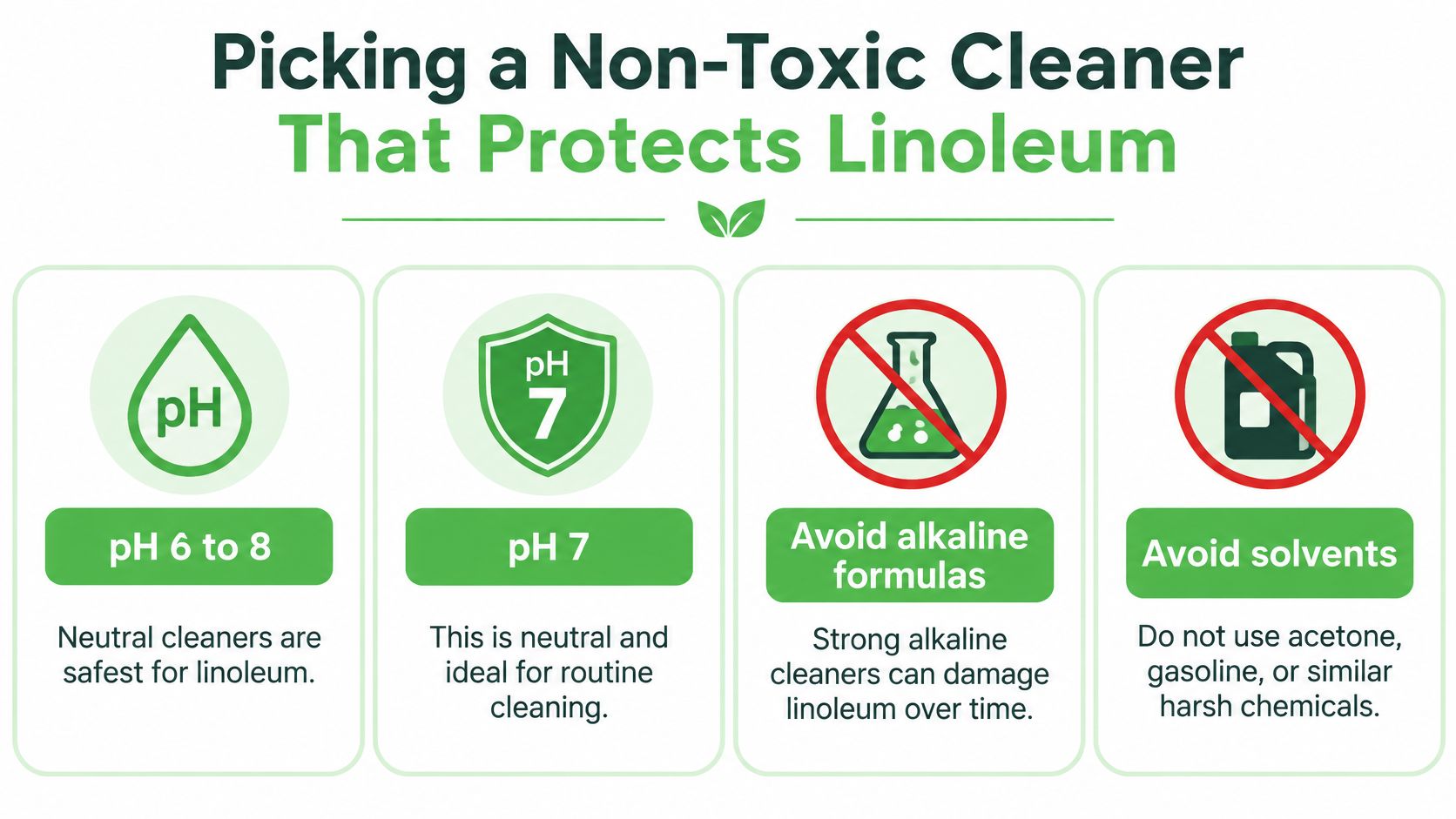
Start with the number on the label, not the leaf icon. A neutral cleaner is a mild detergent with a pH of 6 to 8, and pH 7 is neutral. The Armstrong Flooring glossary defines that range and notes that neutral products are meant to lift soil without removing floor polish, while prolonged exposure to alkaline substances can damage linoleum. That range is the test I would use before any "natural" or "green" claim, including in pet homes in Plano and Lakewood.
Solvents such as acetone, gasoline, and turpentine do not belong here. Strong alkaline degreasers can discolor the surface over time. Bleach and ammonia are out for the same reason we skip them in a fragrance-free home.
Run any bottle through this list before it touches the floor.
- Neutral pH. Look for 6 to 8 on the label or the safety data sheet, not only on the front sticker.
- Fragrance-free. Synthetic scent is left out entirely. That is different from unscented, because some unscented formulas still hide odor with a masking fragrance. What fragrance-free floor cleaner actually means is worth reading before you trust a "clean scent" claim.
- No bleach or ammonia. Both are too harsh for this finish and for a closed house.
- Plant-derived or mineral-based ingredients where the flooring maker allows them.
- A manufacturer match. If the care sheet names a cleaner family, stay inside it.
Residues stay where toddlers crawl and where cats and dogs nap. Fumes linger in closed rooms through a Texas summer, when the air conditioner runs and the windows stay shut. That is why the ingredient list matters for kids, pets, pregnant moms, and anyone with asthma or chemical sensitivities. The aim is fewer harsh chemicals, not a medical promise.
Vinegar and alkaline household degreasers can still etch a finish or leave a film. Natural does not mean floor-safe.
Put a small amount in a closet corner, let it dry, and check for dullness or a tacky feel before you treat the kitchen.
Daily Schedule and Step-by-Step Damp Mopping
A schedule you can actually keep
There is no single correct interval. Traffic, soil, finish condition, and the maker's sheet set the pace. In Dallas, tracked dust, spring oak pollen, winter cedar, and long air-conditioning seasons push grit onto the floor every day, so a dry pass prevents a heavier scrub later. A Plano kitchen with a dog may need a dust mop every other day, while a quiet bedroom can wait for the weekly damp mop.
Caroun's linoleum care summary describes the same order used after installation: sweep, vacuum, or damp mop to remove building dust and loose dirt, and do not leave water or a film on the floor. Re-polishing advice splits three ways, after several damp cleanings, about once a year, or when wear shows. The shared rule is a lightly wet floor, dirty solution picked up promptly, no solvents, and a cleaner the manufacturer approves.
| Task | How Often | Method |
|---|---|---|
| Sweep or dust-mop loose grit | Daily in high-traffic areas | Soft-bristle broom, dust mop, or vacuum without a beater bar |
| Damp mop | Weekly, or as needed | Damp, not wet, with a diluted neutral cleaner |
| Spill cleanup | Immediately | Blot, then wipe with a barely damp cloth |
| Deep scrub for heavy soil | Seasonally or when dull | Diluted cleaner, slow scrub, clean-water rinse, full dry |
| Finish or seal check | Per manufacturer, often yearly | Inspect for dullness, wear, and worn traffic lanes |
Armstrong Flooring's maintenance FAQs say to take dry soil off first with a soft-bristle broom, dust mop, or vacuum without a beater bar, then damp-mop with a properly diluted, manufacturer-approved cleaner. Cork and wood in the mix can take on water at seams and edges, so the mop should never flood the floor. For periodic heavy soil, Armstrong recommends a rotary machine or autoscrubber at no more than 300 rpm, scrubbed slowly in both directions, rinsed with clean water, and dried fully before anyone walks on it.
Eight steps for the weekly mop
- Roll chairs aside and lift loose rugs so you are not dragging grit under the mop.
- Dust-mop or vacuum without a beater bar. Wet grit turns into a fine sandpaper.
- Mix a fragrance-free, neutral cleaner in warm water at the label dilution. A stronger mix does not clean better. It leaves film.
- Wring until the mop is barely damp. If water drips, it is too wet.
- Work small sections in one direction and rinse the mop often.
- Change the rinse water as soon as it looks dirty.
- Wipe standing solution at seams, edges, and under the toe kick.
- Let the floor dry fully before traffic or rugs come back.
Practical rule: A beater bar and a dripping mop are the two tools most likely to scar this floor in a normal week.
Use a disinfectant only at the label dilution and contact time. A heavy mix can discolor the surface or leave a slippery residue. Test the cleaner and any pad in a closet corner first, especially on an older floor or one with an unknown polish. Skip abrasive powders, aggressive stripping pads, solvent products, and uncontrolled wet cleaning unless the flooring maker specifically allows them.
Nearby hardwood is a different job. Spot-clean hardwood stains safely if you have wood in the same Dallas house, and do not carry the linoleum bucket onto it.
When the floor still looks wrong
A sticky film, dull patches, or a dark seam usually means too much solution or a weak rinse. Go over the area with a clean, barely damp mop and clear water, then let it dry before you judge the result. If grit shows up again or the surface feels tacky, shorten the interval. If the finish looks even, you can stretch it. A floor that stays grabby after a normal mop is often residue, not dirt, which is the problem behind a floor that stays sticky after mopping.
Removing Scuffs, Stains and Tracked-In Grime
Act while the mark is fresh, stay with a neutral cleaner, and stop before you strip the finish. Solvents, abrasive pads, and "all-purpose" degreasers are the usual way a small spot becomes a dull patch.
Tarkett's linoleum maintenance guide treats this floor as unusually sensitive to chemistry. High-pH cleaners can permanently damage or discolor it, and solvents such as acetone, gasoline, and turpentine should be avoided. The same product can be acceptable on one resilient floor and harmful on another, which is why the floor type comes before the bottle. Vinegar and alkaline household mixes can still mark a finish or leave residue, even when the label sounds gentle. Test a corner and read the warranty before a whole-room experiment.
| Mark | Likely Cause | First-Try Fix | Avoid |
|---|---|---|---|
| Grease marks | Cooking splatter, oils | Warm water with neutral cleaner on a soft cloth | Solvents such as acetone, gasoline, turpentine |
| Rubber scuffs | Shoe soles, furniture legs | Gentle rubbing with a damp cloth and neutral cleaner, or a pencil eraser on light marks | Steel wool, scouring powders |
| Tracked-in grime and pollen | Shoes, pets, open doors | Dry dust-mop first, then damp mop with neutral cleaner | Heavy soaking |
| Pet accidents | Urine on the surface and at seams | Blot, clean with neutral cleaner, rinse, dry fully | Ammonia-based or bleach products |
| Adhesive residue | Tape, stickers, label glue | Test neutral cleaner in a corner, then gentle wipe | Scraping blades, solvents |
| Rust marks | Metal furniture, plant pots | Check manufacturer guidance and test a neutral cleaner in a corner before any other product | Abrasive pads, steel wool |
After a spring walk in Dallas, oak or cedar pollen on shoe soles looks harmless until water turns it into a yellow smear. A dry dust-mop pass at the entry comes before any damp cleaning, so the grit never becomes grime in the kitchen lane.
For a pet accident, blot first, clean with the neutral cleaner, rinse with a clean damp cloth, and dry fully. Trapped moisture and odor residue cause more trouble than the stain, especially along a seam where a dog naps. Ammonia and bleach are the wrong answer on this floor and in a home where animals lie down.
A mark that survives the first gentle try is a stop sign, not a reason to reach for a stronger product.
Check the manufacturer guidance, or have a floor pro look at an unknown finish, before you escalate.
Protecting the Finish Between Professional Cleans
English inventor Frederick Walton patented linoleum in 1863, and after the patent expired in 1877 production spread more widely, according to a USDA Forest Service publication on linoleum. Oxidized linseed oil, ground cork or wood, powdered pigments, and organic resins changed little in those early years. The floor earned its place in kitchens because it could be cleaned often, not because it could survive a flood or a harsh chemical.

Five habits cover the weeks between a professional visit.
- Put felt pads under furniture legs, and choose rugs with a non-staining backing so rubber does not print a dark mark.
- Keep a mat at the kitchen sink and in front of the fridge, where drips collect.
- Wipe spills as they happen with a neutral cleaner, and leave the steam mop in the closet.
- Dust-mop daily so grit never gets a chance to scratch the traffic lane.
- Look at worn paths and refresh the protective layer on the manufacturer's schedule.
Texas humidity swings and long cooling seasons can move a floor at the seams. After any wet clean, and after a sharp weather change, run a hand along those seams and dry anything that still feels cool.
When a path looks different from the rest of the room, refresh the protective layer. Scrubbing harder will not put the finish back.
Choose Between a Deep Clean and a Recurring Maid Plan
A good home routine handles most weeks. A professional visit is for the moments that routine cannot reset.
Deep cleaning fits a first-time cleaning, a seasonal reset before spring pollen or after a long winter indoors, and a home that has not been professionally cleaned in a while. Recurring maid service, weekly, biweekly, or monthly, fits busy professional families and pet households who want the same cadence without booking every visit. Basic cleaning stays the lighter option when the house is already in good shape. Move-in and move-out work, including inside the fridge, oven, cabinets, drawers, and closets, is the right scope when keys are changing hands. Post-construction cleaning is the one that pulls fine build dust out of a new north-suburb house before anyone mops it into the finish.
Gmaids Certified Cleaning Teams® are trained, background-checked, and insured. We clean with fragrance-free, non-toxic products, and we do not use bleach, ammonia, or synthetic fragrance. The lead cleaner does a full walkthrough of the home before leaving. These visits are a regular part of homes in Dallas, Plano, Frisco, and Lakewood.
If you are sorting the scope, how deep cleaning compares with regular cleaning lays out the difference in plain terms. Households planning a fuller reset can also see how other services describe extra cleaning attention for your home.
Get an instant, flat-rate quote at www.gmaids.com or call 214-997-6918. If something is not right, tell us within 24 hours and we will make it right.
Gmaids has helped Dallas–Fort Worth families keep healthier homes since 2004, with fragrance-free, non-toxic cleaning that is gentler on linoleum, kids, and pets. A Certified Cleaning Team can fold this floor into a one-time deep clean or a weekly, biweekly, or monthly plan, then walk the house before leaving. Visit Gmaids for an instant, flat-rate quote, or call 214-997-6918.


Ready for a healthier, cleaner home?