Ceramic Sink Cleaner Guide for Safe, Fragrance-Free Care
You're standing at the sink after breakfast, coffee ring on one side, chalky spots around the faucet on the other, and a shelf of cleaners that all promise to fix it. Scrubbing harder feels like the answer. It usually isn't. That shine you're protecting is a glazed finish, a glass like coating over the ceramic, not raw pottery that can take endless abrasion. A good ceramic sink cleaner works gently, matches the mess, and leaves the glaze smooth.
Table of Contents
- Match the Cleaner to the Mess
- Label Terms and Ingredients to Leave Out
- Simple DIY Ceramic Sink Cleaners That Work
- How to Clean a Ceramic Sink Step by Step
- Removing Stains and Limescale Without Scratching the Glaze
- Disinfecting Without Harming the Surface
- Keeping the Sink Clean Between Deep Cleans
- Choose Your Cleaner or Book a Clean
Match the Cleaner to the Mess
Soap film across the basin is a different mess from mineral crust around the faucet. The first usually lifts with a soft cloth and liquid soap. The second tempts a stronger product, and that is how a glossy glaze goes dull in patches: more scrubbing and harsher chemistry wear the glass-like coating, they do not restore it.
Start with the maker. Care rules differ by brand, so a product that is fine on one glazed surface may be wrong for another. Schmidt's ceramic sink care guide recommends a sponge with soapy water or a clay based cleaner for routine care and warns against anti limescale products and products containing soda, hydrochloric, citric, formic, or hydrofluoric acids. Vinegar or lemon cleaners should be used only where that sink maker's guide allows them.
Ceramic Sink Cleaner by Soil or Stain
| Problem | Gentle cleaner and method | Avoid |
|---|---|---|
| Everyday film and soap residue | Fragrance free liquid soap in warm water with a soft cloth | Abrasive powders and alcohol |
| Hard water spots and limescale | Diluted white vinegar with water, only where the sink maker allows acids | Undiluted acids and drain cleaners |
| Rust streaks near fixtures | Mild non abrasive cleaner with a soft pad, then rinse well | Steel wool and bleach |
| Hair dye or dark stains | Gentle stain lifting cleaner tested on a hidden spot first | Bleach and ammonia |
| Grime around drain and overflow | Liquid soap and a soft brush, then thorough rinse | Scouring pads and harsh solvents |
Practical rule: If you don't know the maker, look for a brand stamp on the rim or underside of the basin and find that model's care guide.
Without a guide, I'd stick to soap and water and skip acids. Test any new product on a hidden spot, follow the label, and rinse completely before you judge the result. Step up only if that mild pass fails. A second, harder scrub tells you less about the stain and more about how fast the glaze can lose its shine.
Label Terms and Ingredients to Leave Out
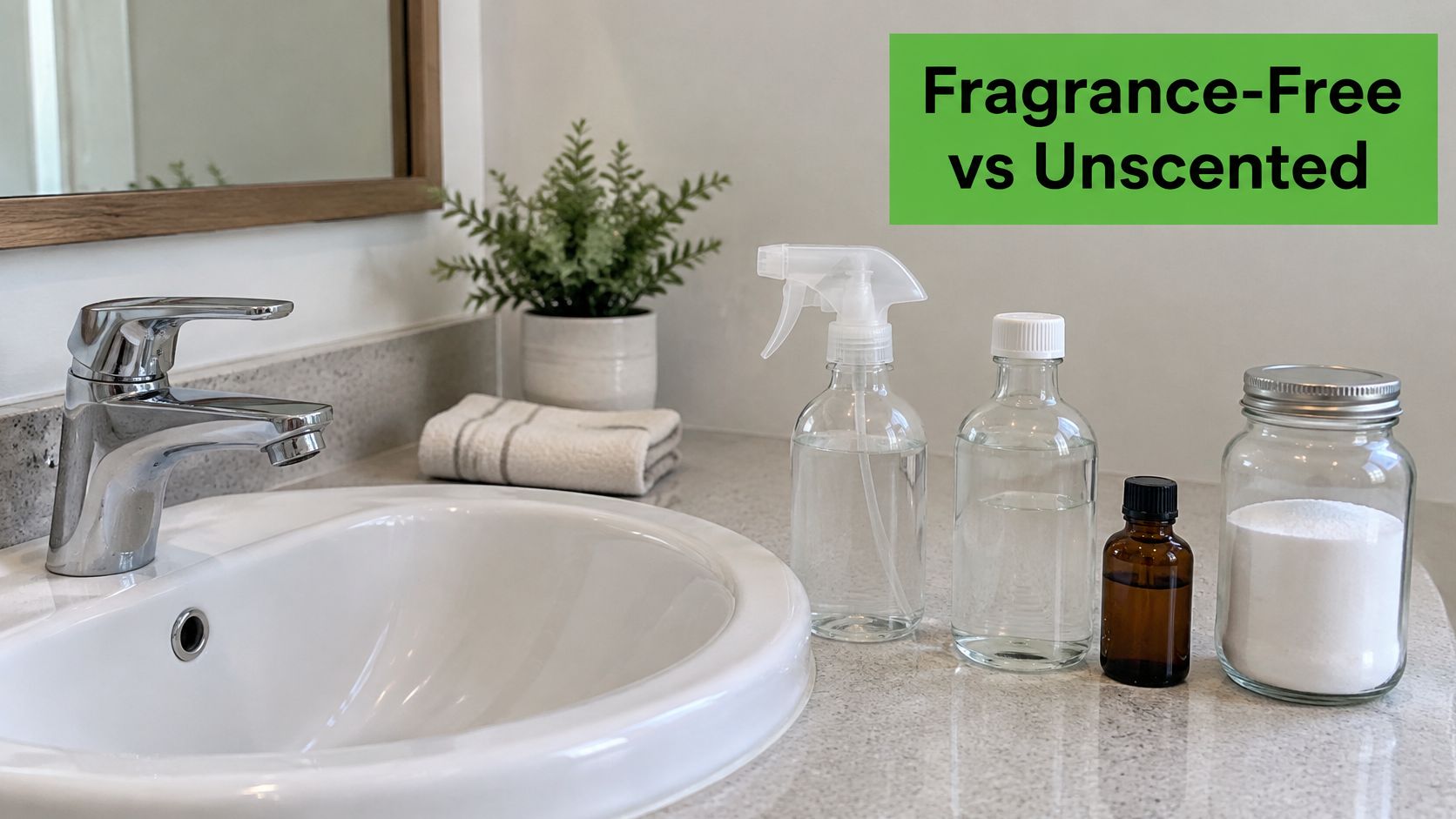
Fragrance free and unscented don't mean the same thing. Fragrance free means synthetic scents are left out entirely. Unscented can still contain masking chemicals that hide odors without removing them.
That distinction matters at home. Fumes linger in a small bathroom, and residues settle on floors where babies crawl and pets nap. A calmer label usually means fewer harsh chemicals in the air and on surfaces your family touches all day.
A Short Label Checklist
- Plant derived or mineral based ingredients: Look for a short, readable list you can pronounce.
- No bleach, no ammonia, no synthetic fragrance: All three should be absent, not just reduced.
- Clear surface statement: The label should say the product suits ceramic or porcelain.
Mixing is where labels matter most. The U.S. Agency for Toxic Substances and Disease Registry guidance on chloramine states that mixing bleach with ammonia produces hazardous chloramine gases, and bleach mixed with an acidic cleaner can release chlorine gas. Public health guidance lists possible effects including coughing, shortness of breath, watery eyes, chest pain, throat and eye irritation, and wheezing. If those start, stop, ventilate, and leave the room.
Scented pine or citrus products can also react with ozone indoors to form particulate matter and formaldehyde, which is one more reason a fragrance free choice keeps the air calmer for sensitive households. Never mix two cleaners in the same bottle or on the same sink. One product, used as labeled, is enough.
Simple DIY Ceramic Sink Cleaners That Work
Home recipes handle everyday soil well when you keep them simple and fragrance free. You don't need a cabinet of mixtures. Three options cover most of what a Dallas kitchen or bath sink sees in a week.
- Everyday cleaner: Mix one teaspoon of fragrance free liquid soap in one cup of warm water. Spray it on, let it sit a few minutes, wipe with a soft cloth, and rinse. This is your default for film, toothpaste, and light food residue.
- Limescale solution: Use white vinegar at 5% acidity diluted 1:10 with water. Apply it briefly with a soft brush, rinse, and dry. Use this only on sinks whose maker allows acids, and never let it sit on fixtures.
- Gentle grime paste: Mix baking soda with water into a thick paste. Use it sparingly with a soft sponge on grime around the drain. Don't press hard on a glossy glaze, because even a mild abrasive can dull the shine if you lean on it.
Natural doesn't automatically mean harmless. An acid or a gritty paste can still damage a finish if it's too strong or used too often.
Test each recipe on a hidden spot first. Never add bleach or ammonia, and never mix vinegar with another cleaner. Make small batches, label every bottle with the contents and date, and store them away from kids and pets.
You'll know a recipe is working when the basin feels smooth under your hand, the shine comes back evenly, and there's no film or streaking after rinsing. If you still feel drag or see a haze, rinse again before you reach for anything stronger. Residue, not dirt, is often what's left.
How to Clean a Ceramic Sink Step by Step
This routine works for a daily rinse or a deeper weekly clean. It's built around warm water, mild soap, soft tools, and drying, which is the step often skipped.
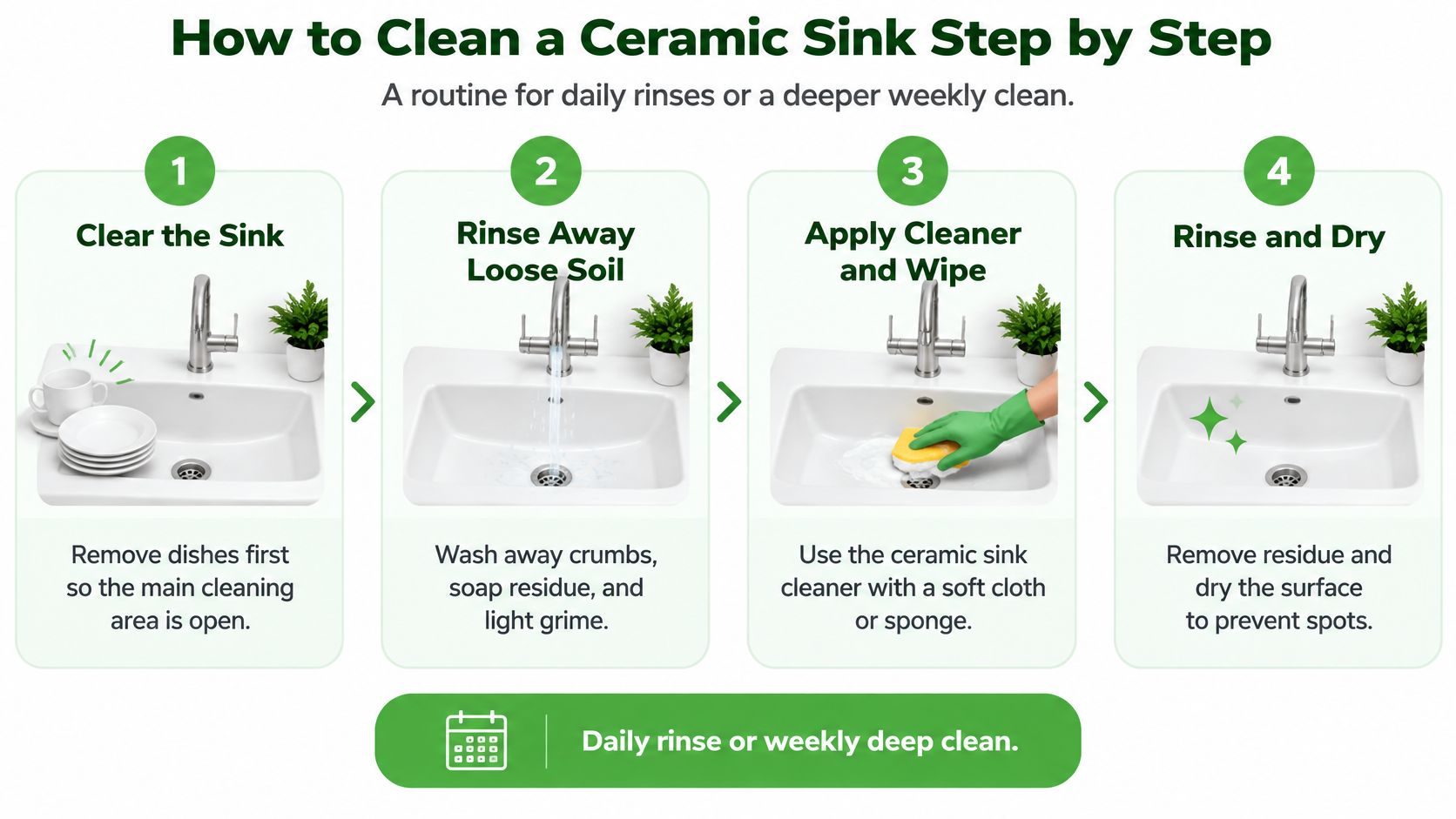
- Clear the sink of dishes first. Dishes hide soil and take time away from the main cleaning, which is why we ask customers to clear the sink before we clean. An empty basin lets you reach the corners and drain.
- Rinse the basin with warm water. This loosens grit so you aren't dragging it across the glaze. Skipping the rinse is how fine scratches start.
- Apply your chosen cleaner evenly. Cover the basin, faucet base, and rim with a soft cloth. Don't flood the counter or leave puddles on metal fittings.
- Let it sit a few minutes on stubborn dirt. Franke's ceramic sink cleaning guidance advises allowing a cleaner to sit for a few minutes on stubborn dirt, then rinsing thoroughly with warm water and wiping the surface dry. Dwell time does work that scrubbing shouldn't.
- Scrub gently with a soft cloth or non scratch sponge. Work in small circles along the glaze. An abrasive pad is the most common slip here.
- Rinse thoroughly with warm water. Include the drain, overflow, and faucet base, since leftover detergent, food residue, rust, mold, and limescale become harder to remove if they stay on the surface.
- Wipe dry with a clean microfiber cloth. A dirty towel just moves film around. Drying prevents spots, especially during long Dallas air conditioning seasons when indoor dust keeps circulating.
A clean sink has even shine, no film, and a smooth feel under your hand.
Removing Stains and Limescale Without Scratching the Glaze
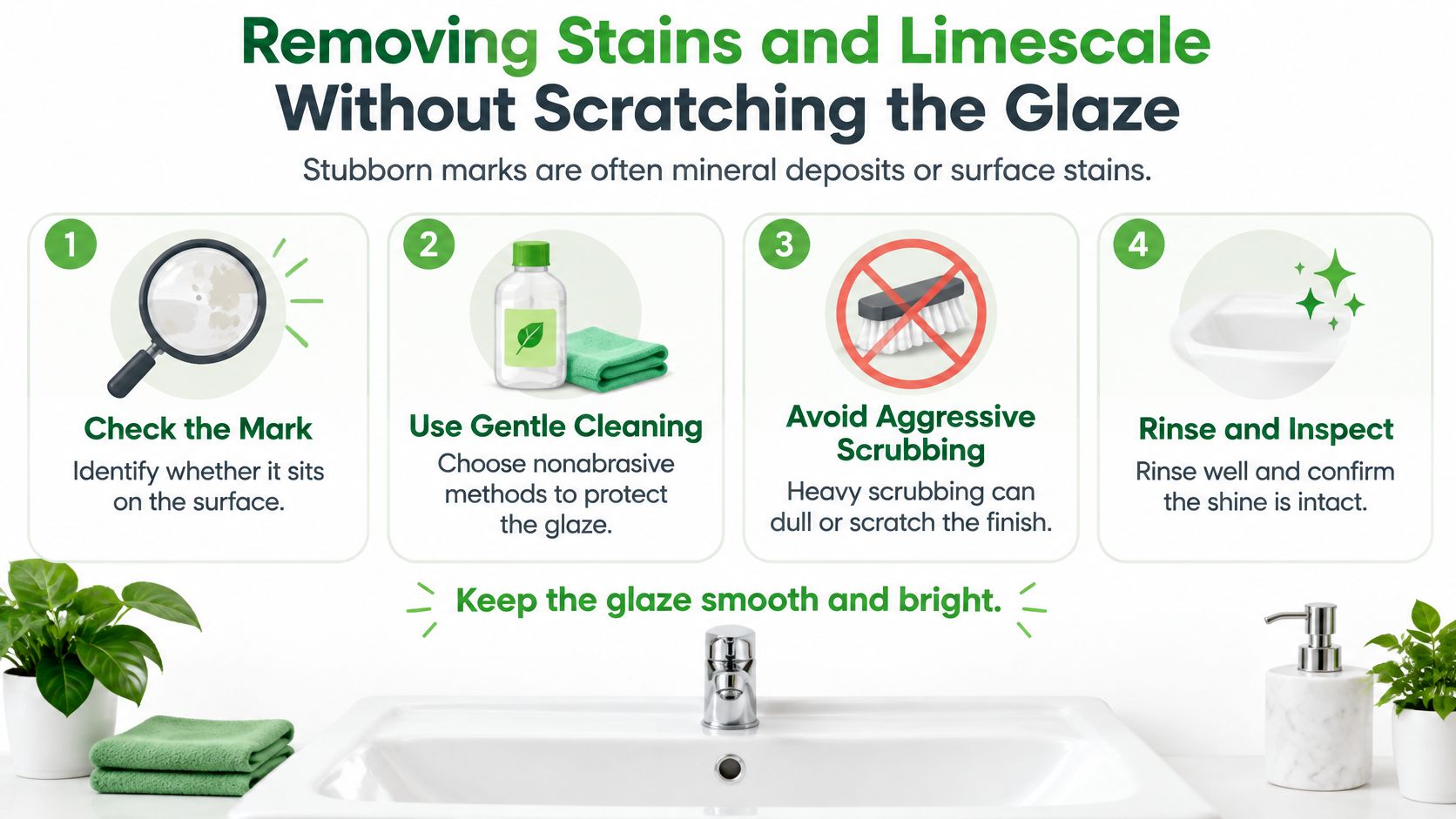
A cloudy ring under the faucet looks like dirt that wants a harder scrub. On a ceramic sink that ring is usually mineral sitting on a fired glaze, a thin glass-like coating over the clay. The coating is the shine. Once it is scratched or etched, the basin goes matte and the next film sticks faster.
Limescale is the most common culprit. A diluted white vinegar solution (about 1:10 with water, applied briefly with a soft brush only where the sink maker allows acids, then rinsed thoroughly and dried) is a common approach for calcium carbonate deposits, so check your sink maker's guide first. Daily washing with detergent, a full rinse, and a dry wipe also slows new scale by leaving less mineral-rich water on the glaze.
A Low Risk Escalation Ladder
I would stop at the first step that lifts the mark. More scrubbing and stronger chemistry are how a sound glaze gets dull.
- Start with warm water and soap. Repeat once before you escalate.
- Lay a cloth soaked in diluted descaler on the deposit for a few minutes, only if your maker allows acids.
- Use a soft non abrasive pad with light pressure, then rinse and inspect in good light.
- Try a stain specific cleaner tested first on a hidden area. Rust streaks near North Texas faucets often respond here once you address the fixture dripping above them.
- Ask a professional to assess it if the sink stays dull or stained, rather than repeating harsh scrubbing.
If mineral marks keep coming back, home remedies for mineral stains can help you think through the water side of the problem, not just the sink side. The same finish-first approach applies when you clean tub stains without damaging the finish. Don't use strong acids, drain cleaners, oven cleaners, bleach, or strong alkalis as a routine, since they can damage metal fittings and some sink finishes.
Disinfecting Without Harming the Surface
The basin looks bright after you rinse chicken juices away, yet a thin film can still sit around the drain, faucet base, overflow, seams, and the underside of the rim. That film is organic soil. A disinfectant cannot reach germs through it, and a long soak of the wrong product can dull the factory glaze if you treat the coating like raw pottery.
Cleaning lifts visible soil. Disinfecting is the later step, and it only works on a surface that is already clear. I would use a full disinfectant after raw meat, illness in the household, or a pet mess, not after an ordinary rinse. Daily soap already handles routine film, and repeating a stronger product is a common way a glossy sink turns flat. If you are sorting out which level the mess needs, this overview of cleaning versus sanitizing lays out the difference in plain language.
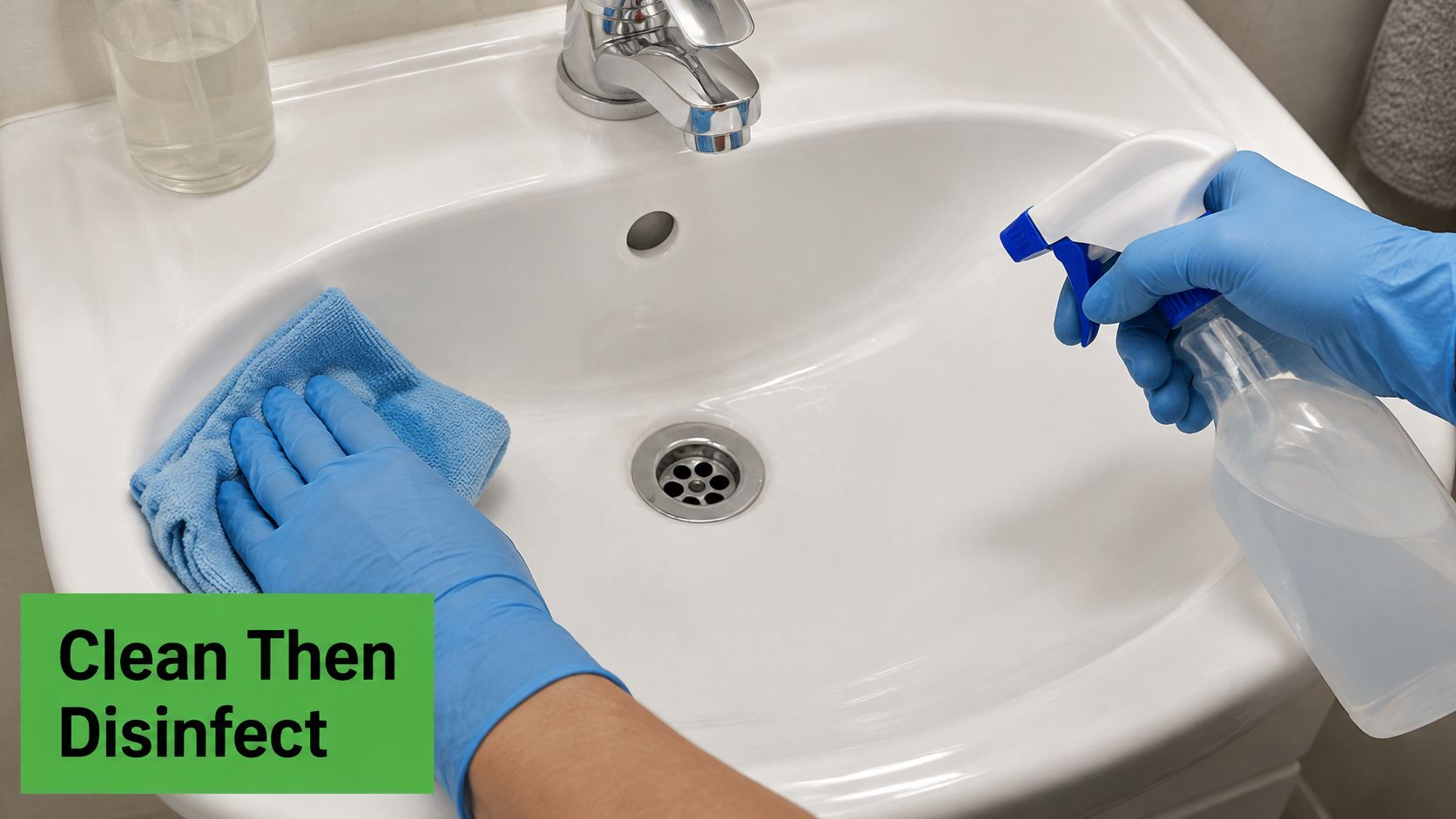
- Clean visible soil first with the everyday soap routine.
- Rinse the cleaner away completely so leftover soap does not block the next product.
- Choose an EPA registered disinfectant whose label lists hard, nonporous surfaces such as glazed ceramic or glazed porcelain. If you are comparing options for a workplace or rental turnover, you can browse surface disinfectants to see how products are categorized before you check individual labels.
- Keep the surface visibly wet for the full contact time. EPA label directions for a registered bathroom disinfectant specify wetting the sink and maintaining a 10 minute contact time before wiping. Wiping early is the mistake that cancels the claim.
- Rinse only if the label says so, then dry.
- Ventilate the room while the product works, and wear any gloves the label requires.
Contact time rule: If the surface dries before the time is up, rewet it. The clock runs only while it is wet.
Antibacterial wording on a bottle does not automatically mean broad protection. Read the active claim, check the current label before each use, and never mix disinfectants with acids, ammonia, or toilet bowl cleaners.
Keeping the Sink Clean Between Deep Cleans
Small, regular habits prevent the heavy scrubbing that dulls a finish. A schedule you can keep beats a perfect one you abandon by week two.
Ceramic Sink Maintenance Schedule
| Task | How often | Why it matters |
|---|---|---|
| Rinse and dry the basin | After each use | Stops residue and water spots from forming |
| Soap clean with a soft cloth | Weekly | Removes film before it hardens |
| Check drain, faucet base and overflow | Weekly | Organic soil collects in these spots |
| Check and descale if spots appear | When spots or film return | Prevents mineral build up |
| Disinfect the sink | After raw meat, illness or pet mess, per label | Cleaning alone may not remove germs |
| Inspect the glaze for dull or stained areas | Every 3 months | Catches marks early, before stronger products are needed |
Adjust the timing for your home. In Dallas, oak and cedar pollen settles on counters and sinks in spring and winter allergy seasons, long AC seasons keep indoor dust moving, and holiday hosting adds extra use. Newer homes in Plano and Frisco may carry construction dust that needs an extra wipe in the first months.
If you bathe or groom pets in the sink, rinse and dry it right after. A hard water home needs more frequent spot checks around the faucet, while a lightly used guest bath in Highland Park or Lakewood can stretch the intervals a bit. The goal stays the same. Catch film early, dry the basin, and your deeper cleans stay gentle.
Choose Your Cleaner or Book a Clean
A cloudy ring around the faucet looks like dirt, so the first move is often a stronger powder and a stiffer pad. On a ceramic sink that film sits on a fired glaze, not raw clay. Extra scrubbing and harsher chemistry can dull the coating before they clear the stain.
Match the cleaner to the mess. For everyday film, use a fragrance-free product labeled for ceramic or porcelain, a soft cloth, and the sink maker's care notes. Step up only when one specific stain stays after that gentle routine. If the basin already looks chalky, stop. Another round of abrasion will not restore a worn glaze.
When leftover stains, a dull basin, or a full-house clean is more than you want to handle, Gmaids is a Dallas-Fort Worth non-toxic, fragrance-free cleaning service established in 2004. Certified Cleaning Teams® are trained, background-checked, and insured. They never use bleach or chlorine cleaners, ammonia-based products, toxic solvents, or synthetic fragrances. A fragrance-free cleaning service is a practical fit for homes with kids, pets, and chemical sensitivities.
Service covers Dallas, Highland Park, Plano, Frisco, and communities from Dallas to Fort Worth. Request a quote at Gmaids or call 214-997-6918.


Ready for a healthier, cleaner home?